
Fully Managed Integration Services: What Companies Actually Deal With and How Integration Solves It
When companies talk about improving operations or trying to reduce mistakes across different parts of the business, most people do not immediately think about integration services, even though it is usually the exact place where everything breaks. So here I want to explain, in a more direct way, what Fully Managed Integration Services actually do, and why businesses in retail, e-commerce, logistics, distribution and manufacturing keep running into the same issues until they finally decide to implement proper EDI Integration, E-commerce Integration or Business Systems Integration with a provider like EDI2XML. And I’m not trying to make it sound fancy, just explaining how it looks in real life.
Key Takeaway
- Fully Managed Integration Services connect ERP, CRM, e-commerce, and trading partners seamlessly.
- Automates data flows, reduces manual errors, ensures EDI and partner compliance.
- Ideal for retail, logistics, distribution, and manufacturing companies.
- Provider handles setup, mapping, monitoring, and error resolution—no internal IT team needed.
- Main benefits:
- Automated workflows
- Accurate inventory and orders
- Reliable reporting
- Compliance with partners and standards
- Cost-effective and scalable operations
The Real Problems Companies Face Before Considering Fully Managed Integration
Most businesses operate with too many disconnected systems. They have Shopify or Amazon for sales, then some ERP like NetSuite, Dynamics 365, or Oracle JDE running inventory and financials, then CRM data in Salesforce or HubSpot, and then a warehouse management tool that has completely different data. People try to keep everything updated manually, which is basically impossible when the company grows even a little.
So the result is delays, missing orders, incorrect inventory, errors in invoices, compliance issues with trading partners who require EDI documents, and a general feeling inside the team that things are constantly behind. This is the situation we see over and over when businesses contact us for Fully Managed Integration Services because they can no longer rely on spreadsheets and manual updates.
What Fully Managed Integration Services Actually Mean
When we talk about Fully Managed Integration Services, we mean that the business does not need to build, maintain, or monitor its own integrations. Instead, a provider like EDI2XML handles everything – from the initial setup to ongoing support. So there is no extra IT team required, and there is no need for internal employees to figure out technical protocols or mapping rules. The goal is simple: connect the systems so data flows automatically and accurately.
This includes EDI Integration, E-commerce Integration, and Business Systems Integration, and each area solves a very specific type of problem that companies struggle with on a daily basis.
EDI Integration: For Companies That Must Comply With Trading Partner Requirements
EDI (Electronic Data Interchange) Integration is usually the first thing a company needs when it works with large retailers, distributors, or manufacturers. Without proper EDI Integration, companies send documents manually or upload files, which slows down operations. And when something is done incorrectly, trading partners send chargebacks, delays, compliance warnings, and other penalties.
Fully Managed EDI Integration removes the manual work. Purchase orders, invoices, shipping notices, and any other required EDI documents are processed automatically and integrated directly with the company’s internal systems. This means data goes where it should without people touching every step, which reduces errors and ensures compliance.
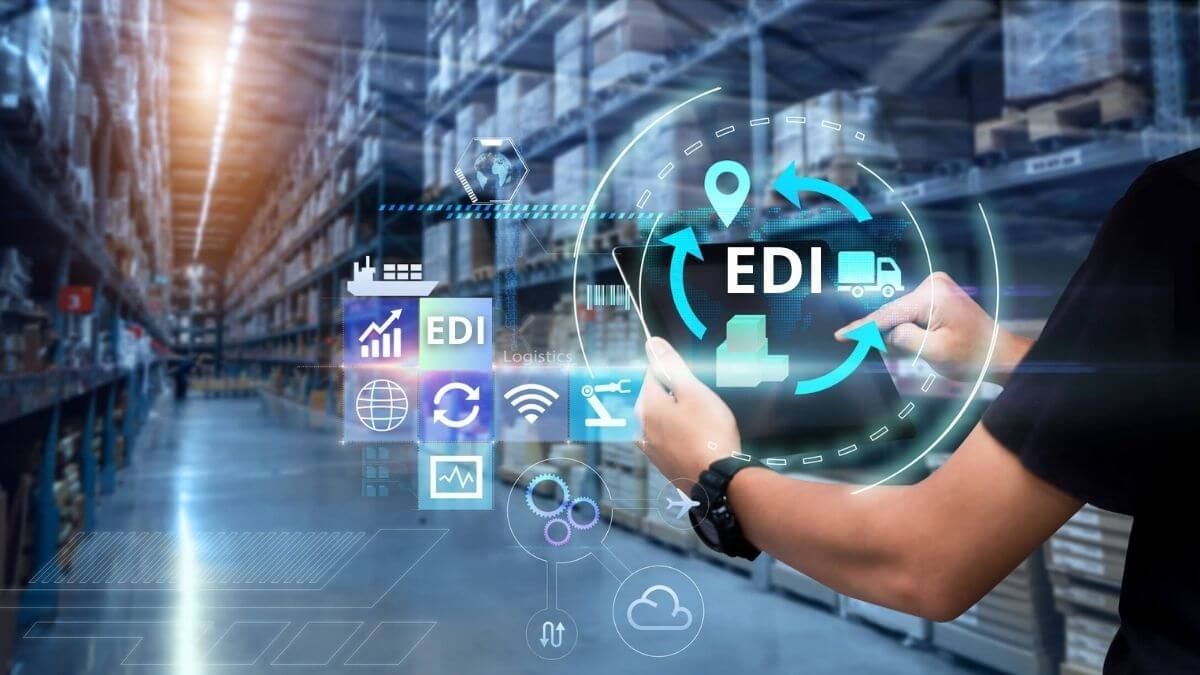
What does “Fully Managed EDI Integration Services” mean
By “fully managed” we mean: you don’t do the heavy lifting. The integration provider handles everything: mapping, data flow, system-to-system connections, maintenance, error handling, partner compliance. You avoid needing a full in-house EDI integration team or dedicated IT specialists.
Specifically, the provider will:
- Analyze your systems and data flows
- Build connection for EDI with e-commerce or ERP/CRM
- Implement automation so data transfer happens without manual intervention
- Monitor operations, catch and resolve errors, manage updates or partner-side changes
- Ensure compliance with partner requirements (document formats, EDI standards, protocols)
This lets you focus on business, rather than on fighting software mismatches.
E-commerce Integration: For Businesses Selling on Amazon, Shopify, BigCommerce or eBay
E-commerce companies often deal with constant synchronization problems. Orders come in from different online platforms but inventory lives in another system, and then shipments and tracking go through different tools again. When there is no proper E-commerce Integration, the whole workflow depends on manual updates, which is why overselling, delays and wrong stock levels happen all the time.
With Fully Managed E-Commerce Integration Services from EDI2XML, online orders flow directly into the ERP or CRM system, inventory updates go back to the platforms automatically, and customers receive accurate information.
Thus, with our managed service, businesses avoid the typical issues of e-commerce operations such as delayed updates, inconsistent stock levels, or missing order information.

Business Systems Integration: Connecting ERP, CRM, and Other Internal Tools
Every business that uses more than one internal system eventually realizes that the systems do not speak the same language. If the ERP does not match the CRM, or the warehouse tool operates separately, the business ends up with duplicated records, outdated information, and reporting that never reflects what is actually happening.
Business Systems Integration solves this: by connecting ERP, CRM, warehouse, accounting, e-commerce, and other tools — so data flows seamlessly, in real time or near real time.
Results: accurate inventory, unified customer data, reliable reporting, automated workflows. No more copy-paste, no more human error, no more delays.
Why Companies Choose EDI2XML for Fully Managed Integration Services
The main reason companies select EDI2XML is that the entire integration process is handled by professionals with more than 25 years of experience, and clients do not need to worry about the technical side at all. The service includes setup, monitoring, updates, error handling, and direct communication with trading partners when necessary. For small and medium businesses, this matters a lot because internal teams usually do not have time or resources to maintain integrations.
The goal is always the same: reliable automation, fewer errors, less manual work, and smoother operations across the entire organization.
The Bottom Line for Businesses Considering Integration
If a business is constantly dealing with delays, missing data, inconsistent information, or compliance issues, it is almost always because the systems are not connected. Fully Managed Integration Services help solve those problems by allowing EDI, e-commerce platforms, and internal business systems to operate in sync. It does not matter whether the company is in retail, logistics, distribution, or manufacturing – the benefits are consistent everywhere.
When the systems finally work together, the business stops fighting operational noise and can focus on growth instead of fixing the same issues every day.
Get a Free Consultation
If your business is facing the problems described above, or if you simply want to understand how integration could improve your operations, you can schedule a free consultation with our team at EDI2XML. We will look at your current systems, your workflows, and your trading partner requirements, and provide recommendations based on real experience, not generic advice.

FAQ — Common Questions About Integration & EDI
What kinds of businesses benefit from Fully Managed Integration Services?
Virtually any business that uses multiple systems – sales platforms (e-commerce or marketplaces), ERP, CRM, warehouse, or accounting software – and exchanges data with partners. Retailers, distributors, manufacturers, logistics, e-commerce companies, and B2B sellers all see value. Integration helps when data is fragmented, when manual syncing becomes error-prone, or when partner requirements (orders, invoices, ASNs) demand a consistent, automated flow.
Do I need an in-house IT team to implement EDI properly?
Not necessarily. With Fully Managed Integration Services (like from EDI2XML), the integration provider handles setup, mapping, monitoring, and maintenance. You don’t need internal experts on EDI standards or data mapping. This removes the burden of managing complex protocols and lets your team focus on core business.
What are the main technical or operational challenges when implementing EDI or system integrations?
There are several common pain points: different partners may use different EDI standards or custom formats, so data mapping becomes complex and error-prone; systems may be incompatible or use different data structures; data quality issues (missing fields, inconsistent codes) may cause failures or rejections; legacy systems or older ERPs often don’t support modern data exchange protocols; and maintaining such infrastructure internally – software, servers, staff – can be costly.
How does integration help reduce errors and improve data quality compared to manual processes?
Because integration automates data transfer between platforms (orders, inventory, invoices, shipping notices, customer data, etc.), it eliminates manual data entry – the main source of typos, mismatches, and omissions. It ensures that data is converted into standardised formats, validated, and transmitted correctly, reducing risk of order mistakes, compliance issues or partner fines.
If I already have some internal systems (ERP, CRM, warehouse software), can integration still work – or do I need to replace everything?
Integration doesn’t require replacing all systems. One of the benefits of modern managed integration is the ability to map and connect existing systems – even legacy ones – with marketplaces, partners or other internal tools. The provider builds connectors or middleware to bridge differences, handle format conversion, and automate data flows, without forcing you to overhaul your entire IT stack.
Is it expensive and time-consuming to implement EDI / system integration?
Implementing EDI or integration can be challenging if done internally – due to software/hardware costs, maintenance, licenses, required expertise, mapping efforts, and partner requirements. But with an EDI managed service provider, you outsource all that: setup, mapping, support. That dramatically lowers costs for SMEs and reduces workload and risks.
What happens if trading partners use different standards or formats – can integration still handle that?
Yes – a robust managed integration handles format differences, data mapping, translation between various EDI standards (or custom formats), and ensures compatibility. So even if each partner has unique requirements, the integration layer handles conversions so your internal systems remain stable and unified.
After integration is set up, what kind of maintenance or support is needed?
Ideally, minimal on your side. Managed integration providers take care of maintenance, monitoring, updates, error handling, and partner onboarding. They ensure data flows continue working even if partners change requirements or systems evolve. This reduces internal overhead and risk.