EDI2XML
  • About
    • The Company
    • EDI2XML
    • Advantages
    • Partnership with EDI2XML
    • Testimonials
  • Services
    • Enterprise AI
    • Fully Managed Integration
    • Fully Managed EDI Services
    • EDI Web Portal
    • EDI Web Service
    • EDI On Premises
    • Managed Cloud Services
    • Amazon Integration
    • Shopify Integration
    • BigCommerce Integration
    • NetSuite Integration
    • JD Edwards Integration
    • Dynamics 365 Integration
    • SAP B1 Integration
    • Salesforce Integration
    • Industry 4.0 Integration
  • Pricing
    • EDI Managed Services
    • EDI Web Service
    • EDI On-Premises
    • Managed Cloud Services
    • Shopify Integration
    • JD Edwards Integration
    • E-commerce Integration
    • All other Integrations
  • Blog
  • Resources
    • Resource Center
    • List of EDI Codes
    • List of EDIFACT Messages
    • EDI Documents Library
    • Trading Partners
  • Contact us
  • Book a Consultation
  • Click to open the search input field Click to open the search input field Search
  • Menu Menu
  • Link to Facebook
  • Link to LinkedIn
  • Link to X
  • Link to Youtube

Optimize your business processes with Electronic Data Interchange EDI solutions—streamline data exchange, improve accuracy, and enhance efficiency.

Tag Archive for: EDI

Automate with EDI2XML Cloud EDI Software Integration Service

Blog

Automating EDI with EDI2XML: A Comprehensive Cloud-Based Integration Solution

In a congested technology space, companies are constantly looking for ways to automate their processes and improve efficiency. The evolution of Cloud computing offerings especially after COVID19 era, pushed these enterprises to more and more adopt cloud solutions and service offerings, where they can leverage not only the technology to automate EDI, but also the expertise of the team behind the service.

In this blog post, let’s explore how enterprises can Automate their EDI processes with EDI2XML cloud software integration services, and how they can quickly adapt to demands from their trading partners, and become more agile in a very demanding business space.

In this article, I will start by defining few of the important terms, then explore EDI2XML Cloud EDI integration service.

What is EDI and Why It’s Important

Electronic Data Interchange (EDI) is a technology that allows companies to exchange standard business documents -such as purchase orders, invoices, shipping notifications, and inventory updates- in a standardized electronic format.

I’m not going to go further on this topic, since we have already published extensive articles about EDI and its use, which I recommend reading for more information about EDI.

For a more detailed guide on how EDI works and its common use cases, check out our articles:

  • What is EDI (Electronic Data Interchange)?
  • EDI ANSI ASC X12 Standards – Technical Overview
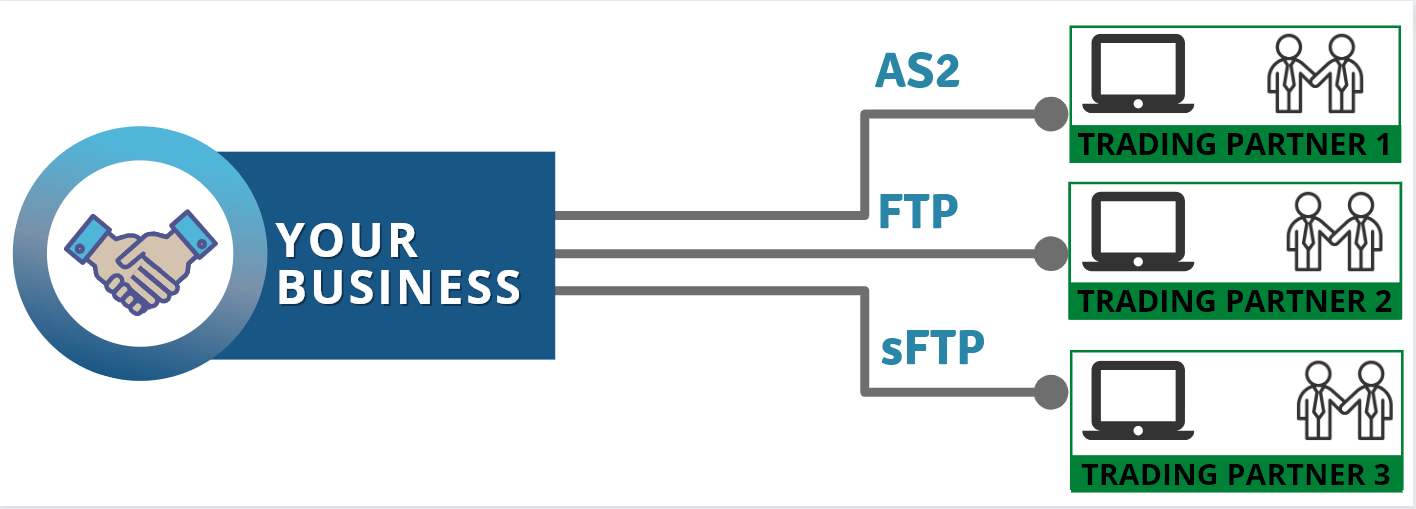
  • How Do Companies Send EDI Files?
  • Business Automation: How to Choose the Right EDI Solution
  • Intro to EDI (Downloadable PDF guide)

What is Cloud EDI Integration Service from EDI2XML?

EDI2XML is a cloud-based service offering, designed to simplify the process of EDI integration. Built on top of EDI2XML software transformation engine, that converts complex EDI documents into XML format, making it easier for businesses to process and manage their data.

EDI2XML cloud service is particularly beneficial for companies that need to exchange large volumes of data with their trading partners.

EDI Cloud Software solution

EDI2XML Cloud Integration Service: Key Components

EDI2XML Cloud Integration service is built on top of several technological components working together in a very orchestrated matter, to deliver an efficient cloud-based solution, that requires no maintenance.

Following is a high-level description of the components that makes up the cloud offering:

1. Cleo: the secured communication “Drummond certified” software to enable the connectivity to trading partners in both directions, using protocols such as sFTP, AS2, AS3, FTPs, https, RosettaNet and much more.

2. EDI2XML: a proprietary transformation software that is capable of transforming EDI to XML and XML to EDI, regardless of the version and sub-version of the EDI transaction.

3. Magic xpi: Magic xpi is a technology proprietary of Magic software, that offers a great interface to visually map from source to destination, any data format to any destination format. It also offers the capability to connect any software system to any other system using a certified and validated connector. Magic xpi acts as the orchestrator to manage the integration flows, triggers, and actions of EDI2XML cloud integration service. It is also the platform to connect to customers branded and none-branded ERP systems.

EDI2XML Cloud-Based EDI Software: Key Features

1. Cloud-Based Solution: The solution operates entirely in the “private” cloud of EDI2XML, eliminating the need for on-premises hardware and reducing IT overhead.

2. Seamless Integration: The EDI2XML service offering, integrates smoothly with various ERP and CRM systems, including SAP, Oracle, Microsoft Dynamics (and much more), using certified connectors.

3. Real-Time Processing: EDI2XML ensures that data is processed in real-time, allowing for faster transactions and improved business agility.

4. Scalability: Whether you’re a small business or a large enterprise, EDI2XML Cloud integration offering, can scale to meet your needs.

5. Security: With robust encryption and secure data transfer protocols, EDI2XML ensures that data is always protected.

Benefits of EDI2XML Cloud Integration Service

There are several benefits to adopt the services of EDI2XML Cloud integration services:

  • Improve automation: Eliminate human errors and improve transaction deliverability by adopting automation.
  • Increased Efficiency: Automating data exchange reduces manual entry errors and speeds up transaction times.
  • Cost Savings: By eliminating the need for paper-based processes and reducing administrative overhead, businesses can save significantly.
  • Improved Accuracy: Automated data processing ensures that information is accurate and up to date, reducing the risk of costly mistakes.
  • Enhanced Collaboration: EDI2XML facilitates better communication and collaboration with trading partners, leading to stronger business relationships.
  • Eliminate IT maintenance: EDI2XML Cloud integration offering, eliminates the need for internal IT support and maintenance.
  • No Need for EDI expertise: Entrusting EDI2XML Cloud integration service, will eliminate the need for experienced personnel in EDI. The internal IT team will focus on what they do best, and EDI2XML will handle all EDI challenges.

EDI2XML Integration Offerings

There EDI2XML integration is offered based on several business models:

Fully Managed Cloud EDI Integration

Fully managed cloud integration: the preferred option for enterprises looking to automate and integrate EDI without carrying the hassle and complexity of Electronic Data Interchange implementation, and maintenance. With this business model, the team at EDI2XML takes care of it call, from pre-implementation analysis, till development and implementation, up until the post-implementation monitoring and support.

HTTP EDI Web Service (REST API)

Cloud EDI2XML Rest API integration: this option is managed by our client. With this option the client will be provided access to EDI2XML REST API, to transform XML to EDI and EDI to XML. This is perfect for customers who has the time and expertise to develop their own integrations using REST API.

EDI2XML Service On-Premises

On-premises EDI2XML integration: Ideal for companies who would like to manage the EDI transformation on their own premises. This is ideal for companies having some strict policies on software consumption and usage.

Cloud EDI solution comparison

How to Get Started

Getting started with EDI2XML is straightforward. Simply fill up the following form to subscribe for the service. Upon filling this simple form, one of EDI2XML specialists will reach out to you to schedule a FREE one-hour Teams meeting to listen to your challenges and offer you a personalized recommendation and a comprehensive business proposal to onboard your company on one of EDI2XML offerings.

Just book a time convenient for you in our calendar.

Or click on this image to book your FREE consultation.


EDI Cloud Free Consultation

September 26, 2024/0 Comments
https://www.edi2xml.com/wp-content/uploads/2024/09/edi2xmlcom-EDI-cloud-solution.webp 628 1200 Pierre Namroud https://www.edi2xml.com/wp-content/uploads/2024/08/edi2xml.com-EDI2XML-company-logo.png Pierre Namroud2024-09-26 11:45:002025-05-09 09:27:07Automate with EDI2XML Cloud EDI Software Integration Service

Mastering X12 EDI 940 Warehouse Shipping Orders

Blog

The Electronic Document EDI 940 – Warehouse Shipping Order plays an important role in effective communication between third-party warehouses and their customers.

The use of electronic document exchange, and in particular EDI 940, improves communication between all participants in the supply chain and increases the efficiency of warehouse management.

We, as an EDI provider with more than 24 years of experience, in this blog will take a closer look at all the necessary information regarding this electronic document, which raises so many questions among goods suppliers who want to establish business cooperation with third-party warehouses or 3 PL providers.

What is EDI 940?

EDI 940 is an electronic document used by manufacturers and wholesalers of goods who use 3PL services or third-party warehouse.

When a manufacturer or seller whose goods are located in a third-party warehouse or distribution center receives a purchase order from a buyer (EDI 850), it generates EDI 940 in order to instruct the warehouse to ship the required goods. In EDI 940, the company indicates when, to whom and how many goods need to be shipped from the warehouse.

Key Components of EDI 940 Document

The goods owner generates EDI 940 document for the warehouse based on the received purchase order (EDI 850). The information in the EDI 940 document may vary depending on the specifics of the goods and the special requirements of the companies, but the following information is usually indicated:

Order details:

  • Order ID (this can be an order number or a customer number).
  • Quantity and description of goods to be shipped.
  • Units of measurement (for example, pieces, boxes, pallets).
  • Weight and volume of cargo

Information about delivery:

  • Date and time of expected shipment.
  • Delivery method (for example, truck, container, mail).
  • Recipient’s address (including postal code).

In addition, the document may include special delivery instructions or additional details such as the number of the warehouse from which the shipment will be made, information about the transport company or logistics provider, and so on.

Warehouse and EDI
 

EDI 940 X12 Specification

Warehouse Shipping Order EDI 940 is an electronic document in the X12 standard.

This EDI document contains of the following segments:

Message Envelop / Group:

  • ISA Interchange Control Header
  • GS Functional Group Header

Heading:

  • ST Transaction Set Header
  • W05 Shipping Order Identification (N = Original Order)
  • N1 Name (‘SF’ – Ship-from, ‘SF’ – Ship-from)
  • N3 Address Information
  • N4 Geographic Location
  • G62 Date/Time (‘02’ – Requested Arrival ‘10’ – Pick-Up Date)
  • NTE – Notes/Special Instructions (‘WHI’ Warehouse Instruction)
  • W66 Warehouse Carrier Information

Detail (Begins detail loop):

  • LX – Assigned Number
  • W01 – Line Item Detail – Warehouse
  • G69 Line Item Detail – Description
  • N9 Reference Identification
  • W20 – Line-Item Detail (Miscellaneous)
  • AMT – Monetary Amount

Summary:

  • W76 Total Shipping Order
  • SE Transaction Set Trailer (the last segment of each transaction set)

Message Envelop / Group Footer:

  • GE Functional Group Trailer
  • IEA Interchange Control Trailer

EDI 940 Warehouse Shipping Order Workflow Process

Below we will look at one of the possible scenarios in which the EDI 940 document is involved.

  • The buyer creates a purchase order (EDI 850) and sends it to the seller.
  • The seller confirms the order using the EDI 855 document.
  • Based on the received order, the supplier generates an EDI 940 document where he describes all the necessary details of the order and sends it to his third-party warehouse.
  • To confirm shipment from the warehouse, the warehouse sends an EDI 945 document to the seller.
  • Based on the received EDI 945 document, the seller creates an EDI 856 to notify the buyer of the upcoming delivery.
  • The seller sends an invoice (EDI 810) to the buyer after receiving the goods.

How to Exchange EDI With a Trading Partner?

In order for the entire process of exchanging EDI documents between the seller and a third-party warehouse, seller and buyer to be possible, this exchange must first be configured. This usually involves an EDI provider who can offer several types of EDI solutions.

For example, an EDI provider such as EDI2XML offers the service as a Fully Managed EDI Service. In this case, the provider is fully responsible for the process of setting up and transferring EDI documents between business partners.

Another method is the EDI Web Service, it is suitable for companies that have technical specialists who can work with REST API (call and consume HTTP Rest Web services); this option is much more economical, in addition, EDI2XML specialists help you make the first settings, they provide everything to your developers to get started, a java client with its source code and instructions on how to work with it.

The advantages of this EDI service are that companies can connect and start exchanging EDI documents with their business partner within an hour. There are no contracts, and low cost per KC.

If you have questions regarding EDI document exchange, our specialists with over 24 years of experience in EDI integration will be happy to help you resolve your issues. They can suggest the most profitable EDI solution for you, and can also provide a free 15-day trial period of our EDI web service.

Just book a time convenient for you in our calendar.

Free EDI online Consultation
July 23, 2024/0 Comments
https://www.edi2xml.com/wp-content/uploads/2024/07/edi2xml.com-EDI-940.webp 675 1200 Tatyana Vandich https://www.edi2xml.com/wp-content/uploads/2024/08/edi2xml.com-EDI2XML-company-logo.png Tatyana Vandich2024-07-23 15:48:212025-04-22 11:30:29Mastering X12 EDI 940 Warehouse Shipping Orders

All You Need to Know About EDI 864 Text Messages

Blog

In this article, we’ll explore what EDI 864 is, its importance in B2B communication, common use cases, benefits, challenges, and why partnering with experienced EDI providers like EDI2XML is essential for successful EDI integration.

What is EDI 864 (Text Messages)?

The EDI 864 transaction, also known as Text Messages, is part of the Electronic Data Interchange (EDI) standard used in business-to-business communication. The EDI 864 transaction set is used for the exchange of various types of text messages between trading partners.

Unlike other EDI transactions designed for computer processing, the 864 is specifically crafted for transmitting various communications in a human-readable form.

These messages can include general information, errors, warnings, inquiries, acknowledgments, responses, and other types of textual communications related to business processes.

864 EDI Transaction: Purpose and Content

The primary purpose of the EDI 864 is to facilitate one-time communications between trading partners. This EDI document allows for the transmission of free-form text, which can include simple messages, contracts, explanations, and other human-readable content.

Rather than being structured for automated processing, the EDI 864 focuses on conveying information to people.

Document Components:

An EDI 864 document includes the following elements:

  • Message date and time: Indicates when the message was sent.
  • Recipient identifying information: Ensures proper delivery of the message.
  • Free-form message text: The actual content of the communication.

While originally designed for one-time communications, some businesses have adopted it for regular updates (e.g., store or distribution center location information) when no other specific transaction set exists.

EDI 864

EDI 864 Format Example

To provide further clarity, we present below an illustrative example of an Electronic Data Interchange (EDI) 864 X12 transaction set. This example is intended to clarify the structure and components of an EDI 864 transaction, offering a tangible reference for understanding its implementation and functionality.

ISA*00* *00* *08*123485CA00 *08*5143737508 *230331*0004*:*00501*864000005*0*P*>

~GS*TX*123485CA00*5143737508*20230331*000400*864000005*X*005010

~ST*864*0001

~BMG*00*THESE DOCUMENTS WILL NOT BE PROCESSED.*03

~N1*FR*Wal-Mart Stores, Inc*UL*0681131000000

~N1*TO*New Manufacturing Inc.

~REF*IA*860515

~REF*IV*000000000682426

~MIT*PLEASE CORRECT AND RESEND.*THESE DOCUMENTS WILL NOT BE PROCESSED.*175*60

~MSG*SEGMENT ELEMENT ERROR*SS

~MSG*INVOICE NUMBER PO NUMBER ID POS – REF DATA COMMENTS*SS

~MSG*00682426 3400008253 TXI 001 – 603 0030063320000 INVALID TAX QUALIFIER PROD*SS

~SE*11*0001

~GE*1*864000005

~IEA*1*864000005~

EDI- Price
 

EDI 864 Specification

Let’s break down this example of the EDI 864 file:

ISA segment:

ISA stands for Interchange Control Header. It specifies details such as sender ID, receiver ID, date, time, and control numbers.

– Sender ID: 123485CA00

– Receiver ID: 5143737508

– Date: 230331 (March 31, 2023)

– Control Numbers: 0004

GS segment:

The functional group header segment specifies the sender and receiver of the transaction, as well as the date and time.

– Functional Identifier Code (TX for text message)

– Application Sender’s Code (123485CA00)

– Application Receiver’s Code (5143737508)

– Date (20230331 for March 31, 2023)

– Time (000400 for 4:00 AM)

– Group Control Number (unique identifier)

– Responsible Agency Code (X for industry-specific code)

– Version/Release/Industry Identifier Code (005010)

ST segment:

The transaction set header segment indicates the start of a transaction set and provides identifying information.

– Transaction Set Identifier Code: 864

– Transaction Set Control Number: 0001

BMG segment:

This is a text message segment containing the message “THESE DOCUMENTS WILL NOT BE PROCESSED.” with a message code “00” and a text “03”.

N1 segments:

These segments provide information about the parties involved in the transaction.

– N1*FR: Sender (Wal-Mart Stores, Inc.)

– N1*TO: Receiver (New Manufacturing Inc.)

REF*IA: Invoice number reference (860515)

REF*IV: Invoice value reference (000000000682426)

MIT segment:

This is another text message segment containing the message “PLEASE CORRECT AND RESEND.” with additional details.

MSG Segments:

MSG stands for Message Text. Contains human-readable messages. Examples:

– “SEGMENT ELEMENT ERROR”

– “INVOICE NUMBER PO NUMBER ID POS – REF DATA COMMENTS”

– “00682426 3400008253 TXI 001 – 603 0030063320000 INVALID TAX QUALIFIER PROD”

SE segment:

The transaction set trailer segment indicates the end of a transaction set and provides control information.

– Number of Included Segments (11 in this case)

– Transaction Set Control Number (matches ST02)

GE segment:

The functional group trailer segment provides control information for the functional group.

– Number of Transaction Sets Included: 1

– Group Control Number: 864000005

IEA segment:

The interchange control trailer segment indicates the end of an interchange and provides control information.

– Number of Included Groups: 1

– Interchange Control Number: 864000005

Overall, this EDI 864 file contains a text message indicating that certain documents will not be processed and includes references, informational messages, and details about the parties involved in the transaction. Additionally, it highlights specific errors encountered during processing and provides instructions for correction and resending.

EDI Guide
 

EDI 864 Example Scenarios

Here are some example scenarios illustrating the use of the EDI 864 transaction set:

Order Rejection Notification with EDI 864

Scenario: A retail company sends a purchase order (EDI 850) to a supplier. Upon reviewing the order, the supplier finds discrepancies or issues that prevent them from fulfilling the order.

Use of EDI 864: The supplier generates an EDI 864 transaction to inform the retail company about the rejection of the order. The 864 message may include details about the reasons for rejection, such as product availability, pricing discrepancies, or incorrect item information.

EDI 864
 

EDI 864 for Invoice Discrepancy Notification

Scenario: A manufacturer sends an invoice (EDI 810) to a distributor. However, upon receipt, the distributor identifies errors or discrepancies in the invoice.

Use of EDI 864: The distributor generates an EDI 864 transaction to notify the manufacturer about the invoice discrepancies. The 864 message may detail the specific issues found in the invoice, such as incorrect pricing, missing items, or incorrect quantities.

Error Notification in Shipping with EDI 864

Scenario: A logistics company sends shipping instructions (EDI 856) to a carrier. However, the carrier encounters issues during the shipment process.

Use of EDI 864: The carrier generates an EDI 864 transaction to notify the logistics company about the encountered errors. The 864 message may detail the issues faced during shipment, such as address discrepancies, delivery delays, or damaged goods.

In each of these scenarios, the EDI 864 transaction set plays a critical role in facilitating communication between trading partners, providing notification, acknowledgment, or resolution of issues encountered during various business processes.

What are the Benefits of EDI 864 Transaction Set?

Streamlined Communication: The EDI 864 streamlines the communication process, reducing the likelihood of errors associated with manual data entry.

Safe and Secure Communication: Like other EDI documents, the EDI 864 offers trading partners a safe and secure way to communicate with one another.

Efficiency: By automating the exchange of text messages related to business processes, EDI 864 helps streamline communication workflows. This can lead to faster resolution of issues, quicker decision-making, and overall improved efficiency in business operations.

Timeliness: EDI 864 enables real-time or near-real-time communication between trading partners, allowing them to promptly address issues, confirm receipt of messages, or provide updates on the status of transactions. This helps improve responsiveness and agility in business interactions.

Thus, the adoption of EDI 864 offers numerous benefits for businesses seeking to improve communication efficiency, reduce errors, enhance collaboration, and achieve cost savings in their electronic data interchange processes.

Delve into the realm of Electronic Data Interchange (EDI) through our illuminating video explanation. Discover the video.

Integration Challenges of EDI 864

The EDI 864 Text Message can be difficult to integrate and automate because it is a free-form text message designed for human readers. While the EDI 864 serves its purpose for human-readable communication, it is not optimized for machine processing. The absence of a predefined structure means that different organizations may use the EDI 864 in varying ways.

When it comes to implementing the EDI 864 and other EDI documents, partnering with an experienced EDI provider is crucial.

Conclusion: EDI 864 Text Messages for Business Communication

Integrating EDI 864 and other electronic data interchange (EDI) documents into your business processes can be challenging. From navigating complex validation rules to ensuring seamless integration with existing systems, there are numerous pitfalls that businesses may encounter along the way. That’s why it’s crucial to seek the expertise of an experienced EDI supplier like EDI2XML.

With over 24 years of experience in the field of EDI, we possess in-depth knowledge and understanding of the intricacies involved in EDI integration. Our team is well-equipped to handle the complexities of integrating EDI 864 and any other EDI document efficiently and effectively.

By partnering with us, businesses can benefit from our proven track record, streamlined processes, and personalized support, ensuring a smooth and successful EDI implementation tailored to their specific needs.

Book a free EDI consultation to discuss the challenges of EDI integration with our experts.

Book-a-free-consultation
April 10, 2024/0 Comments
https://www.edi2xml.com/wp-content/uploads/2024/04/EDI2XML-EDI-864-Text-Messages.png 675 1200 Tatyana Vandich https://www.edi2xml.com/wp-content/uploads/2024/08/edi2xml.com-EDI2XML-company-logo.png Tatyana Vandich2024-04-10 16:29:322025-05-22 15:26:33All You Need to Know About EDI 864 Text Messages

Choosing the Right EDI Solution: A Comprehensive Comparison

Blog

With over two decades of experience as a leading EDI service provider, we recognize the diverse intricacies that each company faces on their EDI journey.

At EDI2XML we understand that businesses have distinct needs and challenges when it comes to EDI integration. Drawing from our extensive knowledge of the industry, we’ve meticulously crafted a comparative table that highlights the distinctive features of our two prominent EDI services: the Fully Managed EDI Service and the EDI Rest Web Service (HTTP REST API).

We aim to provide clarity on how each service can cater to specific needs, from fully managed integrations to quick and cost-effective EDI compliance for SMEs.

Whether you’re a large enterprise in search of a fully managed EDI solution or a small to medium-sized business aiming for a quick and cost-effective EDI compliance route, this table is designed to provide a swift understanding of the differences between these two services.

FEATURE/ASPECT FULLY MANAGED EDI SERVICES EDI WEB SERVICE (HTTP API)
Deployment Fully managed service; no on-site installation required Web service /Rest API, running over the internet on EDI2XML platform
Integration Time Extensive setup phase for a new trading partner. On average (3) to (5) weeks depending on the complexity and cooperation of the trading partner. Quick startup, get started within an hour.
Technical Expertise No need EDI expertise; handled by EDI2XML team. No need for EDI experience; XML format familiar to developers.
Real-Time Connection Real-time access and responsiveness Real-time access and responsiveness
Integration Tools EDI2XML team handles connectivity, EDI mapping, configuration, and more. Provides a functioning Java client for integration, for DIY approach.
File Format All EDI Standards (X12, EDIFACT, HIPAA / X12, RosettaNet) and format: XML, CSV, TXT, JSON Supports both EDI to XML and XML to EDI conversion only.
Custom File Format Available upon request N/A; Proprietary XML format used
Platform Deployed on private Cloud Runs on EDI2XML’s own platform over the internet
Flexibility Different dynamic monthly service packages Pay-as-you-go pricing scheme, no long-term contracts
Integration Support Integration with any ERP/CRM applications. N/A;
Pricing Structure Monthly fee based on data volume and pre-packaged pricing 1. Fixed monthly mailbox fee. 2. Data processing fee based on data volume ($ /KC)
Technical Support   Included in the service Support is billable by ticket
Advantages EDI2XML handles the entire EDI project for the customer Quick startup with no need for EDI expertise
Free Trial N/A 15-days free trial for new users of the API web service
Onboarding Process Detailed analysis, planning, and setup of Trading Partner accounts 3 easy steps: Get information, Request a price list, Getting started in record time
Conclusion Suitable for companies without EDI skills and resources Quick and easy EDI compliance for SMEs
 

In the world of business, seamless communication and efficient data exchange are critical elements for success. For companies navigating the complex landscape of Electronic Data Interchange (EDI), finding the right solution that aligns with their unique needs is paramount.

EDI Guide
 

As you explore the detailed breakdown of each EDI service, understand the advantages, and consider your business’s specific requirements, remember that EDI2XML is here to guide you on your path to EDI excellence.


Dive into the world of EDI (Electronic Data Interchange) with our insightful video explanation.

Explore the video now


For any further inquiries or a free consultation, feel free to reach out to us. We’re not just an EDI service provider; we’re your partners in navigating the complexities of EDI and ensuring that your business thrives in the digital exchange landscape.

Free EDI consultation
December 6, 2023/0 Comments
https://www.edi2xml.com/wp-content/uploads/2023/12/EDI2XML-Fully-managed_EDI-or-WEB-EDI.png 675 1200 Tatyana Vandich https://www.edi2xml.com/wp-content/uploads/2024/08/edi2xml.com-EDI2XML-company-logo.png Tatyana Vandich2023-12-06 15:01:252025-05-15 16:06:11Choosing the Right EDI Solution: A Comprehensive Comparison

All You Need to Know About EDI 943 – Warehouse Stock Transfer Shipment Advice

Blog

EDI 943 – Warehouse Stock Transfer Shipment Advice

EDI 943: Introduction

This article has been created by the expert team at EDI2XML, a trusted EDI provider with 20+ years of experience. Its purpose is to help companies understand the EDI 943 Warehouse Stock Transfer Shipment Advice better. Our goal is simple: we want to give businesses accurate information and show them how to exchange this important EDI document and improve their supply chain and inventory management.

What is EDI 943?

The EDI 943 Warehouse Stock Transfer Shipment Advice is an electronic data interchange (EDI) transaction set used in supply chain, logistics, and 3PL to transmit information about the shipment of goods from one warehouse or location to another.

What is EDI X12 943 Format?

The EDI 943 format refers to the structured layout or template used for creating and exchanging the EDI 943 Warehouse Stock Transfer Shipment Advice document electronically. It defines the specific arrangement of data elements and segments within the document.

The format typically follows a standardized EDI format, such as those established by ANSI (American National Standards Institute) and ASC X12 (Accredited Standards Committee X12). These formats outline the exact sequence and structure of data fields, including sender and receiver information, item description, quantities, shipping instructions, and other relevant information.

What is EDI X12 943 Specification?

Specifications for the EDI 943 outline the specific data elements, segments, and syntax rules that must be followed when creating and exchanging an EDI 943 document.

Here are some key components typically covered in an EDI X12 943 specification:

Message Structure: It defines the overall structure of the EDI 943 message

Segment Definitions: The specification lists all the segments used in the EDI 943

Data Element Definitions: For each data element within the segments, the specification provides information about the data type, length, and usage requirements (mandatory or optional).

Code Sets: It includes code lists and values for specific data elements.

Syntax Rules: The specification outlines syntax rules for delimiters, segment terminators, and other technical aspects of the X12 format to ensure proper parsing and interpretation of the message.

EDI Integration Services
 

Data Elements in an EDI 943 Warehouse Stock Transfer Shipping Advice

In an EDI Warehouse Stock Transfer Shipping Advice (EDI 943) document, several key data elements are essential for accurately conveying information about the shipment of goods between warehouses or locations within the supply chain. These data elements help trading partners understand and process the shipment effectively. Here are the key data elements typically included in an EDI 943:

Transaction Set Header (ST)

  • Transaction Set Control Number: A unique identifier for the transaction set.
  • Transaction Set Identifier Code: Indicates that it is an EDI 943.

Warehouse Information (W06)

  • Warehouse ID: A unique identifier for the warehouse or location sending the shipment.
  • Shipment Identification: A reference number or code for the shipment.
  • Shipment Date: The date when the shipment is prepared.

Name Segments (N1)

  • Ship To (ST): Information about the receiving warehouse or location.
  • Ship From (SF): Information about the sending warehouse or location.

Reference Numbers (N9)

  • Customer Order Number (CO): The customer’s order reference.
  • Location (LU): Internal location or facility code.

Date Segment (G62)

  • Requested Ship Date: The date when the shipment is requested or expected to be shipped.

Carrier Information (W27)

  • Carrier Code: Code representing the carrier or transportation mode

Item Detail (W04)

  • Quantity Shipped: The quantity of items being shipped.
  • Unit of Measure (UIT): The unit of measure for the quantity (e.g., “EA” for each).
  • Item Identification: Product identifier (e.g., UPC or SKU).
  • Product Description: Description of the item being shipped.
  • Vendor Item Number: The supplier’s item number.
  • UPC/EAN/GTIN: Global Trade Item Number or barcode.
  • Product Condition: Indication of item condition (e.g., new or used).

Return Management (N9)

  • Return Instructions (RM): Any specific instructions or information regarding returns.

Item Warehouse (W03)

  • Additional item or shipment details specific to the warehouse.

Transaction Set Trailer (SE)

  • Number of Included Segments: Total number of segments in the transaction set.
  • Transaction Set Control Number: Repeats the control number from the ST segment.

Functional Group Trailer (GE)

  • Number of Transaction Sets Included: Total number of transaction sets within the functional group.
  • Group Control Number: Repeats the control number from the GS segment.

Interchange Control Trailer (IEA)

  • Interchange Control Number: Repeats the control number from the ISA segment.
  • Number of Included Functional Groups: Total number of functional groups in the interchange.

These data elements collectively provide comprehensive information about the warehouse stock transfer shipment, including sender and receiver details, item specifics, shipment dates, and any relevant references or instructions. Trading partners rely on these elements to process, track, and manage inventory transfers efficiently within the supply chain.

EDI 943 Example Transaction

  • ISA*00**00**ZZ*SENDER ID *12*RECEIVER ID*230330*1549*|*00401*100000008*0*P*}~
  • GS*AR*SENDER ID*RECEIVER ID*20230330*1549*1008*X*004010~
  • ST*943*1080~
  • W06*1*123456789012*20220316*RA-100179**Test-12345~
  • N1*ST*Warehouse – GXO*91*MPD001~
  • N1*SF*Supplier Inc.~
  • N9*CO*US300008521~
  • N9*LU*MPD001~
  • G62*04*20220409~
  • W27*A*FED~
  • W04*1*EA*123456789***ABCD12345*******UP*689122008877~
  • N9*QA*QA Hold~
  • W03*1~
  • SE*12*1080~
  • GE*1*1008~
  • IEA*1*100000008~

Please note that this example contains generic placeholders and serves as a simplified illustration of an EDI document’s structure. In a real-world scenario, the data content would be specific to the business transaction.

Practical Applications of the EDI 943 Warehouse Stock Transfer Shipment Advice

The EDI 943 Warehouse Stock Transfer Shipment Advice is used to facilitate and streamline the transfer of stock or inventory items between different warehouses or locations within a business’s supply chain. Here’s how it is typically used:

Initiating a Stock Transfer

The process usually begins when one warehouse or distribution center (the sender) decides to transfer a specific quantity of goods to another location within the same company or to a different company (the receiver). This transfer may be due to various reasons, such as optimizing inventory levels or redistributing stock to meet demand in different regions.

Generating the EDI 943

Once the decision to transfer stock is made, the sender’s internal systems (ERP/CRM) or EDI software generate the EDI 943 Warehouse Stock Transfer Shipment Advice document. This document contains all the necessary information about the planned stock transfer, including item details, quantities, shipping instructions, and relevant dates.

Transmission to the Receiver

The sender electronically transmits the EDI 943 document to the receiver using a secure and standardized EDI communication method, such as AS2, FTP, or VAN (Value Added Network). Important: Both the sender and receiver must have compatible EDI systems in place to send and receive EDI transactions.

Plunge into the intricacies of Electronic Data Interchange (EDI) with our informative video explanation. Begin your exploration with the video

Receiver Acknowledgment

Upon receiving the EDI 943, the receiver’s system acknowledges the document, confirming its receipt with EDI 997 Functional Acknowledgment. This acknowledgment helps ensure data integrity and that both parties are aware of the upcoming stock transfer.

Preparing for Shipment

After acknowledging the EDI 943, the receiver (warehouse) prepares to receive the stock. This may involve making space, arranging for the shipment’s arrival, and ensuring that the information in the document matches their own records.

Stock Shipment

The sender ships the specified inventory items according to the details provided in the EDI 943, including the shipping method and carrier information.

Receiving and Confirmation

Once the goods arrive at the receiving location, the receiver checks the incoming inventory against the information in the EDI 943 document then, send an EDI 944 Receipt Advice as confirmation. This document includes shipment details, discrepancies, and notes about damaged or defective products.

Inventory Updates

After the successful receipt of the stock transfer, both the sender and receiver update their inventory records to reflect the changes. This ensures accurate inventory management and visibility throughout the supply chain.

Keep in mind, that the EDI 943 is not limited to a specific type of business entity and can be used by various parties within the supply chain, including manufacturers of goods when a manufacturer needs to transfer goods from its production facility to a warehouse for storage, distribution, or order fulfillment.

Fully managed EDI
 

What is The Difference Between EDI 943 and EDI 944?

The primary difference between EDI 943 (Warehouse Stock Transfer Shipment Advice) and EDI 944 (Warehouse Stock Transfer Receipt Advice) lies in their purpose and the direction of information flow:

EDI 943 (Warehouse Stock Transfer Shipment Advice)

Purpose: As we discussed early, the EDI 943 is used to notify a receiving warehouse or location about the impending shipment of goods from a sending warehouse or location within the supply chain.

Direction: Information flows from the sender (the warehouse or location shipping the goods) to the receiver (the warehouse or location receiving the goods). It serves as a notice of what is being sent and provides shipment details.

EDI 944 (Warehouse Stock Transfer Receipt Advice):

Purpose: The EDI 944 is used to confirm the receipt of goods at the receiving warehouse or location, acknowledge the receipt of the shipment, and provide additional information such as any discrepancies or the condition of the received goods (e.g., if there are damaged or defective products).

Direction: Information flows from the receiver (the warehouse or location receiving the goods) back to the sender (the warehouse or location that shipped the goods). It serves as a confirmation and acknowledgment of the receipt of the goods and may include quality and condition-related information.

In summary, EDI 943 is about informing the receiving warehouse of an upcoming shipment, (similar to EDI 856 ASN), while EDI 944 is about confirming the receipt of the goods and providing feedback on their condition.

Both documents are crucial for effective inventory management and supply chain operations, ensuring that all parties involved have accurate information about stock transfers.

What are the Benefits of EDI 943?

Implementing EDI 943 (Warehouse Stock Transfer Shipment Advice) offers several benefits for businesses involved in supply chain and inventory management. Some of the key advantages include:

Efficient Inventory Management: EDI 943 allows for real-time or near-real-time communication between trading partners, enabling better control over inventory levels. This leads to reduced overstocking or understocking of products, resulting in cost savings.

Improved Accuracy: Automating the exchange of stock transfer information through EDI reduces the risk of manual errors, such as data entry mistakes and misinterpretations.

Enhanced Visibility: EDI 943 provides visibility into upcoming stock transfers. Warehouses can plan and allocate resources efficiently, ensuring that they are prepared to receive and process incoming shipments.

Streamlined Processes: Automation of stock transfer notifications streamlines workflows and reduces paperwork. This leads to faster order processing, reduced administrative costs, and improved overall operational efficiency.

Cost Savings: The automation and efficiency gained through EDI 943 can lead to cost savings in terms of labor, paper handling, and reduced errors.

Environmental Benefits: EDI reduces the need for paper-based documentation, contributing to environmental sustainability by minimizing paper waste and reducing the carbon footprint associated with document printing and transportation.

Thus, EDI 943 brings operational improvements, cost savings, and better supply chain management.

EDI 943
 

Automate EDI 943 with EDI2XML

At EDI2XML, we offer a comprehensive EDI services designed to simplify your business processes. Our fully managed EDI service is designed to be your end-to-end solution, handling every aspect of your electronic data interchange needs.

With over two decades of experience, we take care of document translation, mapping, data transformation, and seamless integration with your existing ERP/CRM systems.

Our dedicated team ensures that your EDI 943 Warehouse Stock Transfer Shipment Advice transactions are accurate, compliant, and delivered on time, allowing you to focus on your core business operations

With our EDI Web Service, you can easily access and exchange EDI documents securely over the web, ensuring efficient communication with your trading partners.

Our On-Premises EDI solution give you full control over your EDI processes. Our recommended hardware specs ensure optimal performance, and we support various EDI document standards.

Count on our experience to streamline your EDI 943 transactions and boost the efficiency of your supply chain and inventory management.

We’re dedicated to providing you with affordable solutions that elevate your business’s operational efficiency and help you stay competitive.

Contact us today for a free EDI consultation.

Free IT Consultation


October 11, 2023/0 Comments
https://www.edi2xml.com/wp-content/uploads/2023/10/EDI2XML-EDI-943.png 675 1200 Tatyana Vandich https://www.edi2xml.com/wp-content/uploads/2024/08/edi2xml.com-EDI2XML-company-logo.png Tatyana Vandich2023-10-11 16:55:142024-10-01 09:38:13All You Need to Know About EDI 943 – Warehouse Stock Transfer Shipment Advice

EDI 997 Functional Acknowledgment: Examples, Codes, Errors & Best Practices

Blog

The EDI 997 Functional Acknowledgment is one of the most important and most misunderstood EDI documents in the X12 standard. It confirms whether an inbound EDI transaction has been received, parsed, and accepted or rejected at the syntactical level.

In this updated article, we explain what the EDI 997 is, when it is used, how it is structured, and how businesses interpret acknowledgment codes. We also include real examples, troubleshooting tips, and FAQs that business users and IT teams frequently search for.

What Is EDI 997?

EDI 997 (Functional Acknowledgment) is a response document sent back to the original sender to confirm the receipt and syntactical validation of an inbound EDI X12 transaction, such as EDI 810, EDI 850, EDI 856, EDI 820, EDI 940, and others.

The 997 does not evaluate business data. It only confirms whether the EDI file is structurally correct according to X12 rules.

When Is an EDI 997 Sent? (Workflow Explained)

The 997 is automatically generated by the receiver’s EDI system after:

  1. Inbound EDI file is received

  2. System validates its syntax against X12 rules

  3. System generates EDI 997

  4. 997 is sent back to the originator (indicating Accepted, Accepted with Errors, or Rejected)

  5. Both sides update logs and audit records

Typical timing:
A well-configured EDI environment returns the 997 within seconds to minutes.

How the EDI 997 is Structured

The EDI 997 message follows a specific format defined by the ANSI ASC X12 standard, which is widely used in North America. It contains essential information such as control numbers, acknowledgments, and error reports. The Functional Acknowledgment confirms the receipt of the original transaction by including the sender’s control number and indicating whether the transaction was accepted or rejected.

Key Components of the EDI 997

Control Numbers: Each EDI transaction carries a unique control number, and the Functional Acknowledgment references this control number to establish a link with the original transaction.

Accepted or Rejected: The Functional Acknowledgment indicates whether the original transaction was accepted or rejected. If rejected, it may provide error codes or detailed error reports to help the sender identify and rectify the issues.

Date and Time: The Functional Acknowledgment includes the date and time of its generation, allowing the sender to track the timing of the acknowledgment.


R: Rejected – Indicates that the corresponding segment, transaction set, or data element was rejected. This status signifies that the segment or data does not comply with the agreed-upon standards or requirements.

P: Partial Acceptance – Indicates that only a portion of the corresponding segment, transaction set, or data element was accepted. This status signifies that there were both accepted and rejected elements within the segment or transaction set.

These acknowledgment status codes help to provide a clear understanding of the acceptance, rejection, or error status at different levels of the EDI transaction, enabling effective troubleshooting, resolution, and communication between trading partners.

Please note that the specific acknowledgment status codes used may vary depending on the industry, trading partner agreements, and EDI standards implemented.

Benefits of Using EDI 997

Improved Communication: The Functional Acknowledgment fosters better communication between trading partners by confirming the successful transmission and understanding of EDI transactions.

Error Detection and Resolution: The acknowledgment helps identify any syntax or semantic errors in the original transaction, allowing prompt correction and retransmission of accurate data.

Audit Trail: The Functional Acknowledgment provides an audit trail of EDI transactions, enabling both parties to track the progress and history of their document exchanges.

EDI 997 Acknowledgment Status Codes (Table)

Below are the most commonly used codes for AK5 (transaction-level) and AK9 (group-level):

AK5 – Transaction Set Response

Code Meaning
A Accepted
E Accepted with Errors
R Rejected
M Rejected – Message Authentication Failed
P Partially Accepted

AK9 – Functional Group Response

Code Meaning
A Accepted
E Accepted with Errors
R Rejected
P Partially Accepted

These codes help both parties troubleshoot issues at the transaction or group level.

Common EDI 997 Errors & How to Fix Them (Troubleshooting)

1. AK5 = R (Rejected)

Cause: Structural or syntactical error in the original transaction
Fix:

  • Validate segments and mandatory fields

  • Check control numbers

  • Verify segment order

2. AK9 = R (Functional Group Rejected)

Cause: Multiple transactions failed validation
Fix:

  • Review all transactions in that interchange

  • Correct mapping or formatting issues

3. No 997 Received

Cause:

  • Transmission failure

  • Trading partner mailbox issue

  • Incorrect ISA/GS identifiers

  • Partner’s system down

Fix:

  • Resend the document

  • Validate communication setup

  • Open a ticket with the trading partner

4. Accepted with Errors (E)

Cause: Minor structural inconsistencies
Fix:

  • Review segments identified in the AK3/AK4 error notes

  • Correct formatting and resend only if required by the partner

EDI 997 vs EDI 999 

EDI 997 and EDI 999 are both acknowledgments of received EDI documents, but they differ in the depth of validation. EDI 997 (Functional Acknowledgment) confirms that a document was received and passed basic syntactical checks. EDI 999 (Implementation Acknowledgment) does the same but also reports whether the document complies with specific implementation rules (for example, HIPAA in healthcare).

Key Differences

Feature EDI 997 EDI 999
Name Functional Acknowledgment Implementation Acknowledgment
Main Purpose Confirms receipt and basic syntax validation Confirms receipt and compliance with implementation rules
Level of Detail Minimal (Accepted, Rejected, Accepted with Errors) More detailed: specifies which errors or inconsistencies were found
Usage Traditionally used across industries Introduced for healthcare (HIPAA), but now used more broadly
Results A = Accepted, R = Rejected, E = Accepted with Errors A = Accepted, R = Rejected, E = Accepted with Errors (with details)
Example Confirming receipt of a purchase order (EDI 850) Confirming receipt of a healthcare claim (EDI 837) with HIPAA compliance check
Details
  • EDI 997 is like a quick receipt: the document arrived, the structure is readable, and processing can continue. But it does not guarantee that the document complies with business rules or industry standards.

  • EDI 999 provides stricter validation. It reports not only receipt but also whether the document meets implementation guidelines (such as required segments and elements). In healthcare this is critical, since non‑compliance with HIPAA can result in claim rejection.

  • In practice: many companies use both acknowledgments. 997 for general communication, 999 for industry‑specific compliance.

Important Note

  • 997 remains widely used, especially in retail and logistics.

  • 999 is gradually replacing 997 in healthcare, because it provides more detailed feedback.

If you work in retail or manufacturing, you’ll most often encounter 997.

If you work in healthcare (HIPAA), you’ll almost always need 999.

What is the Difference Between EDI 997 and EDI 855?

While both EDI 997 and EDI 855 are important components of the electronic data interchange (EDI) process or flow, they serve different purposes and cater to distinct stages of the transaction lifecycle.

EDI 997, as discussed earlier, is the Functional Acknowledgment that serves as a confirmation of the receipt and acceptance of an inbound EDI transaction. It focuses on verifying the integrity and accuracy of the original transaction set, providing feedback to the sender, without consulting or parsing the “business content” of the transaction.

On the other hand, EDI 855, also known as the Purchase Order Acknowledgment, is an EDI document that serves as a response to the receipt of a purchase order (EDI 850) from the “business” point of view.

The EDI 855 transaction confirms whether the seller can fulfill the requested order and outlines any differences or changes to the original purchase order. It provides important details such as order acceptance, quantity availability, pricing, and delivery dates.

In summary, EDI 997 is a response to the receipt of any inbound EDI transaction, ensuring the transaction’s integrity, while EDI 855 specifically addresses the confirmation of purchase orders, providing essential information for both the buyer and the seller to proceed with the order fulfillment process. Understanding the distinction between these two EDI transactions is crucial for businesses to effectively manage their EDI operations.

Frequently Asked Questions about EDI 997

Is an EDI 997 required for every inbound transaction?

Most trading partners require it for every transaction; some may require 999 instead.

Can an EDI file be processed without a 997?

Yes, but it may cause compliance issues and tracking problems.

What happens if the 997 is late?

Some partners consider it a failed acknowledgment and may delay processing.

Does a rejected 997 mean the transaction failed?

It means the syntax failed; the business transaction was not processed.

Why do some industries prefer 999 over 997?

999 supports advanced validation (IK3/IK4 loops) required in healthcare.

How long should a business keep EDI 997 records?

Typically 1–7 years, depending on compliance requirements.

Does EDI2XML generate 997 automatically?

Yes, for all inbound transactions as part of our Fully Managed EDI Service.

How EDI2XML Automatically Handles EDI 997

At EDI2XML, we manage inbound and outbound 997 acknowledgments automatically as part of our Fully Managed EDI Service:

  • Automatic generation of 997 for all inbound documents

  • Monitoring of trading-partner SLAs

  • Error detection and correction

  • Complete log and audit trail

  • No missed acknowledgments, no compliance issues

Whether you use an ERP, accounting system, WMS, or no internal system at all, we ensure smooth, compliant EDI communication with all trading partners.

Need Help with EDI 997 or Compliance?

EDI 997, or Functional Acknowledgment, plays a vital role in the smooth functioning of electronic data interchange. By confirming the receipt and acceptance of EDI transactions, it ensures accurate and reliable communication between trading partners.

As an EDI service provider with over 22 years of experience, we understand the complexities of EDI integration.

Whether you need fully managed EDI services, EDI web services, or on-premises EDI solutions, we have the knowledge and resources to ensure your EDI implementation runs smoothly and efficiently.

We pride ourselves on providing reliable, secure and scalable EDI solutions that enable businesses to streamline their operations and increase productivity.

Contact us today for a free consultation and quote, and let our experienced team help you achieve successful EDI integration.

Free IT Consultation


August 7, 2023/0 Comments
https://www.edi2xml.com/wp-content/uploads/2023/07/EDI2XML-EDI-997.png 675 1200 Tatyana Vandich https://www.edi2xml.com/wp-content/uploads/2024/08/edi2xml.com-EDI2XML-company-logo.png Tatyana Vandich2023-08-07 10:25:102025-11-25 16:59:03EDI 997 Functional Acknowledgment: Examples, Codes, Errors & Best Practices

What Is EDI 860 Purchase Order Change Request – Buyer Initiated

Blog

Electronic Data Interchange (EDI) is a method of exchanging business documents between companies in a standardized electronic format, eliminating the need for manual data entry and reducing errors and costs.

One of the most common EDI transaction sets used between trading partners is the ANSI X12 EDI 860 Purchase Order Change Request – Buyer Initiated Transaction Set.

What is EDI 860 – EDI 860 Definition

EDI X12 860 Purchase Order Change Request – Buyer Initiated or simply called EDI 860 PO Change is an electronic data interchange (EDI) transaction set that is used by buyers to request changes or modifications to a previously submitted purchase order (EDI 850).

EDI 860 provides a structured way for businesses to communicate changes to purchase orders, such as update to item quantities, delivery dates, or pricing.

EDI 860: What Are The Essential Components?

The EDI 860 transaction set includes several essential components, each of which provides important information about the changes to a previously submitted purchase order. These components include:

Header Information: The header segment contains information about the sender and receiver of the transaction, the date and time of the transaction, and a unique transaction control number.

Purchase Order Information: The purchase order segment contains information about the original purchase order, such as the purchase order number, the date of the original purchase order, and the supplier’s reference number.

Change Request Information: The change request segment contains information about the requested changes to the original purchase order, including any additions, modifications, or cancellations. This segment includes information such as the item number, the requested change quantity, change date etc.

EDI 860 Specification

Here are some key specifications for the EDI X12 860:

– The EDI 860 is part of the Purchase Order family of transaction sets and is used to request changes or modifications to a previously submitted purchase order.

– The transaction set is transmitted using the ANSI X12 standard format, which includes a standard set of data elements, segment structures, and functional group structures.

– The EDI 860 typically follows the receipt of the original purchase order (EDI850), and the transaction set is used to request changes to the original order, such as adding or deleting items, changing quantities, or changing delivery schedules.

– The transaction set includes header information, purchase order information, change request information, and summary information. Each segment contains a specific set of data elements that provide information about the transaction.

– The data elements used in the transaction set are standardized, and their use is governed by a set of implementation guidelines, which provide specific instructions on how to use the data elements.

– The transaction set is designed to be transmitted electronically between trading partners, and it is typically sent using a secure and reliable communication protocol, such as AS2, FTP/SFTP, or VAN.

How Do Companies Use EDI 860 (EDI 860 Workflow)?

EDI 860 purchase order changes may occur at different times within an order cycle. A purchase order cycle typically includes several stages, such as order creation, order acknowledgment, order fulfillment, shipment notification, etc.

Changes to a purchase order may occur at any of these stages, and the EDI 860 transaction set can be used to request changes and communicate them to the supplier.

For example, a retailer may create a purchase order for products from a supplier and send it using the EDI 850 transaction set. After the order is acknowledged by the supplier using the EDI 855 transaction set, the retailer may realize that they need to make a change to the order, such as adding additional quantities or changing the delivery date. They can create an EDI 860 transaction set to request the changes and send it to the supplier.

Later in the order cycle, the supplier may realize that they are unable to fulfill the order as requested, or that they need to make a change to the order themselves, such as changing the product code or price. They can create an EDI 865 Purchase Order Change Acknowledgement / Request – Seller Initiated transaction set, to request the changes and send it to the retailer.

By using the EDI 860 and EDI 865 transaction sets, changes to purchase orders can be communicated quickly and efficiently between trading partners, even if they occur at different times within an order cycle.

The EDI 860 workflow includes the following steps:

1. Purchase Order Creation: A buyer creates a purchase order and sends it to the supplier using the EDI 850 transaction set.

2. Change Request: If the buyer needs to make changes to the purchase order, he creates an EDI 860 transaction set to request the changes. This can include adding or deleting items, changing quantities, or changing delivery schedules.

3. Acknowledgment: There are several different scenarios at this stage that depending of previous agreements between trading partners.

a) The supplier receives the EDI 860 and sends back an EDI 855 PO Acknowledgement, indicating that they have received the request and will process it.

b) The supplier can respond with an EDI 865 Purchase Order Change Acknowledgement / Request – Seller Initiated to inform about the acceptance or rejection of changes made by the seller to a previously submitted purchase order.

Note, the EDI 865 document can also be used to alert the buyer of changes initiated by the seller on a previously submitted purchase order.

4. Order Fulfillment: The supplier sends to the buyer the EDI 856 transaction set also known as Advance Ship Notice (ASN); it contains details about the contents of a shipment and how it will be delivered.

5. Invoice: Once the products have been delivered, the supplier can create an invoice using the EDI 810 transaction set and send it to the buyer.

The workflow can vary depending on the specific business processes and systems used by the trading partners. However, in general, the use of the EDI 860 allows for a standardized and efficient process for requesting and processing changes to purchase orders, improving collaboration and reducing errors and costs associated with manual processing.

How to Exchange EDI Documents with Trading Partner

To start exchanging EDI documents with a trading partner you will need to choose an EDI solution/service provider that can meet your business requirements.

Businesses can use the Fully Managed EDI Service, to exchange various types of EDI documents, including EDI 860. With EDI2XML, companies can automate their EDI process. This service streamlines the entire EDI process and eliminates the need to manage in-house their EDI translation and communication.

As a result, businesses can reduce costs, improve efficiency, and enhance accuracy when exchanging EDI documents, including EDI 860, with their trading partners.

EDI X12 860
 

Another very effective way to start exchanging EDI with your business partner is to choose EDI2XML   REST web service.

For example, using the EDI2XML EDI web service, you can exchange EDI documents within an hour!

Useful: How to Become EDI Compliant in Under 60 Minutes (Yes, Really)

Regardless of the method used to exchange EDI 860 documents, both parties must agree on the specific details of the exchange, such as standard, file format, communication protocols, and security measures. This is typically documented in an EDI agreement or trading partner agreement.

EDI 860 Example

Let’s break down the structure and content of the EDI 860 X12 file:

ISA*00*          *00*          *08*9254291001     *12*518569780     *150818*0603*U*00401*000002256*0*P*>~

GS*PC*9254291001*518569780*20150818*0603*2256*X*004010~

ST*860*0001~

BCH*01*SA*01004773829***20150720*****20150817~

REF*IA*01000472975~

REF*DP*034~

REF*PS*J1~

N1*ST**9*0003947268781~

N1*BY**92*1004~

CTT*0~

SE*9*0001~

ST*860*0002~

BCH*01*SA*01005773829***20150720*****20150817~

REF*IA*01000472975~

REF*DP*034~

REF*PS*J1~

N1*ST**9*0003947268781~

N1*BY**92*1005~

CTT*0~

SE*9*0002~

ST*860*0003~

BCH*04*SA*08781775632***20150801*****20150806~

REF*IA*01000472975~

REF*DP*049~

REF*PS*R~

N1*ST**9*0003947268781~

POC*1*QI*576*192*EA***IN*005895635*UP*025473333517*VN*XYZ460-4*UK*12345673333514~

POC*2*QD*1216*384*EA***IN*005895636*UP*025473333524*VN*XYZ460-4*UK*12345673333521~

POC*3*QD*672*192*EA***IN*005895637*UP*025473333531*VN*XYZ460-4*UK*12345673333538~

POC*4*QZ*384*96*EA***IN*005895638*UP*025473333548*VN*XYZ460-4*UK*12345673333545~

POC*5*QD*360*120*EA***IN*005895642*UP*025473333586*VN*XYZ465-5*UK*12345673333583~

POC*6*QD*180*60*EA***IN*005895646*UP*025473333623*VN*XYZ465-5*UK*12345673333620~

POC*7*QD*1440*432*EA***IN*005895649*UP*025473333777*VN*XYZ809-5*UK*12345673333774~

POC*8*QD*1408*448*EA***IN*005895651*UP*025473333791*VN*XYZ809-5*UK*12345673333798~

POC*9*QD*1344*384*EA***IN*005895652*UP*025473333807*VN*XYZ809-5*UK*12345673333804~

POC*10*QD*1152*336*EA***IN*005895653*UP*025473333814*VN*XYZ809-5*UK*12345673333811~

POC*11*QD*528*144*EA***IN*005895655*UP*025473333821*VN*XYZ809-5*UK*12345673333828~

POC*12*QD*960*288*EA***IN*005895656*UP*025473333838*VN*XYZ816-4*UK*12345673333835~

POC*13*QD*960*288*EA***IN*005895657*UP*025473333845*VN*XYZ816-4*UK*12345673333842~

POC*14*QD*608*192*EA***IN*005895658*UP*025473333852*VN*XYZ816-4*UK*12345673333859~

POC*15*QD*416*128*EA***IN*005895661*UP*025473333869*VN*XYZ816-4*UK*12345673333866~

POC*16*QD*504*144*EA***IN*005895662*UP*025473333630*VN*XYZ709-2*UK*12345673333637~

POC*17*QD*504*144*EA***IN*005895663*UP*025473333647*VN*XYZ709-2*UK*12345673333644~

POC*18*QD*432*144*EA***IN*005895664*UP*025473333654*VN*XYZ709-2*UK*12345673333651~

POC*19*QD*324*108*EA***IN*005895665*UP*025473333661*VN*XYZ709-2*UK*12345673333668~

POC*20*QD*504*144*EA***IN*005895666*UP*025473333678*VN*XYZ709-2*UK*12345673333675~

POC*21*QD*468*144*EA***IN*005895667*UP*025473333685*VN*XYZ709-2*UK*12345673333682~

POC*22*QD*432*144*EA***IN*005895668*UP*025473333692*VN*XYZ709-2*UK*12345673333699~

POC*23*QD*324*108*EA***IN*005895669*UP*025473333708*VN*XYZ709-2*UK*12345673333705~

POC*24*QD*432*144*EA***IN*005895670*UP*025473333715*VN*XYZ709-2*UK*12345673333712~

POC*25*QD*468*144*EA***IN*005895671*UP*025473333722*VN*XYZ709-2*UK*12345673333729~

POC*26*QD*432*144*EA***IN*005895672*UP*025473333739*VN*XYZ709-2*UK*12345673333736~

POC*27*QD*396*108*EA***IN*005895673*UP*025473333746*VN*XYZ709-2*UK*12345673333743~

CTT*27~

SE*35*0003~

GE*1*2256~

IEA*1*000002256~

ISA (Interchange Control Header): This segment marks the beginning of the interchange and contains information about the sender and receiver.

GS (Functional Group Header): This segment identifies the functional group and provides control information.

ST (Transaction Set Header): This segment indicates the start of a transaction set and specifies the transaction set identifier (860 in this case).

BCH (Beginning Segment for Change): This segment contains information about the purchase order change, such as the change type, purchase order number, and dates.

REF (Reference Identification): These segments provide additional reference information related to the purchase order change, such as internal or external identifiers.

N1 (Name): These segments represent the names and identification codes of involved parties, such as the buyer and seller.

CTT (Transaction Totals): This segment specifies the total number of line items in the transaction.

SE (Transaction Set Trailer): This segment indicates the end of a transaction set and provides control information.

ST, BCH, REF, N1, CTT, SE (repeated): These segments repeat for each purchase order change within the file.

POC (Line Item Change): These segments represent the changes made to individual line items in the purchase order. Each POC segment corresponds to a modified line item and contains details such as line item number, quantity, unit of measure, and product information.

CTT (Transaction Totals): This segment at the end of each purchase order change section provides the total number of line items in that specific change.

SE (Transaction Set Trailer): This segment marks the end of each purchase order change section.

GE (Functional Group Trailer): This segment indicates the end of the functional group and provides control information.

IEA (Interchange Control Trailer): This segment marks the end of the interchange and provides control information.

Various Types of Communication Protocols for ANSI X12 EDI 860 Document Exchange

ANSI X12 EDI 860 documents can be exchanged between trading partners using various methods, depending on their technical capabilities and business requirements. Here are some common ways to exchange EDI 860 documents:

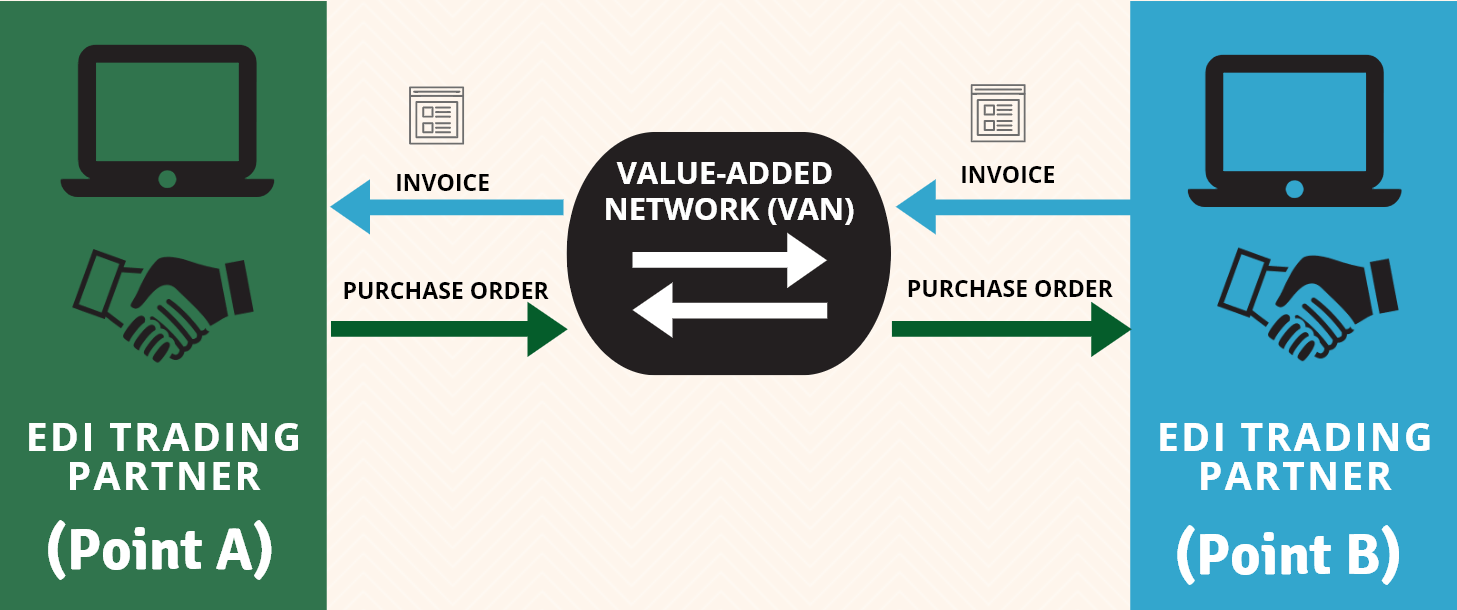
Value-Added Network (VAN): A VAN is a third-party provider that acts as an intermediary between trading partners to securely transmit EDI documents. Companies can use a VAN to send and receive EDI 860 documents, as well as other EDI transactions.

AS2: AS2 is a secure and reliable protocol for exchanging EDI documents over the Internet. With AS2, companies can send and receive EDI 860 documents directly with their trading partners without the need for a VAN.

FTP/SFTP: FTP (File Transfer Protocol) and SFTP (Secure File Transfer Protocol) are file transfer protocols that can be used to exchange EDI documents. Companies can set up an FTP/SFTP server to send and receive EDI 860 documents with their trading partners.

Which EDIFACT Message Corresponds to ANSI X12 EDI 860?

The ANSI X12 EDI 860 document is mostly used in the United States to transmit purchase order change requests. The equivalent EDIFACT message is the ORDCHG – Purchase Order Change Request Message, which is part of the ORDERS (Purchase Order) message family.

In the same way as EDI 860, ORDCHG also allows buyers to request changes to a previously sent purchase order, such as changes to quantity, delivery date, or item description. Like the X12 860, the EDIFACT ORDCHG message provides a structured way for buyers and sellers to communicate changes to purchase orders in a standardized format.

It’s worth noting that while there are similarities between the X12 860 and the EDIFACT ORDCHG message, there are also some differences in the way the two standards handle certain data elements.

What are the Benefits of EDI 860 for Business Partners?

Companies use the EDI 860 transaction set for several reasons, including:

Efficient Order Management: The EDI 860 allows companies quickly and accurately process changes to purchase orders, reducing the time and effort required to manage order changes manually.

Improved Collaboration: The use of EDI 860 promotes collaboration between trading partners by providing a standardized format for communicating changes to purchase orders. This helps to improve communication, reduce errors, and enhance overall efficiency in the supply chain.

Reduced Costs: The automation of purchase order changes through the use of EDI 860 can help companies reduce costs associated with manual processing, such as data entry, paper handling, and processing errors.

Improved Accuracy: The standardized format of the EDI 860 helps to reduce errors and improve accuracy in the processing of purchase order changes. This can help to reduce the risk of delays, rework, and other issues that can arise from errors in the order management process.

Competitive Advantage: Companies using the EDI 860 transaction can gain a competitive advantage by improving their ability to manage orders efficiently, collaborate effectively with trading partners, and reduce costs associated with order management.

Overall, the use of the EDI 860 document can help companies to improve their order management processes, enhance collaboration with trading partners, and gain a competitive advantage in their industry.

Conclusion: EDI Communication

By utilizing the EDI 860 and other related transaction sets, companies can streamline their order cycle and improve communication efficiency, reducing manual data entry, errors, and costs. Overall, EDI 860 plays a crucial role in the EDI process, enabling businesses to communicate quickly and efficiently with their trading partners.

Please contact us if you would like more information, a demo, or a quote.

Free EDI Integration Consultation


May 23, 2023/0 Comments
https://www.edi2xml.com/wp-content/uploads/2023/05/EDI2XML-EDI-860.jpg 675 1200 Tatyana Vandich https://www.edi2xml.com/wp-content/uploads/2024/08/edi2xml.com-EDI2XML-company-logo.png Tatyana Vandich2023-05-23 12:49:032025-03-25 15:10:14What Is EDI 860 Purchase Order Change Request – Buyer Initiated

All You Need to Know About EDI X12 404 Rail Carrier Shipment Information

Blog

Electronic Data Interchange (EDI) has revolutionized the way businesses exchange information and collaborate with their business partners. EDI 404 (X12) – Rail Carrier Shipment Information is a transaction set that enables rail carriers to exchange shipment information with their trading partners.

In this article, we will explore EDI X12 404 Rail Carrier Shipment Information in detail, including its purpose, format, segments, and benefits.

What is an EDI X12 404 Rail Carrier Shipment Information?

The Rail Carrier Shipment Information EDI 404 is an electronic document or transaction set that allows rail carriers and their trading partners to exchange shipment information. This transaction set is part of the Electronic Data Interchange (EDI) X12 standard.

EDI 404 is a transaction set that is specifically designed for rail transportation companies. It is not used in other modes of transportation, such as trucking or air transportation.

Purpose of EDI 404 (X12) Rail Carrier Shipment Information

The primary purpose of EDI 404 is to facilitate the exchange of rail carrier shipment information between trading partners. EDI 404 provides detailed information about a shipment that is being transported by rail, including its origin, destination, routing, and other related details.

According to X12, chartered by the American National Standards Institute the EDI 404 transaction set can be used to transmit rail carrier bill of lading information to the railroad.

This is the initial shipment order between the shipper and the rail carrier and can be used as an equipment release notice and/or legal bill of lading.

The EDI 404 document is particularly useful for companies that need to track and manage their shipments efficiently.

By receiving shipment information electronically in a standardized format, companies can automate many of their business processes and reduce manual data entry errors. This can help to improve efficiency, reduce costs, and increase overall productivity.

EDI 404 (X12) Segments and Data Elements

The EDI X12 404 Rail Carrier Shipment Information transaction set transmits various data elements related to a rail shipment. The transaction set follows a standard format that includes segments, data elements, and composite data structures. The segments are the building blocks of the transaction set and contain specific information about the shipment.

The data elements provide additional details within each segment, while the composite data structures combine multiple data elements into a single data element for easier processing.

Here are some examples of the data that can be transmitted through the EDI X12 404 transaction set according to BNSF 404 Implementation Guideline.

Segments and Data Elements:

  • ISA Interchange Control Header
  • GS Beginning Segment.
  • ST Transaction Set Header
  • ZC1 Beginning Segment for Data Correction or Change
  • BX General Shipment Information
  • BNX Rail Shipment Information
  • M3 Release Information
  • N9 Reference Number
  • CM Cargo Manifest.
  • M1 Insurance Details.
  • DTM Date/Time Reference
  • N7 Equipment Details (N7 Loop)
  • EM Equipment Characteristics
  • VC Motor Vehicle Control (N7/VC Loop)
  • N1 Name (N7/VC/N1 Loop)
  • N3 Address Information.
  • N4 Geographic Information.
  • H3 Special Handling Instructions
  • M7 Seal Numbers
  • N5 Car Ordered
  • IC Intermodal Chassis Equipment
  • IM Intermodal Information
  • M12 In-Bond Identifying Information
  • EI Empty Car Disposition – Pended Destination Consignee (E1 Loop)
  • E4 Empty Car Disposition – Pended Destination City
  • E5 Empty Car Disposition – Pending Destination Route
  • PI Price Authority Identification
  • GA Canadian Grain Information
  • REF Reference Identification (REF Loop)
  • N10 Quantity and Description
  • N1 Name
  • N3 Address Information
  • N4 Geographical Information
  • NA Cross Reference Equipment
  • F9 Origin Station
  • D9 Destination Station
  • N1 Name (N1 Loop)
  • N2 Additional Name Information.
  • N3 Address Information
  • N4 Geographic Information
  • REF Reference Identification
  • PER Administrative Communications Contact
  • BL Billing Information
  • S1 Stop Off Name (S1 Loop)
  • S2 Stop Off Address
  • S9 Stop Off Station
  • N1 Name (S1/N1 Loop)
  • N2 Additional Name Information
  • N3 Address Information
  • N4 Geographic Location
  • PER Administrative Communications Contact
  • R2 Route Information
  • R9 Route Code
  • E1 Empty Car Disposition Pended Destination Consignee (E1 Loop)
  • E4 Empty Pended Destination Pended Destination City
  • E5 Empty Car Disposition Pended Destination Route
  • PI Price Authority Information
  • H3 Special Handling Instructions
  • PS Protective Service Instructions
  • LX Assigned Number (LX Loop)
  • L5 Descriptions, Marks,and Numbers
  • L0 Line Item, Quantity, and Weight (L0 Loop)
  • MEA Measurements
  • L1 Rate and Charges
  • PI Price Authority Information
  • X1 Export License
  • T1 Transit Inbound Origin (T1 Loop)
  • T2 Transit Inbound Lading
  • T3 Transit Inbound Route
  • T6 Transit Inbound Rates
  • T8 Free Form Transit Data
  • L3 Total Weight and Charges
  • LS Loop Header
  • LH1 Hazardous ID Information (LH1 Loop)
  • LH2 Hazardous Classification
  • LH3 Proper Shipping Name
  • LFH Free Form Haz Mat Information
  • LEP EPA Required Data
  • LH4 Canadian Hazardous Requirements
  • LHT Transborder Hazardous Requirements
  • LHR Haz Mat ID Reference Numbers
  • PER Administrative Communications Contact
  • LE Loop Trailer
  • PER Admin. Communication Contact (Haz Mat Shipments Only)
  • LH2 Hazardous Classification Information
  • LHR Haz Mat ID Reference Numbers (Haz Mat Shipments Only)
  • LH6 Hazardous Certification
  • XH Pro Forma B13 Information
  • X7 Customs Information
  • SE Transaction Set Trailer
  • GE Functional Group Trailer
  • IEA Interchange Control Trailer

It’s important to note that each rail carrier may have slightly different requirements for their EDI 404 transaction set. Therefore, it’s essential to use the implementation guideline provided by the specific rail carrier that you are working with to ensure that your data is properly formatted and transmitted.

Implementation Guideline will provide you with the specific data elements, segments, and codes that rail carriers require for the EDI 404 transaction set.

It can also provide guidance on the technical aspects of transmitting the data, such as the file format, transmission protocols, and testing procedures.

EDI 404 Rail Carrier Shipment Information Document Exchange Workflow

In order to use EDI X12 404, both the shipper and the carrier must have the necessary technology and systems in place to support the transaction set.

Here’s a possible workflow for the exchange of an EDI 404 Rail Carrier Shipment Information Document:

EDI 404 Preparation

The shipper (sender) prepares the shipment and creates an EDI 404 document with the relevant information, such as the shipper and consignee names and addresses, the description of the goods, the weight and dimensions, the origin and destination locations, and the carrier information. The document is formatted according to the EDI X12 standard and the specific requirements of the carrier using sender’s internal system or a third-party EDI services.

EDI 404 Transmission

There are several methods to transfer an EDI document to a business partner. Here are some of the most common methods:

  • Value-Added Network (VAN): This is a third-party network that acts as a middleman between trading partners to transmit EDI documents securely. The VAN providers charge a fee for their services.
  • AS2 (Applicability Statement 2): This is a popular protocol for transmitting EDI documents over the internet using encryption and digital certificates. AS2 is a secure and reliable method for EDI document exchange.
  • FTP (File Transfer Protocol): FTP is a standard protocol used to transfer files over the internet. EDI documents can be transmitted using FTP by configuring a server and client for file exchange.
  • Web-based EDI: (REST API) Some EDI providers offer web-based solutions that allow companies to exchange EDI documents through a web interface. This method allows you to quickly start exchanging EDI documents with your business partners.
  • Direct connection: EDI documents can be transmitted directly between two systems using a point-to-point connection. This method requires setting up a dedicated connection between the two systems.

EDI 404 Receive, Validation, and Acknowledgment

The carrier receives the EDI 404 document, validates its syntax and structure, and processes it through their EDI system.

Once the receiver has successfully received and validated the EDI 404 document, they should send back an acknowledgment message (EDI 997 document) to the sender to confirm the receipt and acceptance of the EDI 404 document.

The acknowledgment may include a unique transaction ID, the date and time of receipt, and any relevant status codes or error messages. The sender may use this information to track the progress of the shipment and to resolve any issues that may arise.


EDI 404 Processing

The carrier processes the shipment based on the information provided in the EDI 404 document, such as scheduling the pickup, assigning a rail car, routing the shipment, and generating the necessary documents and labels.

The carrier may also update its internal systems and communicate with other parties involved in the shipment, such as the consignee, the customs authorities, or other carriers in case of intermodal transportation.

Specific EDI Documents for the Rail Industry

In addition to the EDI 404 discussed in this article, here are some of the most commonly used EDI X12 transaction sets in the railroad industry:

410 Rail Carrier Freight Details and Invoice: This transaction set is used to transmit billing and payment information related to rail transportation services.

417 Rail Carrier Waybill Interchange: This transaction set is used to exchange waybill information between rail carriers, including origin and destination locations, equipment requirements, and shipment details.

418 Rail Advance Interchange Consist: This transaction set is used to provide advance notice of railcar movements between rail carriers.

419 Advance Car Disposition: This transaction set is used to provide advance notice of railcar movements to car owners, lessees, or shippers.

422 Shipper’s Car Order: This transaction set is used by shippers to order railcars from the rail carrier.

423 Rail Industrial Switch List: This transaction set is used to provide information about railcar movements within an industrial facility.

424 Rail Carrier Services Settlement: This transaction set is used to provide settlement information for rail transportation services.

Note that this list is not exhaustive, and there may be other EDI X12 transaction sets used in the rail industry depending on the specific needs of the trading partners involved.

While the EDI transactions listed above are unique to rail transportation, there are other EDI transaction sets that are used in the transportation industry more broadly, such as EDI 204 (Motor Carrier Load Tender), EDI 210 (Motor Carrier Freight Details and Invoice), and EDI 214 (Transportation Carrier Shipment Status Message).

You can find out more information about EDI documents for transportation or other industries in the article EDI for Specific Industries.

Benefits of EDI/X12 404

EDI X12 404 offers several benefits to rail carriers and their trading partners. Some of the key benefits include:

  1. Improved Efficiency: By automating the exchange of shipment information, rail carriers can improve their operational efficiency and reduce errors and delays in the shipment process.
  2. Cost Savings: EDI X12 404 can help reduce costs associated with paper-based processes, such as printing, mailing, and storage.
  3. Enhanced Visibility: With EDI X12 404, rail carriers and their trading partners can gain real-time visibility into shipment status updates, equipment and routing details, and transportation charges.
  4. Faster Payments: EDI X12 404 can help accelerate the invoicing and payment process by providing accurate and timely information about transportation charges.

EDI X12 404 Sample File

This is an example of an EDI file from BNSF 404 Implementation Guideline “USING ASC X12 TRANSACTION SET 404 VERSION 004010 10/01/98”

Sample EDI/X12 404

Minimal data requirements for a carload bill of lading

  • GS*SR*CUSTOMERX*BNSF*20230101*1520*2315*X*004010
  • ST*404*4567
  • BX*00*R*PP**BNSF*L*B*N
  • BNX*A
  • M3*B*20230101*1520*CT
  • N9*RP*AWI233**20230101*1520*CT
  • N9*BM*HGP2684**20230101*1520*CT
  • N7*ATSF*111598*195320*N*******RR
  • F9** CHICAGO *IL
  • D9**BOSTON*MA
  • N1*CN*CUSTOMER X
  • N4*BOSTON*MA
  • N1*SH*ABC CUSTOMER
  • N4* BOSTON*MA
  • PER*NT*JEAN DUPONT*TE*098-765-4321
  • R2*BNSF*S****R
  • LX*1
  • L5*1* WALLBOARD *1301210*T
  • L0*1*******1*CLD
  • PI*CT*12345***BNSF*BNC
  • SE*21*2315
  • GE*1*2315
  1. GS*SR*CUSTOMERX*BNSF*20230101*1520*1315*X*004010 – This line contains the GS segment which is a functional group header. It identifies the sender (CUSTOMERX) and the receiver (BNSF), as well as the date and time (20230101 15:20) and the version of the EDI standard used (004010).
  2. ST*404*4567 – This line contains the ST segment which is a transaction set header. It identifies the type of document (404) and a unique control number (4567) assigned by the sender.
  3. BX*00*R*PP**BNSF*L*B*N -This line contains the BX segment which indicates the beginning of a transaction set. It specifies the version of the EDI standard used (00) and General Shipment Information, including the type of transaction (R for railroad) and the carrier (BNSF).
  4. BNX*A – This line contains the BNX segment which is used to identify and track the progress of the shipment.
  5. M3*B*20230101*1520*CT – This line contains the M3 segment which provides information about the shipment, including the date and time it was shipped (20230101 15:20) (CT for central time).
  6. N9*RP*AWI233**20230101*1520*CT – This line contains the N9 segment which identifies a reference number (AWI233) for the shipment and provides the date and time it was shipped (20230101 15:20)
  7. N9*BM*HGR2088**20230101*1520*CT – This line contains the N9 segment which identifies a reference number (HGR2088) BM – bill of lading number and provides the date and time it was shipped (20230101 15:20)
  8. N7*ATSF*111598*195320*N*******RR – This line contains the N7 segment which provides information about the equipment used to transport the shipment, including the the equipment number (111598), and the type of equipment (RR – for a railcar).
  9. F9**CHICAGO*IL – This line contains the F9 segment which provides information about the origin of the shipment, including the city and state (Chicago, Illinois)
  10. D9**BOSTON*MA – This line contains the D9 segment which provides information about the destination of the shipment, including the city and state (Boston, Massachusetts)
  11. N1*CN*CUSTOMER X– This line contains the N1 segment which identifies a party involved in the shipment (in this case, the consignee) and provides their name (CUSTOMER X).
  12. N4* BOSTON*MA – This line contains the N4 segment which provides information about the Geographic location of the consignee (in this case, Boston, Massachusetts).
  13. N1*SH*ABC CUSTOMER – This line contains the N1 segment which identifies a party involved in the shipment (in this case, the shipper – SH) and provides their name (ABC CUSTOMER).
  14. N4* BOSTON*MA – This line contains the N4 segment which provides information about the location of the shipper (in this case, Boston, Massachusetts).
  15. PER*NT*JEAN DUPONT*TE*098-765-4321– This line contains the PER segment which provides contact information for a person or department involved in the shipment. In this case, it is Jean Dupont, and its phone number (TE) is 098-765-4321.
  16. R2*BNSF*S****R – This line contains the R2 segment which provides Route Information and  the equipment used to transport the shipment, including the carrier (BNSF) and the type of equipment (R for a railcar).
  17. LX*1 – This line contains the LX segment which identifies an Assigned Number.
  18. L5*1*WALLBOARD*1301210*T – This line contains the L5 segment which provides information about the product being shipped (descriptions, marks, and Numbers) in this case, WALLBOARD. T = Standard Transportation Commodity Code (STCC)
  19. L0*1*******1*CLD – This line contains the L0 segment which provides information about Line Item, Quantity and Weight. CLD – Car Load, Rail.
  20. PI*CT*12345***BNSF*BNC – Price Authority Information. CT – contract, BNSF – the carrier.
  21. SE*21*2315 – This line contains the SE segment which is a transaction set trailer. It specifies the number of segments in the transaction set (21) and a unique control number (2315) assigned by the sender.
  22. GE*1*2315 – This line contains the GE segment which is a functional group trailer. It specifies the number of transaction sets in the functional group (1) and a unique control number (2315) assigned by the sender.

EDI 404 Document for Rail Carrier Companies

Many companies in the transportation industry use EDI X12 404 Rail Carrier Shipment Information to automate the exchange of shipment information with their trading partners. Here are a few examples of companies that use this transaction set:

  1. Union Pacific Railroad Union Pacific Railroad is one of the largest freight railroad networks in North America.
  2. Canadian National Railway Canadian National Railway is a transportation company that operates a comprehensive rail network in Canada and the United States.
  3. Norfolk Southern Corporation Norfolk Southern is a transportation company that operates a rail network in the eastern United States.
  4. BNSF Railway BNSF Railway is a freight transportation company that operates a rail network in North America.
  5. CSX Transportation CSX Transportation is a transportation company that operates a rail network in the eastern United States.

These are just a few examples of companies that use EDI X12 404 Rail Carrier Shipment Information. Many other transportation companies also use this transaction set to automate the exchange of critical shipment data with their trading partners.

Conclusion: EDI X12 404 Rail Carrier Shipment Information

In conclusion, understanding EDI X12 404 Rail Carrier Shipment Information is crucial for businesses operating in the logistics industry. As we have seen, it streamlines communication between rail carriers and shippers, making the transportation of goods more efficient and cost-effective.

At our company, we have many years of experience in EDI integration and can provide free EDI consultation to businesses looking to implement EDI X12 404 or any other EDI document. We understand the importance of staying up-to-date with industry developments and are committed to helping our clients achieve success in their logistics operations.

So if you’re looking to streamline your logistics processes and improve communication with your rail carriers, don’t hesitate to reach out to us for a consultation. We look forward to working with you and helping your business thrive in the ever-evolving world of logistics.

Free EDI Consultation
March 29, 2023/0 Comments
https://www.edi2xml.com/wp-content/uploads/2023/03/EDI2XML-EDI-404.jpg 675 1200 Tatyana Vandich https://www.edi2xml.com/wp-content/uploads/2024/08/edi2xml.com-EDI2XML-company-logo.png Tatyana Vandich2023-03-29 17:08:152025-11-28 12:12:04All You Need to Know About EDI X12 404 Rail Carrier Shipment Information

EDI 832 Price/Sales Catalog: Understanding its Importance in Supply Chain Management

Blog

This article will cover one of the critical EDI documents in Supply Chain Management, the EDI 832 Price/Sales Catalog.

What is EDI 832 Price/Sales Catalog?

The EDI 832 formally known as EDI X12 832 Price/Sales Catalog Transaction Set is a critical document that is used to provide product information and pricing data; it is sent from suppliers to buyers. It contains detailed information about the products, including product description, pricing, and other relevant details.

The EDI 832 document is used in various industries, including retail, wholesale, and manufacturing. The document is particularly useful for suppliers who sell a large number of products and need to provide customers with up-to-date information about their products and pricing.

EDI 832 Price/Sales Catalog Business Flow

The EDI 832 Price/Sales Catalog document flow typically involves the following steps:

  • Creation. The supplier creates the EDI 832 Price/Sales Catalog document, which contains information about their products, pricing, and other relevant details.
  • Transmission. The EDI 832 Price/Sales Catalog document is transmitted electronically from the supplier to the buyer.
  • Processing. The buyer receives the EDI 832 and processes the information to update their internal business systems, such as their ERP, or inventory management system.
  • Update. The supplier updates the EDI 832 every pre-defined period with any changes to product information or pricing, and transmits the updated document to the customer.
  • Usage. The buyer uses the information in the EDI 832 Price/Sales Catalog document to make purchasing decisions and manage their supply chain operations.

This document flow ensures that both the supplier and customer have access to the most up-to-date information, which helps to improve the accuracy and efficiency of supply chain operations.


EDI 832: Related EDI Transactions Process Workflow

The EDI 832 Price/Sales Catalog process workflow typically involves several related EDI transactions, including the following:

Price/Sales Catalog (EDI 832): The document includes product description, pricing information, and other relevant details.

Purchase Order (EDI 850). The EDI 850 transaction is used to place an order with a supplier. Typical purchase orders include information about the products, quantities, and delivery dates.

Advance Ship Notice (EDI 856). The EDI 856 transaction is used to provide advance notice of a shipment, including information about the items being shipped, the shipping method, and the expected delivery date.

Invoice (EDI 810). The invoice typically includes information about the products being invoiced, the quantities being invoiced, and the total amount due.

These transactions work together to support the complete order-to-payment process, allowing companies to exchange business transactions electronically and streamline their operations.

Key Data Elements in EDI 832

The key data elements in EDI 832 Price/Sales Catalog document include:

Product Identification: This includes information such as the product code, product name, and product description.

Pricing Information: This includes information such as the unit price, discount information, and any applicable taxes or fees.

Availability Information: This includes information about the availability of the product, including the expected delivery date, lead time, and minimum order quantity.

Product Characteristics: This includes information such as the product dimensions, weight, and any relevant specifications.

Product Classification: This includes information about the product’s classification, such as its category, subcategory, and any relevant product codes.

These key data elements provide the customer with the information they need to make informed purchasing decisions and manage their supply chain operations effectively.

Moreover, since the information is transmitted in a standardized format, it can be easily processed and understood by both suppliers and customers, reducing the likelihood of misunderstandings or errors.


USEFUL READING: Business Automation: How to Choose the Right EDI Solution


EDI 832 Price/Sales Catalog –Standards

The EDI 832 price/sales catalog uses the EDI ANSI X12 standard. The ANSI X12 standard is widely used for EDI transactions in the US and North America.

The analog of the X12 EDI 832 Price/Sales Catalog transaction set in the EDIFACT PRICAT (Price Catalog) message. EDIFACT Standard is an international standard that is used for Electronic Data Interchange (EDI) transactions worldwide but is particularly popular in Europe.

Both the EDIFACT PRICAT message and the X12 EDI 832 document are used to exchange product and pricing information between suppliers and customers. Both standards ensure that the information is transmitted in a standardized format.

EDI 832 Price/Sales Catalog – Structure

The structure of the EDI 832 Price/Sales Catalog document typically includes the following elements:

Header: The header contains information about the sender and receiver of the document, as well as the date and time it was transmitted.

Product Information: This section contains detailed information about the products, including product descriptions, pricing, and other relevant details.

Footer: The footer contains a summary of the information in the EDI 832 Price/Sales Catalog document, as well as any relevant checksums or error codes.

As stated above, the EDI 832 Price/Sales Catalog document adheres to EDI standards, which ensures that the information is transmitted in a standardized format that can be easily processed and understood by both suppliers and buyers. This helps to reduce the likelihood of misunderstandings or errors and ensures that the information is transmitted accurately and efficiently.

IMPORTANT NOTE: The EDI X12 standard does not have the capability to transmit images. The EDI X12 832 Price/Sales Catalog is used to exchange product catalog data, including product descriptions, pricing information, and item specifications. It is a text-based format that is used to transmit data in a standardized format, but it does not have the capability to transmit images or other binary data.

EDI 832 Example

ISA*00*          *00*          *12*4506813009     *ZZ*RECEIVER       *220417*1132*U*00401*700005483*0*P*>~

GS*SC*9372915040*RECEIVER*20220417*113200*700005483*X*004010~

ST*832*1013327~

BCT*RC*126462263313********02~

REF*IA*009824~

DTM*007*20210423~

CUR*SE*CAD~

LIN**VA*D70GBTD06 MAG0D030*EN*8051730951638*CM*410*VN*D70GBTD06 MAG0D030*SM*1~

REF*PG~

REF*DP~

PID*F*08***JACKET****EN~

PID*F*PG***F21~

PID*F*SC****ME~

PID*F*SIZ***S~

CTP**RES*1495*1*EA~

CTP**WHL*598~

LIN**VA*D70GBTD06 MAG0D030*EN*8051730951645*CM*410*VN*D70GBTD06 MAG0D030*SM*1~

REF*PG~

REF*DP~

PID*F*08***JACKET****EN~

PID*F*PG***F21~

PID*F*SC****ME~

PID*F*SIZ***M~

CTP**RES*1495*1*EA~

CTP**WHL*598~

LIN**VA*D70GBTD06 MAG0D030*EN*8051730951652*CM*410*VN*D70GBTD06 MAG0D030*SM*1~

REF*PG~

REF*DP~

PID*F*08***JACKET****EN~

PID*F*PG***F21~

PID*F*SC****ME~

PID*F*SIZ***L~

CTP**RES*1495*1*EA~

CTP**WHL*598~

LIN**VA*D70GBTD06 MAG0D030*EN*8051730951669*CM*410*VN*D70GBTD06 MAG0D030*SM*1~

REF*PG~

REF*DP~

PID*F*08***JACKET****EN~

PID*F*PG***F21~

PID*F*SC****ME~

PID*F*SIZ***XL~

CTP**RES*1495*1*EA~

CTP**WHL*598~

LIN**VA*D70GBTD06 MAG0D030*EN*8051730951676*CM*410*VN*D70GBTD06 MAG0D030*SM*1~

REF*PG~

REF*DP~

PID*F*08***JACKET****EN~

PID*F*PG***F21~

PID*F*SC****ME~

PID*F*SIZ***XXL~

CTP**RES*1495*1*EA~

CTP**WHL*598~

CTT*5~

SE*52*1013327~

GE*1*700005483~

IEA*1*700005483~

How Supply Chain Management Benefits From EDI 832 Price/Sales Catalogs

The EDI 832 document helps buyers to manage their supply chain operations more effectively by providing them with accurate and up-to-date information about the products they purchase. This information can be used to update internal ERP system, such as NetSuite, SAP, Dynamics 365, Salesforce, or other which helps to improve the efficiency of supply chain operations.

EDI 832 Price/Sales Catalogs
 

Furthermore, both trading partners benefit from the following:

Reduce time, effort, and errors

By using the EDI 832 Price/Sales Catalog, companies save time and effort when processing orders and making changes to product information. Using the EDI 832 eliminates the need for manual data entry, which can be time-consuming and error-prone.

Additionally, since the information is in a standardized format, (ex. X12 or EDIFACT) it can be easily integrated into internal business systems such as ERP, reducing the chance of misunderstandings or errors.

Accuracy and efficiency of supply chain

Another important benefit of EDI 832 Price/Sales Catalog is that it helps to improve the accuracy and efficiency of supply chain operations. By providing real-time information about product availability, pricing, and other relevant details, it helps to ensure that orders are processed quickly and accurately, reducing the risk of delays or mistakes. Moreover, since the information is updated regularly, it ensures that suppliers and customers always have access to the most up-to-date information, which helps to improve the overall efficiency of supply chain operations.

What is the Best Way to Exchange EDI 832?

If you’re looking to start exchanging EDI 832 Price/Sales Catalogs with your trading partners, consider working with a fully managed EDI services provider. With a managed EDI solution, you can streamline your EDI operations and minimize the time and resources required to manage your EDI transactions.

A fully managed EDI solution can handle all aspects of EDI processing, including data mapping, EDI translation, error resolution, and communication with your trading partners. You can focus on your core business while the EDI service provider takes care of the technical details of EDI.

By working with an EDI provider such as EDI2XML, you can enjoy the benefits of EDI 832 without having to invest in software or IT infrastructure. Plus, with experienced EDI professionals handling your EDI operations, you can be confident that your EDI transactions are accurate, timely, and secure.

In conclusion, starting to exchange EDI 832 with a fully managed EDI services provider is a smart way to streamline your EDI operations and ensure that your EDI transactions are handled efficiently and effectively.

Contact us today for your free EDI consultation!


February 27, 2023/0 Comments
https://www.edi2xml.com/wp-content/uploads/2023/02/EDI2XML-EDI-832.png 675 1200 Tatyana Vandich https://www.edi2xml.com/wp-content/uploads/2024/08/edi2xml.com-EDI2XML-company-logo.png Tatyana Vandich2023-02-27 12:43:262024-10-17 13:17:26EDI 832 Price/Sales Catalog: Understanding its Importance in Supply Chain Management

How Do Companies Send EDI Files?

Blog

What is EDI? Explain Electronic Data Interchange (EDI) and Its Role in B2B Automation

The Electronic Data Interchange (EDI) standard was developed by the American National Standards Institute (ANSI). It allows companies to exchange information about products, services, orders, and payments electronically in a standardized format.

Therefore, EDI is a technology that replaces the exchange of paper/file information between business partners with an automated exchange between their computer systems.

EDI is used by many different types of organizations, including banks, insurance companies, healthcare providers, manufacturers, and retailers.

EDI automation
 

List the Top Benefits of EDI for B2B Communication and Supply Chain Efficiency

EDI (Electronic Data Interchange) implementation is a great way for automating business-to-business (B2B) processes. EDI allows companies to exchange business documents such as purchase orders, invoices, etc. in a standardized electronic format, eliminating the need for manual data entry and reducing the risk of errors.

By automating these processes, EDI can help companies to improve efficiency, reduce costs, and increase accuracy in their B2B operations. Furthermore, implementing EDI can help companies to streamline their supply chain and improve communication with business partners.

Here are some key advantages:

1. Efficiency and Speed:

Faster Transactions: EDI enables the exchange of business documents in a standardized electronic format, reducing the time required for processing orders, invoices, and other documents.

Real-Time Processing: EDI facilitates real-time data exchange, minimizing delays associated with traditional paper-based methods.

2. Accuracy and Error Reduction:

Automated Data Entry: With EDI, data is entered automatically into the recipient’s system, reducing the likelihood of manual errors associated with manual data entry.

Data Validation: The EDI 997 (or EDI Functional Acknowledgement), ensures that data is accurate and ensuring the integrity and reliability of EDI transactions.

3. Cost Savings:

Reduced Paper and Printing Costs: By eliminating the need for paper documents, printing, and manual handling, EDI helps businesses save on material and operational costs.

Lower Administrative Costs: Automation of document processing reduces the need for manual intervention, leading to cost savings in terms of labor and resources.

4. Enhanced Visibility and Tracking:

Transaction Visibility: Businesses can track the status of transactions in real-time, providing better visibility into the supply chain and allowing for proactive management of processes.

Audit Trails: EDI systems often maintain detailed audit trails, which can be valuable for compliance purposes and resolving disputes.

5. Improved Customer Relationships:

Faster Response Times: Quicker order processing and communication lead to faster response times, enhancing overall customer satisfaction.

Reduced Errors: Fewer errors in order fulfillment and invoicing contribute to positive customer experiences.

6. Compliance with Industry Standards:

Regulatory Compliance: EDI often adheres to industry-specific standards and regulations, ensuring that businesses comply with relevant requirements in their sector.

7. Environmental Impact:

Reduced Environmental Footprint: The move from paper-based to electronic transactions contributes to environmental sustainability by reducing paper usage and waste.

In summary, EDI in B2B communication offers a range of benefits, including increased efficiency, accuracy, cost savings, security, and improved relationships with trading partners. It has become an integral part of modern supply chain management and business operations.

How to Automate B2B Processes with EDI: Step‑by‑Step Guide

If your company decides to implement EDI in order to exchange EDI files with your business partners, there are several important parameters to help in this decision:

1. Compare EDI Standards (X12 vs. EDIFACT vs. HL7 vs. RosettaNet) for Your Industry

The EDI standard prescribes mandatory and optional information that must be contained in each document, as well as established rules for the structure of the document.

In most cases, an EDI standard is selected based on the location of the company or its industry. It is more common in North America to use the X12 standard. European Union companies mostly use EDIFACT. HL7 is a standard used for processing medical data. RosettaNet is used in the electronics and semiconductor industry.

These articles can help you learn more about standards:

  • ANSI ASC X12 Standards Overview
  • What is EDIFACT? | UN / EDIFACT standard overview
  • Introduction to HL7 Standards (Health Level 7)
  • RosettaNet and B2B EDI Integration: All you need to know

2. What Kind of EDI Documents Will You Exchange with Your Business Partner? 

Typically, large companies dictate which EDI documents they require. Thus, if your business partner requires the exchange of documents in electronic format, most likely he already has a specific list of documents. An EDI document typically contains the same information as a paper document.

The following are some of the main documents that are exchanged electronically:

  • Invoice (EDI810)
  • Purchase Order (EDI 850)
  • Purchase Order Acknowledgment (EDI855)
  • Advanced Ship Notice (ASN) /Manifest (EDI 856)

However, EDI is not limited to business data related to trade but covers all areas such as medicine (for example, laboratory test results), transportation (container information), insurance, etc.

Take a look at the full list of EDI documents that you can exchange with your business partners. List of EDI documents in X12 standard and EDIFACT.

3. Evaluate EDI Communication Protocols: FTP, SFTP, AS2, and VAN Explained

Unlike an EDI standard or a list of EDI documents that your trading partner may require you to comply with, you will most likely be able to choose which EDI communication protocol you will use.

One of the most critical aspects of exchanging EDI documents is the way information is transferred. Thus, you need to decide how you will send and receive EDI files.

There are several different methods for sending EDI files. Here we will take a closer look at the most frequently used EDI protocols: FTP and SFTP, AS2 and VAN.

What is EDI Communication Protocol?

EDI communication protocols are the methods and technologies used to send and receive electronic data interchange messages. They are used to transfer data between businesses.

EDI Direct Connection (Point-to-Point Connection)

Direct connection allows you to transfer your EDI data directly from your computer to the computer of your business partner. A direct EDI connection can be made via VPN (Virtual Private Network), FTP (File Transfer Protocol), SFTP (Secure File Transfer Protocol), and AS2, which encrypts data before it is sent over the Internet.

EDI-communication
 

Compare Secure EDI File Transfer Methods: FTP vs. SFTP in Practice

FTP/SFTP – File Transfer Protocol/Secure File Transfer Protocol. In order to exchange EDI documents, businesses use these file transfer protocols to connect with their partners over the Internet.

There are a lot of benefits to using SFTP for transferring encrypted files since it is an easy-to-use protocol. Encryption calculations and public/private keys protect data transferred between the SFTP server and the client. The combination of these two elements provides robust protection known as public-key authentication. It is also possible for users to authenticate transmissions using an SSH key or a password.

AS2 (Applicability Statement 2) for EDI Communication

By encrypting EDI data and using digital certificates, AS2 provides a secure method of exchanging documents over the Internet.

The AS2 protocol has become widely adopted and implemented because of the internet’s popularity and HTTP’s leveraging.

AS2 uses a secure HTTPS connection and encrypts messages. The AS2 protocol allows enterprises to exchange EDI data in real-time and directly between their systems.


Walmart was one of the first companies to adopt AS2 for EDI communications. All of its suppliers were required to use the same protocol.


VAN (Value Added Network)

VANs (value-added networks) are private, hosted services that are designed to provide companies with a secure way to exchange EDI information with their business partners.

VAN can be compared to a “post office” where business partners can collect and sort incoming EDI documents.


It is estimated that only a small number of businesses currently use VANs. It is because of the low cost of the Internet and the level of security that can be achieved using Internet communication protocols. Point-to-point communications have become the norm for most of the “big players” in retail.

Conclusion: How Do Companies Send EDI Files? 

Does your partner require an EDI document exchange?

If you do not know where to start, don’t hesitate to get in touch with us. Our EDI experts will be happy to help you make the right decision and answer all your questions.

Free IT Consultation
December 5, 2022
https://www.edi2xml.com/wp-content/uploads/2022/12/EDI-Files.png 675 1200 Tatyana Vandich https://www.edi2xml.com/wp-content/uploads/2024/08/edi2xml.com-EDI2XML-company-logo.png Tatyana Vandich2022-12-05 09:17:422025-04-22 13:50:53How Do Companies Send EDI Files?
Page 1 of 9123›»
Recent
  • Is EDI Required for Small Businesses? A Supplier’s Guide...June 17, 2026 - 7:02 pm
  • EDI compliance with Loblaw
    How to Meet Loblaw EDI Requirements as a Small BusinessJune 4, 2026 - 2:05 pm
  • The Infrastructure Behind Modern Commerce: Why EDI Still Matters
    EDI in E-Commerce and Retail: Why Modern Commerce Still...May 1, 2026 - 4:54 pm
  • Key Statistics on AI Use in the Workplace
    The Risks of Using Public AI Tools in Business: Data Privacy,...March 11, 2026 - 5:51 pm
  • Enterprise AI
    How to Securely Access Enterprise AI: GPT, DeepSeek &...February 20, 2026 - 3:09 pm
Popular
  • How to Quickly Connect to a Large Retailer's EDI Requirements
    How to Get EDI-Compliant Quickly For A Large RetailerNovember 21, 2025 - 4:29 pm
  • EDI-as-a-services
    EDI Translation Software “On-premises” or “As...January 21, 2014 - 1:28 pm
  • order-automation in e-commerce
    Why Is It Crucial to Automate the E-Commerce Order Fulfillment...May 10, 2022 - 1:58 pm
  • EDI for Logistics and transportation
    EDI Integration for Efficient Transportation ManagementOctober 6, 2023 - 1:33 pm
  • information technology definitions
    Business Tech Terms DefinitionsMay 24, 2018 - 1:32 pm

Browse by tag

Amazon Amazon Integration ANSI ASC x12 ASC X12 EDI B2B EDI integration e-commerce e-commerce business e-commerce integration eCommerce eCommerce integration EDI EDI2XML EDI 850 EDI as a Service EDI Communication EDI converter EDIFACT EDI for supply chain EDI for Third-Party Logistics EDI for transportation EDI implementation EDI Integration EDI Integration Project EDI project EDI Translation EDI Web Service EDI x12 ERP Integration integration platform integration project JDE Magic xpi Magic xpi Integration platform NetSuite online store Salesforce Shopify Shopify eCommerce integration Shopify integration Supply Chain Supply Chain Management Translation Software X12 EDI XML

Subscribe to our Blog

Menu

  • Home
  • About the EDI2XML Company
  • About EDI2XML EDI Converter
  • Blog
  • Book A Free Consultation
  • Privacy Policy EDI2XML Company

Our Services

Fully Managed Integration

E-Commerce Integration

Business Systems Integration

Fully Managed EDI

EDI Web Service 

On Premises EDI 

Managed Cloud Service


Latest Blog Posts

  • Is EDI Required for Small Businesses? A Supplier’s Guide to Retail OnboardingJune 17, 2026 - 7:02 pm
  • EDI compliance with Loblaw
    How to Meet Loblaw EDI Requirements as a Small BusinessJune 4, 2026 - 2:05 pm
  • The Infrastructure Behind Modern Commerce: Why EDI Still Matters
    EDI in E-Commerce and Retail: Why Modern Commerce Still Depends on EDIMay 1, 2026 - 4:54 pm

Contact Us

400 Blvd Curé-Labelle, #304 Laval QC H7V 2S7 Canada

Contact EDI2XML Team
Phone: +1 450-681-3009
Website: https://www.edi2xml.com/

© 2000-2026 EDI2XML (by Namtek Consulting Services). All rights reserved.
  • Link to Facebook
  • Link to LinkedIn
  • Link to X
  • Link to Youtube
  • Blog
Scroll to top Scroll to top Scroll to top