
E-commerce Automation: How to Integrate NetSuite with E-Commerce Platform
Last Updated on February 11, 2025 by Tatyana Vandich
Introduction: NetSuite and E-commerce Automation
NetSuite is a cloud-based business management suite that provides companies with a wide range of tools to manage their financials, inventory, e-commerce, and customer relationships.
One of the key features of NetSuite is its ability to integrate with various e-commerce platforms.
Some examples of e-commerce platforms that integrate with NetSuite are BigCommerce, Shopify, Adobe Commerce (formerly Magento), Wix, and WooCommerce.

In addition to e-commerce platforms, NetSuite can also integrate with online marketplaces such as Amazon, eBay, AliExpress, Walmart, and Target.
Integrating NetSuite with ecommerce allows businesses to streamline online operations and improve efficiency.
This article explores various key aspects of integrating NetSuite with e-commerce platforms.
Oracle NetSuite Key Features
NetSuite offers a number of key functions, including the following:
Financial Management
NetSuite offers a range of financial management tools, including accounting, budgeting, and forecasting.
Inventory Management
NetSuite’s inventory management system allows businesses to track inventory levels, set reorder points, and generate reports.
E-commerce (SuiteCommerce)
SuiteCommerce is a fully integrated e-commerce platform that is built on top of NetSuite. It allows businesses to manage their online store, inventory, and financials from one central location.
CRM (Customer Relationship Management)
NetSuite’s CRM tools provide businesses with the ability to manage customer interactions, track sales, and generate reports.
Reporting and Analytics
NetSuite offers a variety of reporting and analytics tools, allowing businesses to access real-time data and make more informed decisions.
By integrating ecommerce with NetSuite’s wide range of features, businesses can streamline their operations and improve ecommerce efficiency.
E-commerce Automation through NetSuite Integration
The integration of e-commerce online store and NetSuite can automate several business processes and bring significant benefits to your business. Below are some examples of what processes of e-commerce store can be automated:
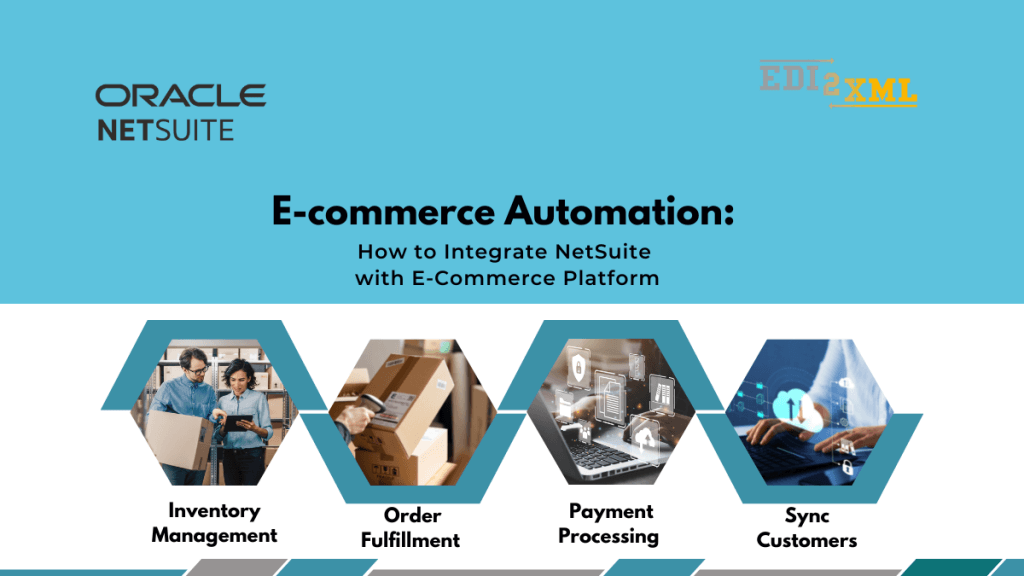
Automation of Inventory Management
By integrating your e-Commerce platform with NetSuite, inventory levels and the stock availability of your online store can be automatically updated in near real-time. As a result, you no longer have to manually enter inventory information and ensure that your e-commerce store always displays accurate inventory information.
Order Fulfillment Automation
Integrating NetSuite with an e-commerce store allows businesses to automatically process orders and update inventory levels in real-time.
Additionally, NetSuite can be integrated with shipping and logistics providers to automate shipping and order tracking. This ensures that orders are fulfilled quickly and accurately, improving customer satisfaction.

Payment Processing Automation
The integration can allow for the seamless transfer of payment information from your eCommerce platform to NetSuite. This can help to reduce errors and improve the accuracy of your financial data.
Sync Customers to NetSuite
Synchronization of customers’ data between NetSuite and your e-commerce store, includes information such as customer name, address, purchase history and more.
Financial Reporting
By integrating NetSuite with an e-commerce platform, businesses can automate financial reporting. Businesses can make better decisions and respond to market changes based on real-time data on e-commerce sales, expenses, and profits.
E-commerce Customer Management
An e-commerce platform can be integrated with NetSuite’s CRM features to automate customer management. This includes tracking customer interactions, managing customer data, and generating reports on customer behavior.
Return and Refund management
NetSuite can integrate with e-commerce platform to automate return and refund management process, making it more efficient and reducing the time and effort required for manual processing.
What E-commerce Platforms Can Be Integrated with NetSuite?
NetSuite’s integration capability is one of the key features that make it a popular choice among businesses.
Thus, NetSuite can integrate with various e-commerce platforms and applications to automate the transfer of data mentioned above.
The integration of NetSuite with e-Commerce platforms allows businesses to automate processes, improve inventory management, access real-time data, and streamline their operations. The ability to integrate with different ecommerce platforms ensures that businesses can choose the platform that best suits their needs.
Some of the most popular e-Commerce platforms that integrate with NetSuite include:
BigCommerce
BigCommerce is a leading e-commerce platform that can be integrated with NetSuite. BigCommerce allows merchants to create an online store quickly, providing them with a wide range of features and tools to manage their store, including inventory management, order fulfillment, and payment processing. It also offers options to integrate with other software solutions, such as NetSuite.
Magento
Magento is a widely used open-source e-commerce platform that can be easily integrated with NetSuite.
Magento comes with a range of features that make it an ideal platform for e-commerce businesses, including powerful marketing and analytics tools, a wide range of payment options, and the ability to create customized store designs. It is also highly scalable, allowing businesses to easily adjust and add features as their needs change.
Shopify
Shopify is a popular e-Commerce platform that can be integrated with NetSuite. Shopify provides users with an easy-to-use interface to set up an online store. It also allows users to easily connect to NetSuite and manage their product inventory and other business operations.
WooCommerce
WooCommerce is an open-source e-Commerce platform that can be integrated with NetSuite.
This integration enables businesses to efficiently manage all operations of their e-Commerce websites. WooCommerce also provides users with a range of features, including payment processing, inventory management, and analytics, that they can use to optimize their online stores.
Amazon Marketplace
Amazon is a leading e-commerce marketplace that can be integrated with NetSuite. By integrating Amazon with NetSuite, businesses can streamline their operations and make their e-commerce operations more efficient. This integration allows businesses to manage their products, orders, customers, and inventory more effectively. It also provides access to Amazon’s wide range of services, such as Amazon Payments, Amazon Prime, and Amazon Logistics.
eBay
eBay is one of the largest online marketplaces in the world. The eBay marketplace can be integrated with NetSuite. It allows business to easily connect their eBay store with their NetSuite account to automate tasks such as updating product information, orders, and customer data.
Salesforce Commerce Cloud
Salesforce Commerce Cloud, formerly known as Demandware, Salesforce Commerce Cloud is a cloud-based e-commerce platform that can be integrated with NetSuite.
It provides an end-to-end platform that enables merchants to rapidly build, deploy, and manage omnichannel e-commerce experiences across web, mobile, and in-store locations while providing real-time insights into customer behavior and performance.
SAP Hybris
SAP Hybris is a leading e-commerce platform that can be integrated with NetSuite.
SAP Hybris makes it easy for businesses to manage customer data, product information, and orders across multiple sales channels. It also provides advanced analytics capabilities to help businesses better understand customer behavior and optimize their operations.
These are just a few examples of e-Commerce platforms that can be integrated with NetSuite. Other e-Commerce platforms can also be integrated with NetSuite.
Benefits of Integrating NetSuite with E-commerce Platforms
The integration of e-commerce platforms and NetSuite can bring several benefits to your organization, including:
- Streamlined Operations. By automating processes of your ecommerce store, you can can reduce the need for manual data entry, and the risk of errors. Thus, company can streamline online operations, increase efficiency, and reduce errors.
- Improved Data Accuracy: The integration can ensure that your website always displays accurate inventory information and that customer data is up-to-date, improving the overall accuracy of your data.
- Better Visibility: By integrating NetSuite with your eCommerce platform, you will have a more holistic view of your business, which can help you to make more informed decisions.
- Increased Productivity: Automation of these processes can save your employees time, allowing them to focus on other important tasks, this can increase productivity and overall business performance.
- Cost savings: Automating these processes can reduce errors, increase efficiency, and streamline operations, which can ultimately lead to cost savings for your business.
How to Successfully Integrate NetSuite with E-commerce Platforms with the Help of an Experienced Integration Services Provider
Integrating NetSuite with an e-commerce platform can help businesses streamline their operations, improve efficiency, and increase productivity. However, it’s always recommended to use an integration services provider that has experience in integrating NetSuite with the specific e-commerce platform you’re using, as they can help you to avoid common mistakes and ensure a smooth integration process.
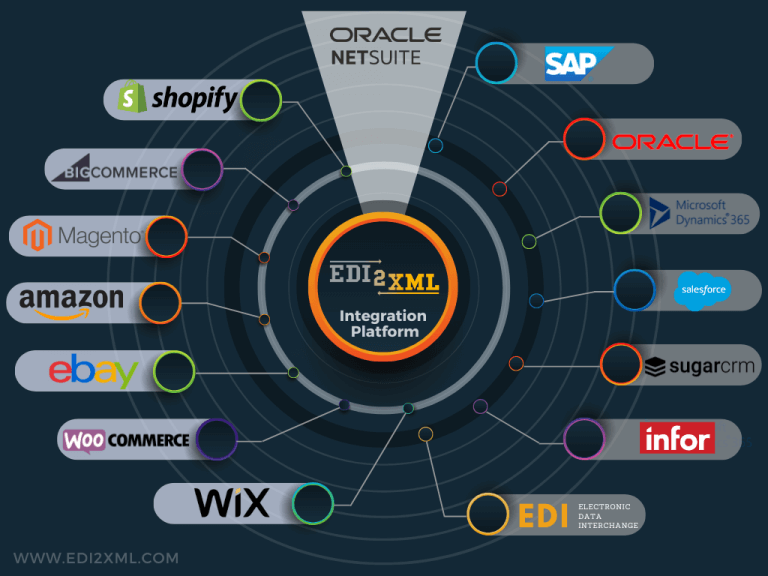
Our company provides NetSuite integration services with e-commerce platforms.
With over 20 years of experience in system integration, we know the ins and outs of NetSuite integration.
By leveraging our experience in NetSuite and e-commerce integration, businesses can take advantage of the many benefits that NetSuite offers. Whether you’re looking for integration with Magento, Shopify, BigCommerce, WooCommerce, Salesforce Commerce Cloud, or SAP Hybris, we have the experience to make it happen.
Contact us today for a free consultation to learn more about how we can help you with your integration project.


Leave a Reply
Want to join the discussion?Feel free to contribute!