EDI2XML
  • About
    • The Company
    • EDI2XML
    • Advantages
    • Partnership with EDI2XML
    • Testimonials
  • Services
    • Enterprise AI
    • Fully Managed Integration
    • Fully Managed EDI Services
    • EDI Web Portal
    • EDI Web Service
    • EDI On Premises
    • Managed Cloud Services
    • Amazon Integration
    • Shopify Integration
    • BigCommerce Integration
    • NetSuite Integration
    • JD Edwards Integration
    • Dynamics 365 Integration
    • SAP B1 Integration
    • Salesforce Integration
    • Industry 4.0 Integration
  • Pricing
    • EDI Managed Services
    • EDI Web Service
    • EDI On-Premises
    • Managed Cloud Services
    • Shopify Integration
    • JD Edwards Integration
    • E-commerce Integration
    • All other Integrations
  • Blog
  • Resources
    • Resource Center
    • List of EDI Codes
    • List of EDIFACT Messages
    • EDI Documents Library
    • Trading Partners
  • Contact us
  • Book a Consultation
  • Click to open the search input field Click to open the search input field Search
  • Menu Menu
  • Link to Facebook
  • Link to LinkedIn
  • Link to X
  • Link to Youtube

Optimize your business processes with Electronic Data Interchange EDI solutions—streamline data exchange, improve accuracy, and enhance efficiency.

Tag Archive for: EDI

Becoming EDI Compliant with Amazon for a Seamless Integration

Blog, EDI, EDI2XML

This post was updated to reflect current trends and information.


As the Amazon Marketplace becomes people’s go-to for online shopping, I am asked about this successful eCommerce platform and why should e-retailers embrace EDI when selling on Amazon.com. Other great questions from business people include, “Why is it so important to go that route versus using Amazon Web Forms? What are the benefits to be on EDI? What are the steps that a company needs to follow, in order to become EDI-ready?”

To answer the above questions, I decided to write this article and share my experience. This can be helpful to a lot of business people such as executives and business owners and Amazon Account Managers, who most of the time have limited information about eCommerce integration and the use of EDI to simplify their business flow and processes.

What is Amazon.com?

Amazon.com is the pioneer in online retailing and now third largest retailer, behind Walmart and CVS. Amazon has truly come a long way: starting out as an online bookseller, this online marketplace now sells everything, from “A to Z”. In 2017, Amazon acquired Whole Foods Market for $13.4 billion, which vastly increased Amazon’s presence as a physical retailer. The acquisition was interpreted by some as a direct attempt to challenge Walmart as a physical store (As per Wikipedia https://en.wikipedia.org/wiki/Amazon_(company) ). Amazon, as an eCommerce platform, has a presence everywhere (Amazon.ca, Amazon.uk, etc.) and is capable of delivering in almost every country. For more information, you can visit their site and learn more.

Here’s a bit more background on Amazon.com

  • Amazon is known to be “customer-obsessed”; they focus on selection, price and convenience to “build a place where people can come to find and discover anything they might want to buy online” (Amazon’s Mission Statement)
  • They are solely an online eCommerce store (eStore)
  • On Cyber Monday in 2019, it was reported  Amazon sales of $9.4 billion in wider retail.
  • Amazon has acquired Zappos in 2009 and recently acquired Whole Foods
  • It owns 10% of North American eCommerce – which includes Office Depot, Staples, Apple and Walmart

There are 310 million active Amazon customer accounts worldwide, 90 million of which are Amazon Prime members, many companies are looking to sell their products on Amazon.com. Who wouldn’t want to when Amazon is the KING of eCommerce Stores with roughly 175 million monthly visitors or potential buyers – the largest online marketplace.

Creating an Account & Selling on Amazon.com

Selling on Amazon is quite simple and quick to achieve. It takes few moments to create an account on Amazon.com either personal or business account, setup your items and start selling. Amazon themselves provide a payment gateway solution and all kinds of logistics and assistance to make sure your products are sold and delivered to consumers. One thing for certain, every seller should work and respect Amazons’ own terms and conditions and pay the monthly subscription fee along with the selected program fees.

Managing your Profile on Amazon.com

Part of Amazon’s offering in the eCommerce platform is that they provide an easy “back office” interface, called Vendor Central (for 1P sellers), where brand administrators can add items to the platform, prices, stock availabilities, product descriptions and more. In this same interface, the admin can manage orders received from consumers, updates item statuses and shipment details.

What else is on Amazon Vendor Central?

One of the options provided by Amazon Vendor Central is the ability to set some type of integration between your business software system and your Vendor Central Interface using EDI. This is a very important feature offered at no additional cost to sellers, so that they can integrate their day-to-day orders received from their Amazon store into their Software Management System and vice versa.

Amazon Vendor Central vs EDI Integration

As highlighted in the previous section, the Vendor Central provided by Amazon allows you (as an account and eCommerce store owner) to manage every aspect of your store, manually. This process depends on human interaction and intense manual labour work.

The ability to transport and integrate your data between your software system and your Amazon account in both directions (in and out) is uniquely done through EDI. Meaning when you want to extract an order from Amazon and automatically integrate into your JDE, SAP, Sage or any other system, the only way to do so is using EDI integration. Whenever you need to push new Items, SKUs, pricing ….to your store on Amazon, EDI is the only way to do so without having to manual key in all of this data.

When should you embrace EDI with Amazon?

Selecting the EDI route and becoming compliant with Amazon is truly worth the investment, when the following criteria is met:

  • An overwhelming number of SKUs are being sold on the Amazon Marketplace
  • Your SKUs and items sold on Amazon are dynamically changing periodically which makes it very difficult and time consuming for a human to manage it all manually
  • Your number of orders generated on Amazon are exceeding 15 per day. Why is the magic number 15 orders? This is due to the fact that the window to ship those orders out to your customers is very narrow, about 24 to 48 hours. Therefore, managing this amount of daily orders manually can lead to a ton of human errors and in turn, penalties by Amazon.

What are the top benefits to be on EDI?

There are many benefits to be on EDI when selling on Amazon:

  • Reduced human errors in data entry
  • Increased capacity to deliver quickly and on-time
  • Increased response time when issuing advance ship notices for orders placed on Amazon
  • Increased scores/reviews and happy customers on Amazon
  • Ability to quickly and efficiently update your inventory status from your current software or ERP (i.e. JDE, SAP…) into your Amazon account without the need to even login to Vendor Central

Stay on the lookout for part 2 of this article where I dig deeper into the steps that a company needs to follow in order to be EDI compliant with Amazon. In the meantime, feel free to reach our EDI integration experts today to help you with your Amazon integration needs.

Amazon Integration


For more information on Amazon integration, please read these articles:

  • Integration with Amazon Seller or Vendor account: Things you should know
  • Integration with Amazon Web Services (MWS): Things you should know
  • Amazon Business: How to increase the B2B sales on Amazon?
  • What is Dropshipping on Amazon?

November 20, 2017
https://www.edi2xml.com/wp-content/uploads/2024/08/edi2xml.com-EDI2XML-company-logo.png 0 0 Tatyana Vandich https://www.edi2xml.com/wp-content/uploads/2024/08/edi2xml.com-EDI2XML-company-logo.png Tatyana Vandich2017-11-20 11:55:382023-04-10 15:20:06Becoming EDI Compliant with Amazon for a Seamless Integration

EDI Integration: Tips to better manage your online business

Blog, EDI


This post was updated to reflect current trends and information.


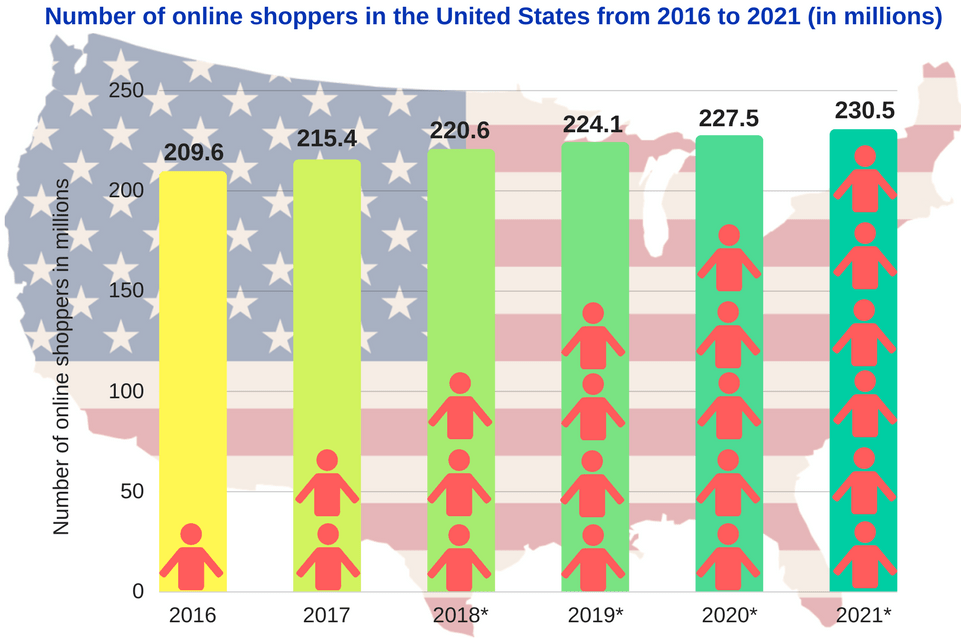
Purchasing tickets, gifts, clothes, equipment and even groceries can now all be done online. Due to its accessibility and convenience, most of us already buy products online, from anywhere at anytime, using a smartphone or laptop, so long as we are connected to the Internet. Simple user interface, quick actions and results: everything is so easy that it only takes a few minutes. This explains why the number of online shoppers is growing at a tremendous rate, year after year. For example, the number of online shoppers in the United States alone is estimated to be 230.5 million by 2021 as compared to 215.4 million in 2017.

Online shoppers USA

Source: The Statistics Portal “Statista”  

The above graphic displays statistics about online shoppers who browsed products, compared prices or bought merchandise online at least once during the corresponding year.  Notice an increase of online buyers year over year due to the active introduction of Omnichannel retailing.

What is the omnichannel retailing?


Omnichannel is a cross-channel business model that companies use to improve their customer experience. “Omnis” can be translated from Latin as “existing everywhere”. In our case, covering all channels of communication with customers: as physical locations, online store, social media, live web chats, mobile applications, and telephone communications. The customer accesses all products and services in the most convenient way for him, while being always visible to the retailer.

Setting up your online store


Opening an online store in today’s digital world is NOT difficult; however, running the operations of an online business is of course a little more challenging. Here are some of the undeniable advantages of running an online store:

  • There are no rental fees
  • You need fewer employees to operate the store
  • Companies can overcome geographical limitations
  • Best of all, it is open 24 hours a day, 365 days a year

Use the best e-commerce practice


In order to not be left out of the e-commerce game, you should give great attention to detail and look for the best practices in operating your e-commerce business. On the Internet, there’s a ton of great advice for entrepreneurs who have started their online business already; it is about choosing an e-commerce platform, optimizing the page load speed, creating unique content, promoting the products, and the list goes on…

However, there isn’t much information out there that talks about the technical and logistical aspects of running an online store. Critical information that e-business owners should know are things like how to exchange documents electronically between your e-business and trading partners or transport companies. There’s also the important e-commerce practice of integrating your systems and electronic exchange of data (or EDI) in order to improve speed, accuracy, quality of information and overall business efficiency.

The role of EDI integration in logistics and e-commerce


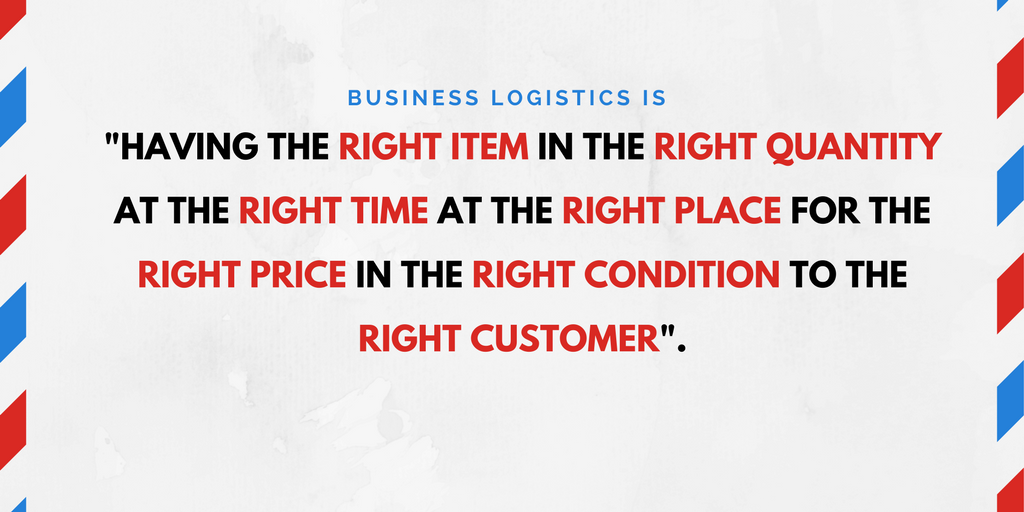
The term “logistics” even in the traditional retail sense was not always so clear-cut and far from being obvious. Business logistics can be defined as:

Definition of business logistics

When running an e-commerce business, regardless of which supply chain management methodology you choose (Drop-Ship or other), you will have to face a substantial amount of business related documents that you need to exchange with your trading partners.

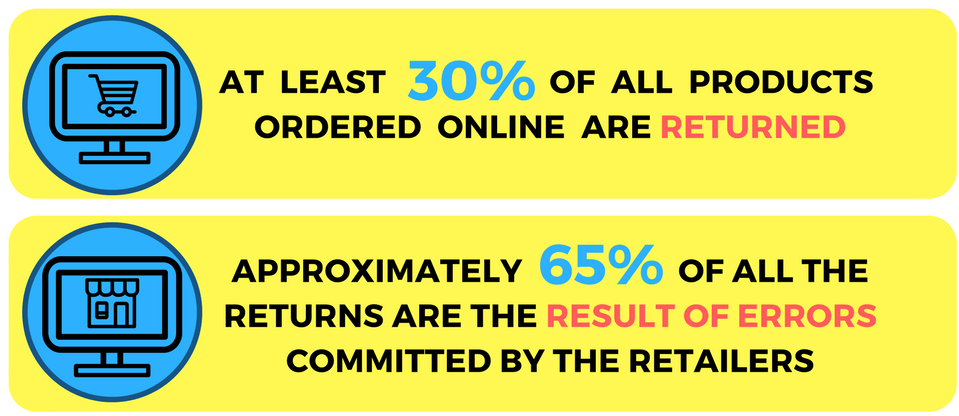
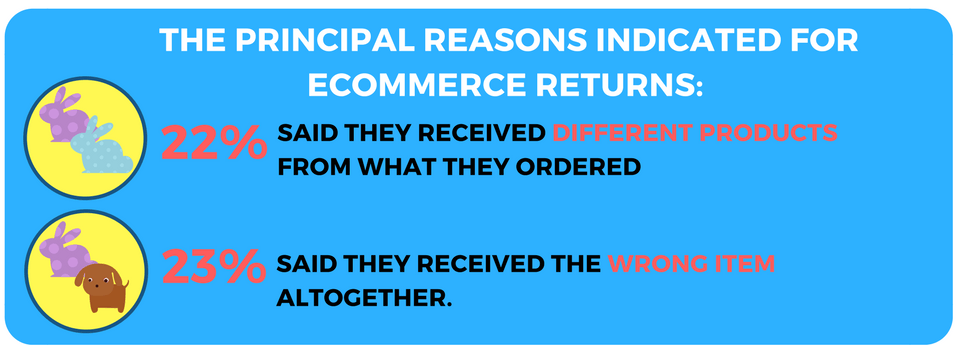
Now, let’s do a simple calculation: how much time do your employees spend on order entry, shipping advice, invoices, generating labels? What is the error rate? Maybe that’s why the rate of returns of online sold products is sky-high. Research about e-commerce product returns shows:

statistics online return

Online return reason

In my opinion, the statistics shown above reflecting e-commerce product returns looks frightening… Is it possible to reduce the above percentages?  Can your online business avoid those errors?

EDI integration improves the quality of the data by at least 30% to 40 % reduction in the transactions containing errors, by eliminating unreadable writing or typing errors, the losses of faxes/mail, transmission, and re-manipulation of errors.

Think and manage your online business better


The positive effects of EDI Integration will be measurable across all of the following services: commerce, production, logistics, and finance.

In sales:

  • Sales cycle and quality of the relationship with your customers are improved and processing times reduced (reliability and efficiency of exchanging orders, shipping advice etc. …)

In production:

  • Reduced production costs
  • Better management of your stocks
  • Short production times

In logistics:

  • Reduced processing times for shipments
  • Elimination of anomalies or errors
  • Elimination of paper documents
  • Strong improvement in the quality of information

In finance:

  • Reduced billing times
  • Reduction of disputes

In conclusion, moving forward with an EDI integration project gives a business the access to an undeniable competitive advantage; companies are able to reduce the costs of its products and services, improve business processes and meet the demand of customers and suppliers. What’s better than that?

Keep learning about EDI integration and the MANY benefits it has for your online business by visiting our website EDI2XML.com or contacting us directly today!

Free EDI Consultation


November 1, 2017
https://www.edi2xml.com/wp-content/uploads/2024/08/edi2xml.com-EDI2XML-company-logo.png 0 0 Tatyana Vandich https://www.edi2xml.com/wp-content/uploads/2024/08/edi2xml.com-EDI2XML-company-logo.png Tatyana Vandich2017-11-01 14:38:422019-07-16 12:31:04EDI Integration: Tips to better manage your online business

How EDI integration can boost your eCommerce Store

Blog

This post was updated to reflect current trends and information.

With the evolution of e-commerce in the last few years, EDI integration is getting more and more widespread in the e-retail vertical. This trend is due to the heritage of the traditional retail businesses. Why is this happening, and how is EDI helping e-commerce retail stores?

According to Statista.com:

in 2024, global retail e-commerce sales reached an estimated six trillion U.S. dollars. Projections indicate a 31 percent growth in this figure over the coming years, with expectations to come close to eight trillion dollars by 2028.


Online shopping is one of the most popular online activities worldwide.

Therefore, today, e-commerce sales is one of the segments of the economy with a huge development potential.


Top E-Commerce Platforms in 2025: Which One is Right for Your Business?

Plenty of e-commerce platforms are available on the Internet, but the most popular and most effective in 2025 market are the following:

Platform Best For
Shopify  All sizes; ease + scalability
WooCommerce WordPress users; full customization
Magento (Adobe Commerce) Large/tech-savvy enterprises
BigCommerce Mid-large brands; no transaction fees
Wix / Squarespace / Weebly Small retail, visual branding
Ecwid Adding cart to existing assets
PrestaShop / OpenCart Dev teams, custom builds
Salesforce Commerce Cloud / SAP Commerce Cloud Enterprise/B2B e‑commerce
Amazon Mass reach, cross-border, niche goods

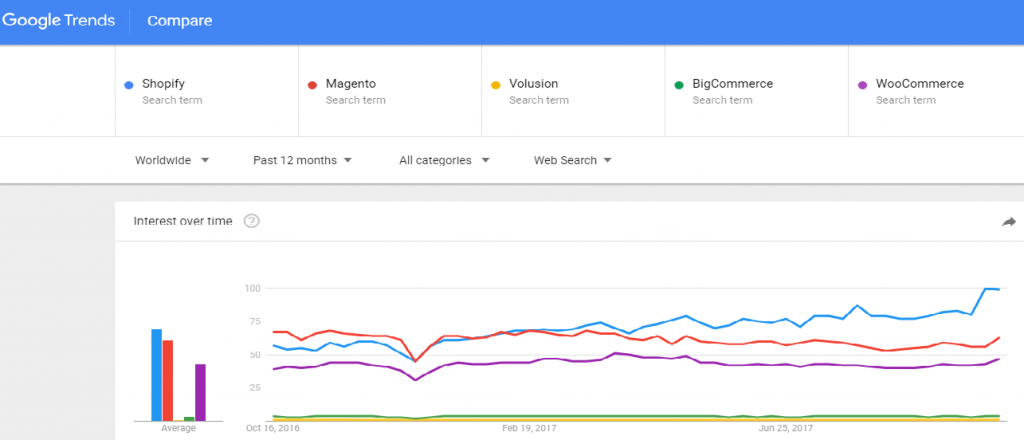
If you look at the comparative table in Google trends, you will see that Shopify is the leader in terms of how many businesses use this platform for their own eCommerce, versus how many they show interest in the other e-commerce platforms.

google-trends-e-commerce-platforms


Shopify in 2025: Market Share and Usage Statistics You Need to Know

Launched in 2004 Shopify is one of the leading Canadian e-commerce platforms, trusted by businesses worldwide. According to the analytical and strategic platform Yaguara

Over 4.6 million websites using Shopify worldwide. Further, with its increasing popularity in the United States, Shopify has grabbed 29% of the e-commerce platform market share in the country.

As new shops are signing up every day, the real exact number is higher. For more information about Shopify, you can visit their website.


Automate Your Shopify Store with Our Fully Managed EDI Integration

We at EDI2XML eliminate the need for manual data entry using Magic xpi Integration Platform, we automate the most important business processes, ensuring data exchange between Shopify/Shopify Plus and leading ERP and accounting systems. LEARN MORE>


How EDI Improves Productivity and Efficiency in E-Commerce

Business owners, including e-commerce store owners, are all always looking for a better way to improve efficiency, and customer service in a very well connected digital world.

In that direction, the Drop-ship concept has emerged to become one of the top delivery model adopted with major ecommerce retailers. With this concept, consumers have access to a large inventory of goods, delivered directly from the manufacturer (most of the time). This is delivering a smooth shopping experience that is secure, convenient and comfortable.

In order for the ecommerce owners to compete in this new reality, their offerings of products and services, should be built in such an efficient way, where their items’ prices, stock and inventory availability, are all up-to-date right from their manufacturer’s system, in near real-time.

Their delivery schedules are also a factor: eCommerce stores should be equipped with real-time calculation of delivery cost and ETD, again right from the shipping or transport company.

EDI integration between an eCommerce platform and the manufacturers, in the drop-ship world, is one of the best options to accomplish the above objectives. EDI helps streamline the Supply-chain management and improve efficiency.

To know more about the reasons why you should integrate EDI with your Shopify eCommerce store, read our previous blog called “Top 3 Reasons for EDI integration with Shopify”

Key Benefits of EDI for Online Stores in 2025

It’s no secret to anyone that the traditional methods of document management are outdated, they are quite costly and can impede the interaction between trading partners. This becomes especially noticeable when the business grows.

 EDI interchange has existed for more than 30 years. Over the years, EDI has been tested and proven to work, in North America and Europe. EDI has repeatedly and most importantly demonstrated its effectiveness in reducing human errors and improving quality of information.

EDI is a Major Helper for Online Stores

EDI service translates into electronic format (or messages), the entire interaction between the eCommerce store, the supplier and the consumer – from the order to the signature of delivery documents.

The exchange of information takes place directly between the systems of trading partners, therefore, the influence of the human factor, and errors are at its minimum.

If you want to know more about EDI2XML translation, read this article on our website

EDI significantly simplifies and speeds up the logistics work: ordering, packaging, shipping and delivery.

Comparing eCommerce store to a traditional outlet store, the latter will have more constraints and limitations on stock availability and delivery methods: with an online store having EDI integration in place, this problem does not exist. All availabilities are up-to date right from the supplier’s system. An eCommerce store owner, with integration capabilities will not worry about having an “empty shelf”…he does not have to worry about hiring more employees to answer customer service calls.

EDI integration, empowers eCommerce online stores with the capability to reduce their costs, increase efficiency, improve stock availability and customer service.

Need Help with EDI Integration? Talk to Our Experts Today

If you are interested to learn more about this topic or any EDI integration-related issue, don’t hesitate to contact us for a free Consultation and we will be more than happy to answer your concerns and questions.

Free EDI consultation

October 18, 2017
https://www.edi2xml.com/wp-content/uploads/2024/08/edi2xml.com-EDI2XML-company-logo.png 0 0 Tatyana Vandich https://www.edi2xml.com/wp-content/uploads/2024/08/edi2xml.com-EDI2XML-company-logo.png Tatyana Vandich2017-10-18 15:59:542025-06-12 16:13:45How EDI integration can boost your eCommerce Store

Top 3 Reasons For EDI Integration With Shopify

Blog

This post was updated to reflect current trends and information.


EDI integration with Shopify

In short, Shopify is one of the leading Canadian eCommerce platforms offered to businesses and individuals, based on a monthly subscription fee. Anyone can subscribe and then begin to showcase their products online, to sell directly to the public. For more information about Shopify, you can visit their website here.

Who Uses Shopify?

Shopify is a popular e-commerce platform that can be used by individuals and businesses of all sizes to create and manage their online stores. Here are some of the types of people who use Shopify:

  1. Small business owners: Shopify is an excellent platform for small business owners who want to sell products online without having to deal with the technical aspects of building an e-commerce website.
  2. Entrepreneurs: Many entrepreneurs use Shopify to create and sell their own products online, whether it be clothing, beauty products, or digital downloads.
  3. Large businesses: Shopify’s scalability makes it a popular choice for larger businesses that need a platform that can handle high levels of traffic and sales.
  4. Dropshippers: Shopify’s integrations with popular dropshipping apps and tools make it an attractive option for dropshippers who want to sell products without having to hold inventory.
  5. Non-profits: Shopify offers special pricing and features for non-profits, making it an excellent platform for charities and other non-profit organizations to sell merchandise and raise funds online.

Overall, Shopify is a flexible platform that can be used by a wide range of people and businesses to create and manage their online stores.

A Word on Drop-Shipping

One important thing to emphasize here is that with the emergence of the online retail (or eCommerce) market, companies selling products through the Internet on platforms such as Shopify, are not necessarily carrying inventory of their products anymore.

More and more, once a company receives an online order from a customer (through the Shopify platform), these orders are then transferred to the manufacturing business partner(s) for shipping and delivery of the bought item(s), where they are told the “white label” the delivery package. This concept is called “Drop-Ship” (or Drop Shipping) in the retail and eCommerce world. Basically, the seller receives orders from their online retail store and is paid via the Internet (through PayPal or credit card) and then forwards the order to the manufacturer to then ship directly to the client. For many, there is now no need to hold inventory in a local warehouse.

What Does EDI Have To Do With eCommerce?

For those who aren’t very familiar with EDI (or Electronic Data Interchange), it is a set of standards and processes to exchange business documents electronically between Business (or Trading) Partners. Common business documents include Purchase Orders, Invoices, ASNs (Advance Ship Notice), Inventory Inquiry/Advice and more. This data exchange can happen in both directions – incoming and outgoing.

In the context of online sales over the Internet, on an eCommerce platform like Shopify as well as with the introduction of drop-shipping, EDI comes into play for several reasons;

1. Most major manufacturing and distribution companies will require a system-to-system integration through some sort of EDI. This speeds up processes and allows for greater efficiency in partner communication.

2. Shipping companies also require integration via EDI.

3. Today, consumers are very well educated and require to be informed on the status of their orders at every step of the way during the shipping process.

As you may notice, all of the above requires system-to-system integration between so many unrelated or diverse systems and platforms. At this point in time, most major companies and retailers are well equipped with EDI platforms and standards in which they have been investing in for many years now. Companies are now finding more ways to use their EDI to increase efficiency and are truly seeing returns on their investments.

Top 3 Reasons Why You Need EDI Integration With Shopify

The reasons may seem obvious to you at this point, but I will re-iterate the top 3 reasons for EDI integration with your Shopify store or any other eCommerce platform;

Cloud Services Provider If you are in the Drop-Ship business and you are selling online through Amazon, Wal-Mart, Cabela’s or Target, for example, chances are that these retailers will impose certain rules, and require that you go on EDI. If you are dealing with suppliers, they will also impose similar rules and require the use of EDI.


Cloud Services Provider If you are selling online through your own store via Shopify, and you have a high volume of clients that expect to the informed of their orders at any given moment, this is another big reason why you should have EDI integrated with your Shopify store.

Cloud Services Provider If you are dealing with shipping companies like FedEx, Purolator, UPS, etc., and you have a high volume of shipments on a daily basis, then you need to integrate your management systems AND Shopify with EDI.

The above are the main reasons for EDI integration but there are tons of other ways EDI can improve your processes and reasons to talk with an EDI consultant today.

How Can I Integrate My Shopify Store with EDI?

This integration is very feasible however you will most definitely need a team of system integrators with a high knowledge and expertise in EDI. With the right team like the EDI2XML team, there is no going wrong.

If you are interested in learning more about this topic or any other issue related to EDI integration projects, please contact us today and receive your free consultation.

Shopify integration
May 27, 2017/2 Comments
https://www.edi2xml.com/wp-content/uploads/2017/05/EDI2XML-Shopify-edi-integration-1.png 675 1200 Tatyana Vandich https://www.edi2xml.com/wp-content/uploads/2024/08/edi2xml.com-EDI2XML-company-logo.png Tatyana Vandich2017-05-27 16:05:452023-05-08 15:04:53Top 3 Reasons For EDI Integration With Shopify

How To Successfully Complete SAP/R3 EDI Integration Projects Using iDoc

Blog, EDI2XML
Article written by Pierre Namroud, EDI Integration Specialist & Business Consultant

During my professional career as an integrator and EDI expert, I had the opportunity to work on several major integration projects. Some of them were in an Oracle environment while others had to do with integrating with SAP/R3. Other projects included integrations with different types of systems such as Salesforce, Shopify, Microsoft suites, etc.

In today’s EDI2XML post, I will share my experience as an ‘Integrator’ to lay down the basis of a successful integration project of EDI and SAP/R3. Please note, however, that I am not an SAP expert and during these integration projects I worked closely with SAP professionals and credit them for all of their efforts in completing the SAP portions of this type of project.

What is SAP/R3?

SAP/R3 is an Enterprise Resource Planning (ERP) software solution produced by the well-known German company, SAP. This specific version,“R3”, has been renamed to ECC (ERP Central Component). SAP Business One is also a sub-set ERP software from the same Software Provider and it is designed for Small Businesses.

SAP ERP Solutions are widely present in corporate enterprises in North America, Europe and all around the world. It is one of the most popular corporate ERP software solutions.

Does SAP support EDI Integration?

SAP ECC (or R3), out of the box, does in fact support EDI integration. The EDI format that is currently supported by SAP is called iDoc. Simply put, iDoc format files or messages are proprietary to SAP and they are similar to, and based on, EDIFACT messages.

In essence, if an iDoc file is provided to SAP, it will get processed using some specific BAPI and it will turn the iDoc into an order, in SAP.

EDI Transformation for SAP Integration

Most integration projects that I have worked on involved integrating EDI X12 formats within the SAP system, in both directions (incoming and outgoing messages). Since X12 EDI format is far from the iDoc format, our team was tasked with handling the transformation and EDI translation from X12 EDI to iDoc format.

Checklist for a Successful EDI Integration Project with SAP

Now that the basics are defined, I will share my recommendations, in a checklist format, to help guide you through a successful integration project for SAP and EDI.

  • Make sure you know how to work with SAP backend. If you are not highly knowledgeable or an expert in SAP, make sure to most definitely include someone who is, as part of your team. This is a must.
  • Make sure you work in a Development SAP environment, rather than a Production environment when doing the work.
  • Make sure to use the appropriate SAP BAPIs or RFC, well identified for each point you plan to integrate with SAP. This is very important and it is crucial to be identified. Your SAP expert can take the lead in this area.
  • Make sure to equip yourself and your integration team with an efficient integration framework. The completion timeline and success rate of this project will definitely be better if you equip your integration team with an efficient integration tool.
  • To avoid getting into an unknown space, outsource the translation of the EDI X12 or EDIFACT (or any other protocol) to a reliable, knowledgeable Service Provider. By teaming up with an EDI partner, you’ll quickly notice the real value they will bring to the table since they will handle all of the complexities that an EDI project can bring. Their task will be to do the EDI transformations and create one single iDoc format of EDI for your integration flows to SAP.

Conclusion

I sure hope that I was able to expose some of the challenges and complexities surrounding a typical SAP integration project, with the above checklist, and properly explained my recommendations, from my own personal experiences.

If you are interested to learn more about this topic or any other issue related to EDI integration projects, please click on the image below and I will be more than happy to contact you for a FREE consultation.

Free EDi Consultation and pricing

May 5, 2017
https://www.edi2xml.com/wp-content/uploads/2024/08/edi2xml.com-EDI2XML-company-logo.png 0 0 Tatyana Vandich https://www.edi2xml.com/wp-content/uploads/2024/08/edi2xml.com-EDI2XML-company-logo.png Tatyana Vandich2017-05-05 18:13:472018-04-26 10:43:53How To Successfully Complete SAP/R3 EDI Integration Projects Using iDoc

4 Challenges of EDI and Drop-Ship in eCommerce

Blog


This post was updated to reflect current trends and information.

EDI integration projects


The term “drop-ship” has been used quite a lot in recent years by retailers and manufacturers alike. This supply chain management method looks to be gaining in popularity going into 2019 and will likely be in high demand for years to come as well.

Let me first explain the meaning of drop shipping and how it has become so popular…

What is Drop Shipping?

“Drop-ship” is a fulfillment method where a merchant does not carry any inventory on hand. Instead they sell products to consumers via an online store (eCommerce), send the customers’ orders to the manufacturer and have the manufacturer ship the goods directly to the customer. The customer will never know the difference since they pay the merchant and receive their goods in a box with the merchant’s labels. This method eliminates the need for the merchant to handle the goods.

The Rise of Drop-Ship Popularity

Due to the fast evolution of eCommerce, coupled with the continuous challenges that businesses face to reduce costs and increase profitability, the drop-ship method is in high in demand by major retailers. You’ll find that eCommerce giants like Amazon.com, Costco.com, Cabelas.com, Sears.com and others, are increasing the pressure on their supply chain to adopt the drop-ship concept. Of course, they also require their business partners to comply with their EDI requirements and specs for a full automation of the entire sales cycle.

The Complexity behind Drop Shipping

If we take a behind-the-scenes look at drop shipping from 2 perspectives, from the eCommerce retailer, like Amazon or Cabela’s, and from the manufacturer of goods, we’ll find the simplicities and complexities behind each process.

From the perspective of the eCommerce retailer, the drop-ship method allows them to eliminate the need to carry any inventory and to ship their goods. Their process is rather simple, profitable and quick. All they need to do is sell products online and ensure that their partnered manufacturers are EDI and drop-ship ready. Once they sell products from their eCommerce site, they will send the orders via EDI to their manufacturer and the manufacturer takes it from there.

From the perspective of the manufacturer, we’ll find some of the complexities. However, if they are setup correctly from the get-go, then it becomes rather simple and quick. In this case, the drop-shipper (manufacturer or distributer) is entirely in charge of the fulfillment of all incoming eCommerce orders (from the retailer). They need to process the sale all the while complying with the retailer’s business specifications such as EDI. Let’s go over the top 4 challenges a manufacturer must overcome during a drop-ship EDI implementation;

Top 4 Challenges the Drop-Shipper Might Face

If you are a manufacturer and have recently partnered with an eCommerce retailer to sell your products, then you might already know that they will require you to drop ship and automate your sales process through EDI integration. I have listed below the top 4 challenges you might face as a drop shipper;

1.    Ability to submit accurate inventory feed (846) to the eCommerce retailer

When starting a new business relationship with an eCommerce retailer based on the drop-ship method, the first step will be to feed inventory & per-item stock statuses to the retailer in a timely manner. This inventory inquiry/advice document is called EDI 846. Major retailers such as Amazon.com, Cabelas.com, Costco.com and Wal-Mart.com require their Trading Partners to send them an 846 document at least twice a day so that their online store can properly show only available products, based on inventory available to ship. Most of the time, companies either don’t have an accurate inventory system or their stock status is not properly maintained, which can be a great challenge to overcome. Even if companies have accurate inventory statuses, many of their management software systems, even reputable and expensive systems such as JDE, do not have built-in capabilities to send the 846-inventory status in X12 format, as per the requirements of the retailers.

2.    Ability to receive and process EDI orders (850)

Another challenge comes in the form of receiving EDI purchase orders (document 850). Many companies struggle with the capability to receive EDI orders, process them and integrate them quickly into their management system before it is sent to the pick/pack/ship process down the line in the supply chain. Most software systems are still missing this integration capability and require end users to manually key-in orders received in EDI x12 format, to then be able to process and ship. This is a great challenge for many manufacturing and distribution businesses. Dealing with eCommerce Stores, orders are continuously coming in, at all hours, in high volumes. The client (retailer) typically expects the manufacturers to ship within 24 to 48 hours (at the latest!). Moreover, eCommerce retailers are expecting to receive a P/O acknowledgment (document 855) via EDI. Therefore, it’s extremely critical that the drop shipper is equipped with a fully integrated software solution where EDI orders can automatically come through in real-time, so that they are quickly processed.

3.    Ability to fulfill orders within a very short period of time

As previously mentioned, eCommerce retailers expect their partners to ship goods to the end-consumer within a very short time frame (24 to 48 hours). They expect them to package the products, print customized picking/packing slips to send with the goods and complete the shipping process in a very quick manner. In case of failure to comply, there is a risk the vendor will be eliminated from the program. At the logistics level, an important challenge is to have a management system and required resources to process orders, pick, pack and ship in the required time frame. Efficiency in this case is imperative since time is money.

4.    Ability to electronically submit Ship Notices (856) & Invoices (810)

Two other EDI x12 documents are sent out to the eCommerce retailer by the drop shipper; the Advance Ship Notice or ASN (document 856) and of course an invoice (document 810). Most companies don’t currently have the capability to turn those business documents into an x12 EDI format and submit to the Trading Partner, straight from their management system.

Overcoming Drop-Ship Challenges

Our team’s experience with EDI drop-ship has allowed us to overcome the above challenges in an efficient and timely manner. Since every project varies, it’s important to do the following;

  • Surround yourself with experts in EDI who have the experience in dealing with drop-ship projects. It’s important to have enough knowledge and expertise in these methods prior to beginning any EDI drop-ship project. It’s important to get organized internally before any major project.
  • Ask an EDI Provider, who offers flexible and affordable EDI & IT services, to help you streamline your processes and advise you on best practices.
  • Opt for a full EDI integration with your current management software solution, if possible. Of course, such an option is not always possible or provided by your Software provider but if it is, it’s our recommendation to go ahead with this since it will eliminate chargebacks and increase efficiency in your EDI projects so you are best capable of complying with your Trading Partners’ demands. Don’t forget, partner demands and specs can change at any moment. It’s best to ensure you can handle changes at a moment’s notice. (Flexibility is the way to go!)

If you’re looking to complete an EDI Drop-Ship project, contact us today. We’ve got the experts and the EDI2XML service to get you drop-ship ready. Contact us today for your FREE consultation to evaluate your EDI project.

Free EDI consultation


December 30, 2016
https://www.edi2xml.com/wp-content/uploads/2016/12/EDI-and-drop-shipping.png 350 1024 Tatyana Vandich https://www.edi2xml.com/wp-content/uploads/2024/08/edi2xml.com-EDI2XML-company-logo.png Tatyana Vandich2016-12-30 12:59:002019-05-22 15:08:094 Challenges of EDI and Drop-Ship in eCommerce

How to Choose the Right eCommerce Integration: EDI, XML, or Web Services

Blog

This post was updated to reflect current trends and information.

Why eCommerce Integration Matters for Growing Businesses

eCommerce platforms have been largely used by small and mid-sized enterprises, to sell their products and services to the booming consumer market (B2C) on the internet. Amazon and eBay for example, are among the most popular eCommerce platforms; for ease of operations and integration they offer different ways to exchange data between the trading partner and the platform. As an example, Amazon offers EDI integration capability, or Web service calls to exchange data or simple XML transactions. The most frequently asked question, by business owners, is: what is the best option to have a quick integration at a minimal cost with a maximum return on investment?

In this post I will explain the different integration mechanisms and share my opinion on how to decide which way to go. As a complementary article to this post, I invite you to read my previous post entitled Tips to Empower your eCommerce with great Supply Chain through EDI Integration to get more detailed advise about eCommerce and EDI integration to be able to build a strong SCM channel.

Let me start by quickly defining each of the above technical terms:

What is EDI (Electronic Data Interchange)

EDI is the oldest protocol used to exchange data between business partners. It has been standardized and heavily used for decades. It is very well ingrained in the manufacturing and retail verticals. Data in EDI format has a pre-defined format and structure. It is transmitted using different types of secured communication protocols (i.e. VAN, AS2, FTP, sFTP…).

Useful reading: What is EDI?

What is XML (Extensible Markup Language)

As defined by the W3Schools website , XML is a markup language much like HTML, meant to carry data, not to display data. It is designed to be self-descriptive, where users define their own XML tags to describe data. XML is a W3C recommendation. XML was created to structure, store, and transport information, in contrast to HTML that is meant only to display data in a web browser.

Since XML has been developed, it quickly became a popular means to transfer very well structured data between business partners. Thanks to its ease of use, and its descriptive aspect of the XML data format, it has been the preferred choice of many software vendors and applications used in integration projects.

Web services (SOAP and REST)

Wikipedia defines a Web service as “a method of communication between two electronic devices over a network. It is a software function provided at a network address over the web with the service always on as in the concept of utility computing”.

Web services are designed to support machine-to-machine interaction over a network, using different protocols, by sending and receiving “messages” using HTTP and XML in addition to other web-related standards.

Now for the technical use and interpretation of Web Services, it is simply triggering the execution of a program or function remotely, using the internet, and returning the result to the caller. In addition, Web services use XML in different formats to send structured data back and forth. The advantage of Web services is that it uses the internet as a communication and transport protocol, in addition to the XML structured language to format the data transmitted back and forth.

If you want to know more about  different types of web services such as SOAP and REST and why EDI developers prefer use RESTful services, read our new article: Seamless EDI implementation through Web Services

Takeaways: 

Web services enable real-time, machine-to-machine communication over the internet. They use HTTP and XML (or JSON in RESTful APIs) to exchange data between applications.
Modern platforms often rely on RESTful APIs for faster, lighter integration.
This method is ideal for businesses seeking flexibility and scalability across cloud-based systems.

Useful reading: What is EDI2XML web Service?

What Is eCommerce Integration?

eCommerce integration means the process of sending data from the eCommerce platform to an external system or platform, and receiving data into the eCommerce platform using an automated process. Integrating your ERP system or a company’s CRM system with the eCommerce platform enables the necessary data to be sent in both directions so that both systems can interact in a seamless way, without the need for human intervention. This will improve efficiency and enterprise capabilities to serve clients faster.

Useful reading: Tips to Empower your eCommerce with great Supply Chain through EDI Integration

How to Choose the Right Integration Method

In my opinion, there is no single rule when selecting an integration method. Any business owner, executive or integration consultant should ask the following technical questions before selecting a technology and protocol to integrate their eCommerce platform with their own system:

  • What’s the expertise of my integration team?
  • Are they familiar with EDI format and protocols as well as its business flow?
  • Are they more familiar with XML and web services?
  • What are the additional technical advantages that the enterprise would gain by selecting one versus the other?
  • Are these advantages important issues for our business?
  • What are the add-on costs for both options?

Basically, the decision comes down to evaluating the level of expertise of the integration team and their zone of technical comfort. From a technical perspective, there isn’t a perfect option. Of course, the business aspect of the decision is a major factor and sometimes, business reasons might outweigh technical reasons.

If you need more information or would like to discuss your eCommerce integration needs, I will be more than happy to provide a free 1-hour consultation.

EDI Web Service for edi integration
August 1, 2016/2 Comments
https://www.edi2xml.com/wp-content/uploads/2024/09/edi2xmlcom-Amazon-Integration-Services.webp 534 626 Pierre Namroud https://www.edi2xml.com/wp-content/uploads/2024/08/edi2xml.com-EDI2XML-company-logo.png Pierre Namroud2016-08-01 11:13:052025-10-16 10:02:14How to Choose the Right eCommerce Integration: EDI, XML, or Web Services

How to solve Shopify eCommerce integration with EDI

Blog, EDI


This post was updated to reflect current trends and information.


ECommerce (or online retail) has been a growing trend over the last few years. Due to this, business partners, retailers and suppliers have been transforming their flows and processes in order to better serve today’s well-connected, tech-savvy and wise consumer, who is constantly plugged in to the latest technologies. Read more

June 6, 2016
https://www.edi2xml.com/wp-content/uploads/2024/08/edi2xml.com-EDI2XML-company-logo.png 0 0 Tatyana Vandich https://www.edi2xml.com/wp-content/uploads/2024/08/edi2xml.com-EDI2XML-company-logo.png Tatyana Vandich2016-06-06 11:30:572022-07-26 10:37:55How to solve Shopify eCommerce integration with EDI

Everything you need to know about EDI2XML Translation Service

Blog

It’s no secret that our EDI2XML team loves helping businesses increase efficiency, improve partner relationships, accelerate movement of goods to customers and improve shipment accuracy by allowing them to easily exchange documents electronically between Trading Partners (read “Benefits of EDI Communication”).

But, how do they do this and for how much? We want our customers to fully understand the processes involved in our EDI Translation Service and all the costs involved as well. It’s about providing a service for companies that will only benefit them and not cause more hassles, issues or headaches. So, let’s start from the top; Read more

March 18, 2016/2 Comments
https://www.edi2xml.com/wp-content/uploads/2024/08/edi2xml.com-EDI2XML-company-logo.png 0 0 Tatyana Vandich https://www.edi2xml.com/wp-content/uploads/2024/08/edi2xml.com-EDI2XML-company-logo.png Tatyana Vandich2016-03-18 09:48:522018-11-26 09:54:31Everything you need to know about EDI2XML Translation Service

PROs & CONs of Common EDI Translation Methods for SMEs

Blog

This post was updated to reflect current trends and information.


An article on our parent site, Namtek Consulting Services, called “Finding the Middle Ground with EDI Software & Services, ” explains the three most common options Small and Medium Enterprises look into when beginning to use EDI to exchange documents with their Trading Partners.

These 3 options consist of:

  1. Building an EDI translation tool from scratch and doing all communication in-house
  2. Going with a large, reputable EDI Vendor to outsource your EDI
  3. Buy an EDI translation tool, targeted solely to developers

Here are the PROs and CONs for each:

1.    Homegrown EDI Software

With this option, your company must have an in-house IT team, with the necessary EDI knowledge and experience to handle EDI capabilities and requirements.

PRO: The IT team is capable of developing their own EDI translation software to integrate within their ERP system for optimal performance. The whole process will be customized to their exact needs.

CON: This process usually ends up being very expensive and time-consuming for everyone involved. On top of it, many SMEs cannot afford to have their own in-house IT department and EDI experts.

2.    Prominent EDI Vendor

PRO: Large vendors help you connect to the retail industry’s largest network of Trading Partners.

CON: These Vendors are not cheap! Get ready to pay high monthly fees and to wait months at a time to hear back from their Support team.

3.    EDI Translators for Developers

PRO: These tools are affordable to buy, consisting only of a low one-time fee.

CON: Because these translation tools are used and maintained by developers, it requires knowledgeable resources in-house and ongoing support within the company to preserve all EDI capabilities. Your in-house team will need to handle all EDI mapping and requirements for each Trading Partner connection. Therefore, the cost to buy the translation tool may be within budget, but it will cost your company time, effort and in-house IT wages to complete the whole EDI project.

The best option? An EDI Fully Managed Service that is: Affordable, handles ALL EDI mapping, and has a great support team. Take a look at EDI2XML!

Free EDI consultation
October 22, 2015/2 Comments
https://www.edi2xml.com/wp-content/uploads/2015/10/EDI2XML-EDI-translation.png 675 1200 Tatyana Vandich https://www.edi2xml.com/wp-content/uploads/2024/08/edi2xml.com-EDI2XML-company-logo.png Tatyana Vandich2015-10-22 14:02:172022-06-17 11:41:43PROs & CONs of Common EDI Translation Methods for SMEs
Page 6 of 9«‹45678›»
Recent
  • Is EDI Required for Small Businesses? A Supplier’s Guide...June 17, 2026 - 7:02 pm
  • EDI compliance with Loblaw
    How to Meet Loblaw EDI Requirements as a Small BusinessJune 4, 2026 - 2:05 pm
  • The Infrastructure Behind Modern Commerce: Why EDI Still Matters
    EDI in E-Commerce and Retail: Why Modern Commerce Still...May 1, 2026 - 4:54 pm
  • Key Statistics on AI Use in the Workplace
    The Risks of Using Public AI Tools in Business: Data Privacy,...March 11, 2026 - 5:51 pm
  • Enterprise AI
    How to Securely Access Enterprise AI: GPT, DeepSeek &...February 20, 2026 - 3:09 pm
Popular
  • How to Quickly Connect to a Large Retailer's EDI Requirements
    How to Get EDI-Compliant Quickly For A Large RetailerNovember 21, 2025 - 4:29 pm
  • EDI-as-a-services
    EDI Translation Software “On-premises” or “As...January 21, 2014 - 1:28 pm
  • order-automation in e-commerce
    Why Is It Crucial to Automate the E-Commerce Order Fulfillment...May 10, 2022 - 1:58 pm
  • EDI for Logistics and transportation
    EDI Integration for Efficient Transportation ManagementOctober 6, 2023 - 1:33 pm
  • information technology definitions
    Business Tech Terms DefinitionsMay 24, 2018 - 1:32 pm

Browse by tag

Amazon Amazon Integration ANSI ASC x12 ASC X12 EDI B2B EDI integration e-commerce e-commerce business e-commerce integration eCommerce eCommerce integration EDI EDI2XML EDI 850 EDI as a Service EDI Communication EDI converter EDIFACT EDI for supply chain EDI for Third-Party Logistics EDI for transportation EDI implementation EDI Integration EDI Integration Project EDI project EDI Translation EDI Web Service EDI x12 ERP Integration integration platform integration project JDE Magic xpi Magic xpi Integration platform NetSuite online store Salesforce Shopify Shopify eCommerce integration Shopify integration Supply Chain Supply Chain Management Translation Software X12 EDI XML

Subscribe to our Blog

Menu

  • Home
  • About the EDI2XML Company
  • About EDI2XML EDI Converter
  • Blog
  • Book A Free Consultation
  • Privacy Policy EDI2XML Company

Our Services

Fully Managed Integration

E-Commerce Integration

Business Systems Integration

Fully Managed EDI

EDI Web Service 

On Premises EDI 

Managed Cloud Service


Latest Blog Posts

  • Is EDI Required for Small Businesses? A Supplier’s Guide to Retail OnboardingJune 17, 2026 - 7:02 pm
  • EDI compliance with Loblaw
    How to Meet Loblaw EDI Requirements as a Small BusinessJune 4, 2026 - 2:05 pm
  • The Infrastructure Behind Modern Commerce: Why EDI Still Matters
    EDI in E-Commerce and Retail: Why Modern Commerce Still Depends on EDIMay 1, 2026 - 4:54 pm

Contact Us

400 Blvd Curé-Labelle, #304 Laval QC H7V 2S7 Canada

Contact EDI2XML Team
Phone: +1 450-681-3009
Website: https://www.edi2xml.com/

© 2000-2026 EDI2XML (by Namtek Consulting Services). All rights reserved.
  • Link to Facebook
  • Link to LinkedIn
  • Link to X
  • Link to Youtube
  • Blog
Scroll to top Scroll to top Scroll to top