EDI2XML
  • About
    • The Company
    • EDI2XML
    • Advantages
    • Partnership with EDI2XML
    • Testimonials
  • Services
    • Enterprise AI
    • Fully Managed Integration
    • Fully Managed EDI Services
    • EDI Web Portal
    • EDI Web Service
    • EDI On Premises
    • Managed Cloud Services
    • Amazon Integration
    • Shopify Integration
    • BigCommerce Integration
    • NetSuite Integration
    • JD Edwards Integration
    • Dynamics 365 Integration
    • SAP B1 Integration
    • Salesforce Integration
    • Industry 4.0 Integration
  • Pricing
    • EDI Managed Services
    • EDI Web Service
    • EDI On-Premises
    • Managed Cloud Services
    • Shopify Integration
    • JD Edwards Integration
    • E-commerce Integration
    • All other Integrations
  • Blog
  • Resources
    • Resource Center
    • List of EDI Codes
    • List of EDIFACT Messages
    • EDI Documents Library
    • Trading Partners
  • Contact us
  • Book a Consultation
  • Click to open the search input field Click to open the search input field Search
  • Menu Menu
  • Link to Facebook
  • Link to LinkedIn
  • Link to X
  • Link to Youtube

Optimize your business processes with Electronic Data Interchange EDI solutions—streamline data exchange, improve accuracy, and enhance efficiency.

Tag Archive for: EDI

Seamless EDI Implementation Through Web Services

Blog

EDI is used almost everywhere regardless of industry or company size. The most extensive use of EDI is in the retail industry. EDI compliance is mandatory in order to trade with big retailers such as Target, Costco, Walmart,… even giants of electronic commerce like Amazon are heavy users of EDI.

There are a lot of different types and approach of implementing EDI in your company. It can fully managed EDI service, or gaining popularity lately EDI Web Service, because, service architects and developers want EDI to be easy to implement, maintainable, extensible, and scalable.

What is Web Service?

Web service is a network technology that provides inter-program interaction based on web standards. More specifically, it’s client and server application that communicate over the World Wide Web’s (WWW).

The W3C consortium defines a web service as: “A Web service is a software system designed to support interoperable machine-to-machine interaction over a network”.

Thus, the web service is identified by a URI string. The Web service has a User Programmatic Interface (UPI) that is represented in WSDL format. Other systems interact with this web service by exchanging SOAP or REST protocol messages. HTTP Hypertext Transfer Protocol is used to transport the messages. The description of Web services and their APIs can be found by UDDI.

♦ WSDL (Web Services Description Language) – is an XML-based interface definition language that is used for describing the functionality offered by a web service.

♦ UDDI (Universal Discovery, Description and Integration) – is an XML-based registry for business internet services

Web services are rich in functionality and extensibility, as well as their machine-readable descriptions through the use of XML. Web services can be combined to achieve complex operations.
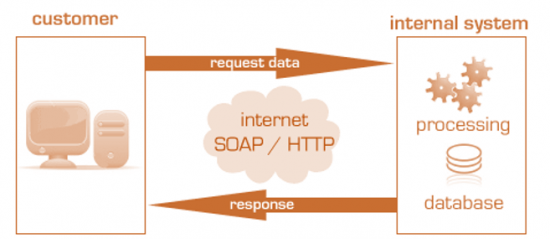
web service diagram

The diagram above shows a very simplified view of how a web service works. The client invokes a web service call by sending a request to a server which hosts the actual web service, then get the response from the web service.

What are the Different Types of Web Services?

Web services can be deployed in several ways. The following web-services are the most commonly used http web services:

♦ SOAP (Simple Object Access Protocol) — in fact, it is a triple of standards SOAP/WSDL/UDDI

♦ REST (Representational State Transfer) – quite often called as RESTful API (Application Program Interface that uses HTTP requests to GET, PUT, POST and DELETE data) or RESTful web service – is based on (REST) technology.

Actually, SOAP originated from XML-RPC (XML Remote Procedure Call) and is the next generation of its development and evolution. While REST is a concept, based on an architectural style.

Of course, there are other types of web services, but since they are not widely used, we will focus on these two in this brief review: SOAP and REST.

A Quick Overview of SOAP Web Services

SOAP stands for Simple Object Access Protocol. It is an XML-based protocol for accessing web services.

It is platform and language independent. It means that by using SOAP, you can interact with other programming language applications.

Initially, SOAP was primarily intended to implement a remote procedure call (RPC). Now SOAP is used to exchange arbitrary messages in XML format, not just to call procedures.

Like any text protocol, SOAP can be used with any application layer protocol: SMTP, FTP, HTTPS, etc., but more often SOAP is used over HTTP.

All SOAP messages are structured as an envelope (is the root element in every SOAP message), including the following elements:

  • Message ID (local name)
  • Optional Header element
  • Mandatory Body element (message body)

Structure of SOAP message:
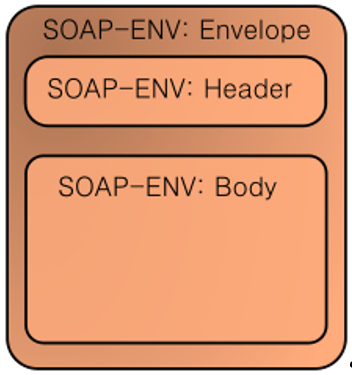
SOAP message structure

The expanded list of SOAP message elements is shown in the data schema (for SOAP version 1.2).

A Quick Overview of REST Web Services

REST stands for Representational State Transfer. As it was mentioned above, REST is not a protocol but an architectural style built on existing standards that are well known and controlled by the W3C consortium, such as HTTP, URI (Uniform Resource Identifier), XML and RDF (Resource Description Format).

In a REST services, the emphasis is placed on access to resources, and not on the execution of remote services; this is the fundamental difference from SOAP-services. However, the remote procedure call is also applicable to REST. It uses the PUT, GET, POST, and DELETE methods of the HTTP protocol to perform tasks. The cardinal difference between REST and SOAP is that REST remains an HTTP request.

According to many developers, SOAP is cumbersome and difficult to use. REST is an easy alternative.

REST is using the URL approach. Often, to make a request, REST relies on a simple URL Instead of using XML.

Advantages of REST Web Services

REST is more flexible and easier to use for the most part. There are following advantages when:

  • Agile: Unlike SOAP, there is no strict specification for REST Web services and it consumes less bandwidth and resources, thus, REST Web services are very fast.
  • Language and Platform independent: REST web services can be written in any programming language and run on any platform.
  • Can be used with different data format: REST web service permits different data format such as Plain Text, XML, HTML, and JSON.

SOAP vs REST: What to Choose?

SOAP is more applicable in complex architectures where interaction with objects is beyond the scope of the CRUD model. In applications having the CRUD model, it can be quite applicable to REST due to its simplicity and transparency.

In fact, if any objects in your service do not need a complex relationship than: “Create”, “Read”, “Update”, “Delete” (usually in 99% of cases is enough), it is possible that REST will be the best choice.

In addition, REST compared to SOAP can be more productive because it does not require parsing complex XML commands on the server (regular HTTP requests are performed — PUT, GET, POST, DELETE).

EDI2XML HTTP Service

EDI2XML Web Service, is an HTTP (based on REST) service running over the internet, on EDI2XML private cloud platform that is capable of receiving HTTP requests to translate EDI messages to XML, and XML messages to EDI (based on EDI2XML’s proprietary XML format). Advantages of using EDI2XML HTTP service:

⇒ You can start with less than an hour

⇒ No contract: pay as you go

⇒ Very simple and dynamic pricing scheme

⇒ Availability and reliability

⇒ Based on proven technology in the field for over 18 years now

⇒ Outstanding technical support

Our EDI Web Service solution solves developer’s problem because we have over 18 years of expertise in EDI, that is difficult for every developer and integrator to acquire quickly.

You can start with the free 15 – days trial of EDI2XML Web Service to see how real-time translation services works.
EDI Web Service for edi integration


Related Posts:

What is EDIFACT? | UN / EDIFACT standard overview
EDI ANSI ASC X12 Standards – Technical Overview – 2020

EDI Integration of B2B e-commerce for small companies

November 20, 2018
https://www.edi2xml.com/wp-content/uploads/2018/11/edi-web-services-.png 350 1024 Tatyana Vandich https://www.edi2xml.com/wp-content/uploads/2024/08/edi2xml.com-EDI2XML-company-logo.png Tatyana Vandich2018-11-20 16:33:062025-07-02 14:32:40Seamless EDI Implementation Through Web Services

All About EDI: 11 Complete Answers about Electronic Data Interchange

Blog

This post was updated to reflect current trends and information.


We often get asked questions about EDI (Electronic Data Interchange), so we decided to write this article to answer the most common questions we get. We also provide you with useful links in case you’d like to explore further.

1. What is EDI? (Electronic Data Interchange)

Electronic Data Interchange (EDI) In simple words, EDI is the process of electronically exchanging business documents (in a pre-defined format) between trading partners. EDI replaces the faxing of paper and mailing documents.

Any standard business documents (e.g. a purchase order, invoice, shipping notice etc.) can be transferred by EDI, considering both parties have been setup to exchange with the appropriate EDI communication.

Useful Reading: EDI Document Library

2. Who uses EDI?

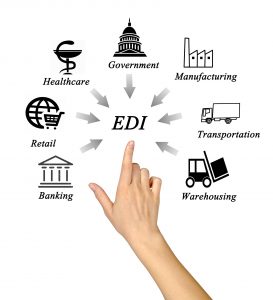
Electronic data interchange EDI Organizations of all types and sizes are able to utilize EDI. EDI communication is used in Government and various industries such as banking, healthcare, retail, automotive and others. Any company that buys, sells goods or services can potentially use EDI.
3. To be EDI capable or EDI compliant – what does it mean?

In simple words, EDI capable or EDI compliant is the ability to exchange business documents electronically in a specific format based according to an EDI standard.
Being EDI compliant, means your company has complied with the pre-agreed EDI standard which allows you to send and receive EDI documents to any business/trading partner located anywhere in the world.

4. What are the EDI standards?

All EDI transactions are determined according to EDI standards. Many industries have developed their own EDI standards to fit their requirements and business terms. EDI standards are built on the concept of making electronic business documents uniform, without regard to a country or place of origin. EDI standards regulate the correct order and location of the units of data in an EDI document. Below are some of the most commonly-used standards:

ANSI ASC x12 Uniform standard, developed by the American National Standards Institute, and Accredited Standards Committee X12 (ASC X12) to support companies across different industry sectors in North America.

EDIFACT Electronic Data Interchange for Administration, Commerce, and Transport (EDIFACT), developed by the United Nations. EDIFACT is the international standard but is widely used by multiple industries in Europe.

RosettaNet A standard widely used in the global semiconductor industry, but also in electronic components, consumer electronics, telecommunication, and logistics. RosettaNet is widely used in the USA, but it is also well accepted and even supported by governments in Asia.

Useful Reading: RosettaNet and B2B EDI Integration: All you need to know

PEPPOL (Pan-European Public Procurement Online) allows public organizations and their suppliers to exchange standard-based electronic documents over its network. PEPPOL simplify the trading process between private companies and government.

Useful Reading: B2G Integration: PEPPOL EDI Data Interchange

ODETTE A standard used by the automotive industries in Europe, developed by the Organization for Data Exchange by Tele Transmission in Europe.

SWIFT (Society of Worldwide Interbank Financial Telecommunication) The main goal is to exchange messages between financial institutions and banks. Financial and bank institutions from over 200 countries used SWIFT.

Tradacoms Standard mainly used in the UK retail sector.

5. What is EDI Mapping?

Mapping is the process of taking data from EDI format, to a company specific format and vice versa.

6. What does an EDI document, an EDI message or EDI transaction set, mean, is there a difference between them?

In the EDI environment each business document, such as an invoice or a purchase order, is called an EDI message or EDI transaction set or EDI document. Technically, there is no difference between them… The most commonly used EDI documents, especially in the retail and manufacturing industries, are as follows:

  • 810 Invoice
  • 846 Inventory Inquiry message
  • 850 Purchase Order
  • 855 Purchase Order Acknowledgment
  • 856 Ship Notice/manifest (ASN)
  • 997 Functional Acknowledgment

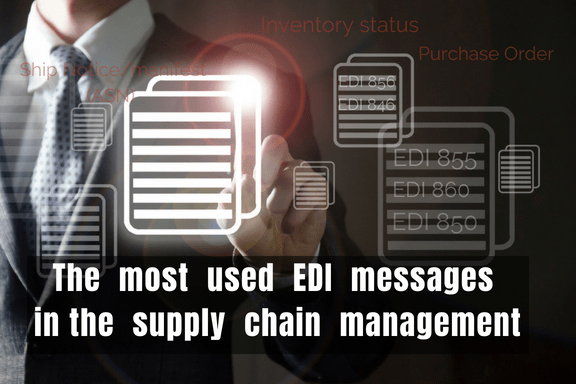
Useful reading: The most used EDI messages in the supply chain management

What is Advanced Ship Notice (ASN) 856 transaction set?

What is EDI 846 document?

Why EDI 846 is important to do business with big-box retailers

7. What are EDI Communication Protocols?

EDI protocols are the communication platform used for constant transmission of data between business partners.

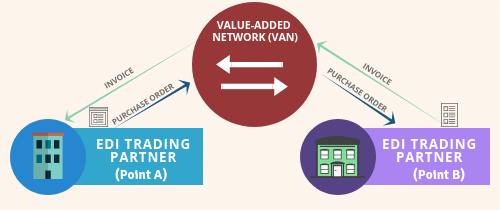
Companies can either exchange documents directly to their Trading Partners (Point-to-Point) or through an EDI Network (VAN).

Direct

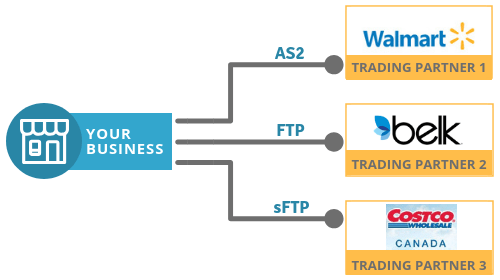
Direct EDI also known as Point-to-Point, allows companies to establish a single secure connection with their Trading Partner. Following are the most common communication protocols used to exchange EDI data in a point-to-point or direct connectivity:

  • FTP/SFTP – File Transfer Protocol/Secure File Transfer Protocol. These file transfer protocols allow businesses to connect with their partners via the Internet in order to exchange EDI documents.
  • AS2 A secure way to exchange documents over the Internet by using digital certificates and encryption of the EDI data. Communication protocols EDI AS2 FTP sFTP

VAN (Value Added Network)

VAN – is a private network provider, that only transmits EDI transactions in a secured manner between private networks. A VAN is a mediator who moves data from point A to point B. Until recently, this method of transferring data was considered the safest.

Useful reading: EDI Communication and VANs

EDI VAN connection

8. Which EDI Standard, Document(s) and Protocol should I use?

If you are just starting out, then you will most likely receive a list of requirements from your Trading Partner. It all depends which EDI standard they use, which documents they require from their Partners and how they expect these documents to be sent to them. Your trading partner is one that most of the times dictates the documents to exchange.

9. What are the Benefits of EDI?

There are multitudes advantages to use EDI (Electronic Data Interchange) both for small and mid-size companies as well as to big corporations. Below some impressive benefits from implementing EDI:

  • Improves Shipment Accuracy
  • Accelerates the movement of goods to customers
  • Improves customer/partner relationships
  • Improves cycle time reductions
  • Decision makers are able to quickly access order statuses
  • Improves document accuracy due to the elimination of manual labor.
  • Enhances the flow of information between 2 trading companies
  • Internal teams can now focus on core business tasks and

10. What is the difference between SaaS EDI & On-Premise EDI Software?

SaaS EDI

EDI2XML EDI SaaSUsing SaaS EDI model customers do not pay for ownership of the software, but for renting it (i.e. using it through a mobile application or Web interface). The main advantage of the SaaS model for the company is the absence of costs associated with the installation, update, and maintenance of the equipment and software that is being used by the company.

 

On-premises EDI

In on-premises deployment model, the company needs to maintain and manage the EDI software system itself. There is a whole control over all aspects of the EDI system including security, access and data integrity. EDI software is loaded onto the company’s owned PC or servers. If you choose the on-premises EDI model, keep in mind that you need the skills and expertise within your IT team. You also need the budget to maintain and upgrade EDI software and hardware when needed.

Useful reading: SaaS EDI or On-Premises EDI Translation Software: What you should know

11. What is EDI2XML?

EDI2XML is a SaaS EDI Solution, capable of converting EDI documents into XML/CSV/TXT format files and vice versa. EDI2XML is a Full Translation Service, which includes the translation of incoming and outgoing documents as well as communication with Trading Partners.

If you are still not finding the answer in our frequently asked questions post, please contact us.

Do you want to implement EDI at your company? Find out how to get started – request a live demo of EDI2XML.

Free EDI and System Integration consultation

October 22, 2018
https://www.edi2xml.com/wp-content/uploads/2018/10/All-about-EDI.png 350 1024 Tatyana Vandich https://www.edi2xml.com/wp-content/uploads/2024/08/edi2xml.com-EDI2XML-company-logo.png Tatyana Vandich2018-10-22 11:58:222019-02-28 14:02:49All About EDI: 11 Complete Answers about Electronic Data Interchange

The most used EDI messages in the supply chain management

Blog

This post was updated to reflect current trends and information.


In this article, we want to talk about the top EDI messages commonly used by trading partners in supply chain management. We will explain the purpose of the EDI messages and their benefits.

What is EDI?

The acronym of EDI is Electronic Data Interchange. The main objective of EDI is to replace the exchange of paper-based business documents.

EDI is the exchange of structured business documents used in B2B. The implementation of EDI is almost limitless. EDI is present in every commercial activity:
– supply chain management
– e-commerce
– Warehousing
– Insurance
– Banking and finance
Electronic data interchange (EDI) is helping businesses to automate specific business processes, as well as to cover an entire cycle of logistics.

What does EDI mean in logistics?

In short terms, an EDI is a flow where one business partner can create digital and electronic “business documents”, compliant to a specific standard (i.e. X12, EDIFACT, Tradacom, RosettaNet,) and transfer to the second party in a secured telecommunication channel.


Useful: eBook:  EDI – Key Information You Need to Know


The most commonly used set of EDI messages

Top EDI messages
 

Following is the list of o the most commonly used EDI transaction sets used in today’s business space, from supply chain management to e-commerce, you will find the following documents as the basics for EDI exchange:

– EDI 846 Inventory status
– EDI 850 Purchase Order
– EDI 855 Purchase Order Acknowledgement
– EDI 856 Ship Notice/manifest (ASN)
– EDI 860 P/O Change
– EDI 810 Invoice

The above EDI messages, called “must-have” because they are necessary to automate the most important trading cycle in the supply chain management, eCommerce, and Drop-ship space.

Many companies do not limit themselves only on the above EDI messages, they can decide to leverage other transactions and business documents to improve their supply chain effectiveness; as an example, they can request to add the 753, 754, and other documents related to pickup and delivery…


Useful: EDI Transaction Types – Complete List of EDI Transactions


EDI messages types

EDI 846 Inventory status

Most trading partners in the supply chain and eCommerce space, request that their suppliers update them with their inventory status by sending the EDI 846 document. You can check the details about this document in this article.

EDI 850 Purchase Order

Often, this is the first type of EDI message that companies such as retail chains, manufacturers, warehouses, or 3PL-providers to exchange when they switch to EDI.

EDI 850 contains:

  • Order number
  • Required date and time of delivery
  • Reference to the contract or contract number
  • Price
  • Sender and customer information, the place of delivery
  • Information on the contents of the order (bar codes, quantity, the name of the goods, multiplicity of packaging).

With the EDI 850, the product ordering process goes faster and becomes cheaper as the number of people involved in the process is reduced. Thanks to the fast and guaranteed transfer of information about the order, the supplier improves the reliability of the deliveries.

EDI 855 Purchase Order Acknowledgement

EDI 855 response to the Purchase Order is a “couple” message for EDI 850. The supplier sends EDI 855 to the buyer in accordance with the order value or suggesting to make changes regarding order quantities. This helps to avoid disruption in the supply chain.


Useful reading: What is EDI 855 Purchase Order Acknowledgment?


EDI 856 Ship Notice/manifest or ASN

ASN is a pair of EDI 861 Receiving Advice.

These notifications are exchanged between the business partners at the stage of shipment and receipt of the goods.

The supplier sends ASN immediately after the shipment. This EDI message helps to simplify and speed up the process of acceptance of goods. EDI 856 Ship Notice/manifest contains detail shipment information:

  • Shipment information (bill of lading number, ship to, ship from, etc.)
  • Unit load information about a physical shipping item.
  • Order information such as purchase order number, buying place, division number, etc.
  • Tare information about the pallets.
  • Pack information about the shipping package (cartons, racks, bags, etc.,)
  • Item information about the shipped goods, such as SKU identification, quantity shipped, etc.

Companies that have implemented ASN significantly increase the speed of receiving goods and entering data into the business system – with EDI 856 you do not need to drive numbers manually from the invoices. ASN information can go directly to the business system.

For the big trading retailers, this type of EDI message is a vital necessity. Advance notification of the goods delivery helps to prepare for its acceptance. Even before the supplier’s truck arrives, the retailers already have a list of the goods sent.

EDI 860 Buyer triggered P/O change

EDI 860 is a transaction sent to the supplier advising him about a change in the Purchase order sent earlier. The change can be to increase/decrease/delete quantities on an order or to change dates.

EDI 810 Invoice

EDI 810 Invoice is an electronic invoice transaction sent by the supplier to the buyer.

Learn more about  x12 810 Invoice in this article: What is an ANSI ASC X12 EDI 810 invoice?

Becoming EDI Compliant

We will help you save on EDI, quickly perform the integration, configure the connection with any trading partner or supplier.

Contact us today for more information and for pricing.

Free Consultation

Related Posts:

What is EDI 846 document?

What is EDIFACT? | UN / EDIFACT standard overview

Electronic Data Interchange: Key Information You Need to Know

What Are the Differences Between ANSI X12 and UN/EDIFACT

August 2, 2018
https://www.edi2xml.com/wp-content/uploads/2018/08/the-most-used-EDI.png 350 1024 Tatyana Vandich https://www.edi2xml.com/wp-content/uploads/2024/08/edi2xml.com-EDI2XML-company-logo.png Tatyana Vandich2018-08-02 09:00:312024-10-11 10:05:47The most used EDI messages in the supply chain management

EDI as a Service, a winning model in the digital transformation of your business

Blog, EDI, EDI2XML

This post was updated to reflect current trends and information.


One major advantage of the digital transformation and the massive adoption of the cloud, is the initiation of a serious discussion between business owners and executives from one side and their IT service providers from another side, for an outsourced IT services based on the best technology available today, at a reasonable price.

IT-outsourcing in the Digital Transformation era

Companies are more and more outsourcing their IT services to service providers. This process was motivated by customers’ desire to optimize their IT costs. There are different outsourcing models: hardware, software, data warehousing and storage, …

EDI2XML as a serviceFor many years we have seen the growing interest of the market towards a model called Software as a Service (SaaS). Although the term SaaS means only “software”, in fact, it is the most developed (to date) model of IT outsourcing, combining all the components listed above

What is Software as a Service?

Software as a service (SaaS) is one of the forms of cloud computing, a service model in which subscribers are provided with ready-made application software fully serviced by the provider. The vendor in this model manages the application, giving customers access to functions from client devices, usually through a mobile application or web browser.

The advantage of the SaaS model

The main advantage of the SaaS model for the consumer is the absence of costs associated with the installation, updating, and maintenance of the equipment and software that is being used by the company.
In the SaaS model:

  • The application is adapted for remote use
  • One application is used by several clients (the application is communal)
  • Payment is charged either in the form of a monthly subscription fee or on the basis of the volume of transactions
  • Technical support of the application is included in the payment
  • Updating and upgrading the application is quick and transparent for customers.

As with all forms of cloud computing, customers do not pay for ownership of the software, but for renting it (i.e. using it through a mobile application or Web interface).

Thus, as opposed to the classic software licensing scheme, the customer has relatively small recurring costs and does not need to invest heavily in the acquisition of the application program and the necessary Software and hardware for its deployment, and then maintain its performance, for the years to come.

EDI translation software in the Digital Transformation

Many entrepreneurs realize that using Electronic Data Interchange (EDI) is a necessary condition to do successful business. Even in some cases, there is no choice, it is mandatory to be EDI compliant in order to trade with big channels like Walmart, Costco, Canadian Tire or Target. Businesses are looking for the most profitable and cost effective EDI solution to implement.

Read: EDI X12, EDIFACT, CSV, XML – Why is a conversion necessary?


EDI benefits are obvious in business. One of the major advantages of EDI, is that it can quickly improve and develop an enterprise bottom line.

If the company is EDI compliant, it will be able to expand its turnover without a significant influx of new employees. Certainly, another advantage of EDI is that it reduces human errors, increases efficiency and the quality of information.

Read: EDI converter: Benefits of converting between EDI and XML


What are the advantages of using EDI as a Service?

EDI2XML as a Service is an ideal solution for companies of all sizes and from various industries who seek to implement an edi solution to comply with their trading partners and want to simplify the entire integration of their EDI in their Systems and processes.

With EDI2XML as a service, edi is converted to xml and from there, it can be transformed to any format that our client is capable of working with and integrate into his own CRM/ERP.

There is no need for our clients to install any software or hardware. We manage the entire workflow of integration, from setting up new partner, configuring and testing EDI documents and certification with the trading partner. We can even go farther by integrating directly into our clients’ ERP or CRNM systems using certified connectors from the Manufacturer (i.e. SAP, JDE, Microsoft AX…). As a result, our clients have a quick and painless fully integrated solution, and continuous streamlined EDI and data flow between all partners.

Choose to outsource your digital transformation projects

Whatever EDI converter you are looking for: edifact to xml, convert edi to xml online, convert x12 to xml online, etc. We have the best EDI Solution for your business. So, do you want to exchange electronic documents with customers, suppliers, and business partners, with a cost effective and optimal way? Then you have to check EDI2XML as a Services live.

Contact us today for more information and free EDI Consultation.

Free EDI consultation

June 19, 2018/0 Comments
https://www.edi2xml.com/wp-content/uploads/2018/06/EDI-as-a-service.png 350 1024 Tatyana Vandich https://www.edi2xml.com/wp-content/uploads/2024/08/edi2xml.com-EDI2XML-company-logo.png Tatyana Vandich2018-06-19 13:09:542019-10-17 10:52:27EDI as a Service, a winning model in the digital transformation of your business

Business Tech Terms Definitions

Blog, EDI, EDI2XML

This post was updated to reflect current trends and information.


We compiled a shortlist of business technology terms that are useful to keep on hand when looking for software solutions for your business or when speaking with an IT Service Provider. Because, sometimes a short and simple definition is all you need, and that’s exactly what we have here.

“SOFTWARE” Terms

Software EDI

• ERP: Enterprise Resource Planning; a fully integrated business process management software suite. It allows users to view, manage and track core business processes and resources using one single database.

• CRM: Customer Relationship Management is a software system that allows your business to manage contacts, collaborate effectively, increase productivity & grow your business. It is based on the preservation and analysis of information to improve the marketing, service and business relations with your customers.

• BI: Business Intelligence; a performance optimization software that aims to produce detailed analyses with the help of customized drillable dashboards. BI provides immediate access to relevant and timely business information (through visualizations & reports)

• WMS: Warehouse Management System; a software application to manage warehouse operations (track inventory, shipping, receiving, stock locations, picking, etc.)

• eCommerce: Website used to make commercial transactions electronically over the Internet; in other words, an online store to sell products and services.

• eCommerce integration: is the synchronization of a company’s eCommerce website with its back-end accounting or ERP system.

• API: An application programming interface (API) is a set of subroutine definitions, protocols, and tools for building application software. In general terms, it is a set of clearly defined methods of communication between various software components.

• Implementation: The process of installing and configuring software; this phase includes many steps such as business process re-assessment, system testing, user-training and support.

• Integrated Software: A collection of computer programs (modules like accounting, purchases, sales, inventory management, sales forecasting, EDI & more) which share one database.

• IT Consulting: Consulting services provided by an outside organization/consultant to advise business executives or IT managers on appropriate strategies and solutions to bring efficiency into the company through technologies.

• Digital transformation (DT): Digital Transformation (DT) is the transformation of business by remodeling the business strategy or digital strategy, models, operations, products, marketing approach, objectives etc., by adopting digital technologies. This accelerate sales and growth of the business from end to end.

• Office automation: Office automation refers to the varied computer machinery and software used to digitally create, collect, store, manipulate, and relay office information needed for accomplishing basic tasks. Raw data storage, electronic transfer, and the management of electronic business information comprise the basic activities of an office automation system. Office automation helps in optimizing or automating existing office procedures.

• Artificial Intelligence (AI) Artificial intelligence (AI) is an area of computer science that emphasizes the creation of intelligent machines that work and react like humans. Some of the activities computers with artificial intelligence are designed for include speech recognition, learning, planning, and problem solving.

• Internet of Things (IoT) The Internet of Things (IoT) is the network of physical devices, vehicles, home appliances and other items connected to the internet, collecting and sharing data. An example of an Internet of Things device a lightbulb that can be switched on using a smartphone app is an IoT device.

• Industrial Internet of Things (IoT) The Industrial Internet of Things is a unified system of computer networks and production equipment with built-in sensors and software for collecting and exchanging data. This system has remote monitoring and control in automatic mode, without human intervention. Industrial Internet of Things allows creating industries that are more economical, flexible and efficient than existing ones.

“EDI” Terms

• EDI: Electronic Data Interchange; the secure process of electronically exchanging business documents, like Purchase Orders, Invoices, ASNs, (in a pre-defined format) between Trading Partners

• EDI Standard: EDI documents are sent using standard-specific formats, describing what each piece of information is; these standards avoid trading partners sending documents back and forth using company-specific formats. Common standards include: ANSI ASC X12 (North American Standard), EDIFACT (International standard)

• EDI Translation System: Software application used to translate the EDI format (into a format readable by humans and systems) so the data can be read and used by business people and processed by a company’s internal management system.

• Communication Protocol: Communication method used to transmit data to and from Trading Partners; FTP, sFTP, AS2, VAN, Https

• Point-to-Point: Direct Connectivity; rather than having documents pass through a VAN, Trading Partners can exchange documents directly through secured communication protocols like FTP, sFTP, AS2, Https, etc.

• VAN: Value Added Network; a private network provider to facilitate electronic data interchange for Trading Partners; considered the “EDI post office” for incoming & outgoing documents.

• AS2: Applicability Statement 2; A point-to-point connectivity method that sends messages across the internet using the HTTP or HTTPS protocol, with increased verification and security.

• Trading Partner: Participant in an ongoing business relationship

• XML Extensible Markup Language; a markup language used to describe data. This is typically the go-to in EDI translation, since it is a format that is human and system-readable

• Data Mapping: The method by which information in one format is restructured into a different format.

May 24, 2018/4 Comments
https://www.edi2xml.com/wp-content/uploads/2018/05/Business-Tech-Terms-Defined.png 350 1024 Tatyana Vandich https://www.edi2xml.com/wp-content/uploads/2024/08/edi2xml.com-EDI2XML-company-logo.png Tatyana Vandich2018-05-24 13:32:492020-03-18 14:41:45Business Tech Terms Definitions

How to get more out of Salesforce with EDI Integration

Blog


This post was updated to reflect current trends and information.


At the end of a discussion we had with one of our contacts, who was inquiring about EDI, Salesforce and how to integrate it all together, I decided to write this article, in order to clarify and structure my arguments with the hope it can help other readers who might fall on this article having the same questions and concerns. I will start by defining some technical terms, prior to getting to the points.

What is Salesforce?

Salesforce is one of the most popular cloud-based CRM. The company is based in California (USA), and it has thousands of users worldwide. We’ve already written an article that provides more about the product, which I invite you to read, and learn more about salesforce itself, and how Magic xpi can be the best integration platform with Salesforce.

What is EDI?

Electronic Data Interchange or (EDI) is fundamentally a standard that regulates the electronic exchange of business documents between trading partners. EDI contains a set of message types. There are many different EDI standards i.e. X12, EDIFACT, RosettaNet…used mainly in different industries and different parts of the world. In North America, the US standard ANSI ASC X12 is p predominantly used.

Some example message types are:

  • EDI 810 – Invoice
  • EDI 850 – Purchase Order
  • EDI 846 – Inventory Inquiry/Advice
  • EDI 856 – ASN (Advance Ship Notice)

Help: What is EDI2XML as a Service?

EDI2XML as a Service is our popular translation and communication service offering to businesses of all sizes, from various industries. All conversions of EDI files are done on our end, leaving customers with no on-site installation of software or hardware and an EDI project that is on time and within budget.

Download our EDI2XML Translation Service Pricing Package here for more information

Why EDI Integration with Salesforce is Important

Companies of all sizes have different systems in place: i.e. ERP, CRM, Warehouse management…Some other companies might only operate their business using Salesforce.

It is a common situation that companies will have business partners requesting to exchange EDI (regardless of the standard), with them. The truth is that companies’ can NOT refuse such a request coming from a customer for example. They have to comply with such demand and become “EDI ready” or “EDI compliant”.

In a such scenario, the company running Salesforce will be receiving a Sales order (850 as an example) and sending back and invoice (810) for billing purposes, all in X12 standard (for example). What to do about this requirement? Companies need to take action.

Why You Need to integrate EDI into Salesforce

Given the above facts and considering that Salesforce “out-of-the-box” does NOT support any EDI standard, there is no choice for a company leveraging Salesforce, to escape the integration request.

Ultimately, businesses need to Integrate EDI into their Salesforce instance. By pushing EDI messages into their Salesforce instance in a near real-time basis, companies can achieve even more with the Salesforce system.

“Need Integration” Checklist

Each company is unique, and it can be a lot of reasons why your business needs Integrations. Following are the most common reasons a company might need to consider, in order to jump into integration projects:

– Your trading partner(s) is requesting to exchange data electronically

– Your company gets a lot of orders (200+ orders a month on average), this is being taped manually in different systems, thus taking lots of time of your employees, and creating inefficiencies.

– You are looking for a better experience with your customer. You need to get your inventory out that always exact, tracking numbers are received instantly after the merchandise is sent, etc.

– You do not have enough time to process orders. Your costumers need to wait for order processing.

– As third-party sellers, you are getting penalties from Amazon, eBay, and other marketplaces for the reason that you are not shipping orders fast enough.

– Your company receiving negative reviews from your customers who shop online, because of slow service or erroneous orders processing.

What to do Next to integrate EDI and Salesforce

Integrating EDI with Salesforce, is a bit different from other types of integration projects, a company might go through. Due to the fact that EDI is very specific, it requires very specific expertise. Here are some of the important points to consider before going into EDI integration projects:

  • For EDI integration in general, work with an EDI provider, and NOT with VANS (Value Added Networks). VANs are more expensive and less into integration.
  • Make sure the EDI provider is “integration oriented”; meaning he is not only specialized in EDI, but in integration as a concept
  • Do NOT settle half-way with “file integration”, look for near “real-time” integration, directly into your system.
  • Do NOT settle with point-to-point integration”. Developing and “coding” integration points, is very expensive to maintain at long term.
  • Look for the best integration method: look for certified connectors from the manufacturer (salesforce).

Integrate EDI with Salesforce to drive your business

If you need more information or help in determining your need in EDI to Salesforce Integration, please contact our integration experts, and Feel free to request a free demonstration.

EDI Salesforce Integration

March 20, 2018
https://www.edi2xml.com/wp-content/uploads/2018/03/Featured-Image-edi-Salesforce.png 350 1024 Tatyana Vandich https://www.edi2xml.com/wp-content/uploads/2024/08/edi2xml.com-EDI2XML-company-logo.png Tatyana Vandich2018-03-20 13:46:182024-12-24 15:16:11How to get more out of Salesforce with EDI Integration

EDI compliance and integration with Burlington Coat Factory

Blog, EDI

This post was updated to reflect current trends and information.

Company Overview of Burlington Coat Factory

Burlington Coat Factory is an American national off-price department store retailer and a division of Burlington Coat Factory Warehouse Corporation. The company operated 592 stores located in 45 states and Puerto Rico, inclusive of an internet store and has approximately 40 000 employees.

As per the company’s website, the first store was opened in Burlington, New Jersey in 1972, selling principally coats and outerwear.  Since then company diversified product categories by offering an extensive selection fashion-focused, labeled merchandise acquired directly from nationally recognized manufacturers and other suppliers.

Burlington Coat Factory EDI Standards

For all communications with their suppliers, Burlington Coat Factory use Electronic Data Interchange (EDI) including purchase orders, Advance Ship Notices (ASN), Invoices etc. The company is on EDI X12 v4010 standard.

Burlington Coat Factory EDI Specification

850 Purchase Order

Burlington Coat Factory sends 850 Purchase Orders via EDI, to inform their seller of a product request. A Purchase order 850 may be used to provide distribution requirements for receiving location(s), such as cross-dock, drop-ship, or direct to consumer as would be the case for the Burlington online store.

For each 850 Purchase Order, they indicate a purchase order number, a P/O date, the location of the ship to, provide a delivery time and product pricing.

856 Ship Notice/Manifest

Burlington Stores requires their seller to send an 856 Ship Notice/Manifest via EDI, to be advised of shipment information. The 856 transactions, includes order information, description of goods, types of packaging used, carrier information and more.

For a single purchase order, there can be or more shipments which would be followed by one or more 856 ASN Advance Ship Notice and possibly one or more 810 Invoices.

810 Invoice

The suppliers of Burlington Coat Factory have to comply with X12 810 Invoice to bill Burlington for products and services shipped to their stores.

Using an EDI 810 Invoice, permits Burlington to register payment-request information and update automatically their appropriate systems. The information included in the Invoice 810 provides automated cross-referencing of a purchase order and receiving information. This process is executed without manual intervention, thus eliminating further data entry.

824 Application Advice

Burlington Stores send 824 Application Advice via EDI, to notify the acceptance, rejection or acceptance with change of a trading partner’s transaction. The 824 transaction set contains information such as quantity and monetary amounts, dates, reference numbers, it also provides trading partner information, technical error descriptions in free-form text format.

852 Product Activity

The EDI message 852 Product Activity sent by Burlington to transmit product sales by location to the supplier. These messages inform a supplier about the items sold and items on hand at a store and its level. Burlington sends the EDI 852 message on a scheduled basis (e.g., weekly on Mondays) for input to a vendor’s sales and inventory management system.

997 Functional Acknowledgment

997 Functional Acknowledgment is required by Burlington, when sending or receiving EDI transactions. 997s, are an indication that a trading partner has successfully received a well-formed EDI message. The message Functional Acknowledgments 997 generated automatically for transmission back to the sending party.

Becoming EDI compliant with Burlington Coat Factory

EDI2XML offers full EDI integration with Burlington Coat Factory. From A to Z, a customer’s EDI requirements are handled by our team of EDI experts. We take care of EDI mapping, Trading Partner configuration, Standards maintenance, XML/CSV/TXT translation etc.

For more information Download our EDI2XML Translation Service Pricing Package here 

EDI2XML pricing packages

January 26, 2018
https://www.edi2xml.com/wp-content/uploads/2024/08/edi2xml.com-EDI2XML-company-logo.png 0 0 Tatyana Vandich https://www.edi2xml.com/wp-content/uploads/2024/08/edi2xml.com-EDI2XML-company-logo.png Tatyana Vandich2018-01-26 11:40:062020-07-23 11:29:21EDI compliance and integration with Burlington Coat Factory

EDI converter: Benefits of converting between EDI and XML

Blog, EDI, EDI2XML

This post was updated  to reflect current trends and information.


Overview of EDI

EDI (Electronic Data Interchange) – standardized message formats for the transfer of commercial information between business partners. The two most common documents exchanged using EDI are purchase orders (EDI 850) and invoices (EDI 810). To transfer the EDI data, companies are often using the Internet or VANs (Value Added Networks). EDIFACT is the most popular EDI standard in Europe and ANSI X12 is in active use in North America. In the global  supply chain,  the GS1 EDI  set of standards are predominant. In brief, EDI allows companies to communicate business and commercial information quickly and efficiently.

Read: What is EDI? (A technical introduction to EDI)

Understanding XML

 XML (Extensible Markup Language) is a markup language that allows to standardize the data, in the form of text easily understood by users and computers. In other words, XML is a simple and flexible text format designed to meet the needs of electronic publishing.

XML has two main tasks:

  1. Provide a description of the data structure.
  2. Provide a common syntax for all other specifications.

Thus, XML does not specify how to display a document, it only describes its structure and content.

XML created in 1996 by W3C (World Wide Web Consortium); it is a subclass of the Standard Generalized Markup Language (SGML). XML was conceived to be a flexible format, at the same time as a formal metalanguage for use on the Internet. One of XML’s primary applications was in handling B2B and B2C data interchange.

From the beginning of XML implementation, its advantages over EDI were obvious. Simple and self-descriptive, structured, support of multi-lingual and Unicode (very important for international EDI transaction).

What is EDI2XML?

EDI2XML is a technology to transform incoming EDI documents (X12 EDI files) into XML. At the same time, converting an XML document to EDI X12 format. This process of converting edi to xml is due to the fact that our company took the time to create predefined xml schemas (xsd files) that respond to the business needs of almost 100 % of EDI consumers.

Read: How does EDI2XML work?

EDI2XML converter

The fact that we have over 20 years of experience in converting X12 EDI to XML gives us a competitive advantage over other EDI developers. We have already successfully implemented this converter in many companies of different sizes from various industries. We also helped IT consultants use EDI2XML in their EDI integration projects.

EDI2XML as a Service is our popular translation and communication service. All conversions of EDI files are done on our end, leaving customers with no on-site installation of software or hardware and an EDI project that is on time and within budget.

Read: EDI Integration of B2B e-commerce for small companies

If you would like to know more about the plans offered for EDI2XML (Free EDI Consultation), or would like to see it in action (live Demo), please do not hesitate to contact us.

Free Guide Intro to EDI


Related Posts:

Electronic Data Interchange: Key Information You Need to Know
ANSI ASC X12 Standards Overview
What Are the Differences Between ANSI X12 and UN/EDIFACT
A technical introduction to EDI

December 27, 2017
https://www.edi2xml.com/wp-content/uploads/2017/12/FI-EDI-XML.png 350 1024 Tatyana Vandich https://www.edi2xml.com/wp-content/uploads/2024/08/edi2xml.com-EDI2XML-company-logo.png Tatyana Vandich2017-12-27 14:00:182020-04-09 15:53:10EDI converter: Benefits of converting between EDI and XML

Bed Bath & Beyond EDI Integration, Compliance and Implementation

Blog, EDI, EDI2XML


This post was updated to reflect current trends and information.


Bed Bath & Beyond – Company Overview

Founded in 1971 Bed Bath & Beyond Inc.  is an American-owned omnichannel retailer offering a vast selection of high-quality domestic’s merchandise and home furnishings.

Bed Bath & Beyond (BBB) has an e-commerce platform consisting of various websites and applications. The Company also operates established retail stores in the United States, Puerto Rico, Canada, and Mexico. As of 2021, the company has a total of 1 020 stores and 55 000 employees.

Bed Bath & Beyond purchases its merchandise from 10 800 suppliers, 85% of such purchases are provided by small and medium-sized enterprises. The company’s 10 largest suppliers accounting for only 15% of purchases.

BBB faces growing competition from online stores, such as Amazon. To strengthen its presence on Internet, Company makes acquisitions such as Decorist an online interior design platform. One Kings Lane Inc. – an online home goods retailer which offers an extensive collection of designers. PersonalizationMall.com – online seller of personalized gifts. Of a Kind, is an e-commerce website that offers limited edition items from emerging fashion and home designers.

Bed Bath & Beyond EDI Compliance

To be among the Bed Bath & Beyond suppliers, you must be able to send and receive documents electronically in accordance with x12 EDI standards.

As a supplier of Bed Bath & Beyond your company may be required to exchange the following EDI business document types:

  • EDI 810         Invoice
  • EDI 850         Purchase Order (Customer triggered)
  • EDI 852         Product Activity
  • EDI 855         Purchase Order Acknowledgment
  • EDI 856         Advance Ship Notice (ASN)
  • EDI 860         PO Change (Customer triggered)
  • EDI 865        PO Change (Supplier triggered)

At any time, we can add additional Bed Bath and Beyond compliant EDI transactions at a customer’s request.

Check up our EDI Document Library

EDI Service Providers for Small Business

EDI2XML offers EDI integration with Bed Bath and Beyond to allow businesses of all sizes to become Bed Bath and Beyond EDI compliant.

Even small companies can trade with Bed Bath & Beyond using our EDI2XML Translation Service. Our services cover all:

  • EDI Mapping
  • Partner Configuration
  • Translation Processing
  • Standards Maintenance
  • XML Translation
  • EDI communication with Trading Partners, etc.

We also work with your team to easily integrate your EDI process with all major ERP systems.


Read: Convert EDI to XML: The Winning SaaS Option


Best EDI for Small Business

With our EDI converter, B2B companies have the ability to exchange essential business documents via EDI without hiring in-house EDI/IT personnel. Our EDI2XML Translation Service is the best EDI solution for B2B. This service is great for any business looking to implement EDI at an affordable price, without any headaches.

If you’re looking to complete an EDI project, Contact us today for your  FREE consultation to evaluate your EDI project.

contact-us-today-to-connect-withbed-bath-beyond-and-other-business-partners
December 20, 2017
https://www.edi2xml.com/wp-content/uploads/2017/12/Bed-Bath-abd-Beyond-EDI-Integration.png 675 1200 Tatyana Vandich https://www.edi2xml.com/wp-content/uploads/2024/08/edi2xml.com-EDI2XML-company-logo.png Tatyana Vandich2017-12-20 16:14:342022-04-01 11:51:16Bed Bath & Beyond EDI Integration, Compliance and Implementation

A must-have guide for a successful systems integration with EDI

Blog

The concept of Electronic Data Interchange (EDI) is still very abstract for a business owner up until today. More often, as soon as an SME (small to medium-sized enterprise) is requested by an important partner to comply with the electronic data interchange process or do EDI, everyone gets into a big pig panic inside the enterprise, and all reinforcements are being called to help with such a project.

Why EDI Integration Projects Often Turn Into a Headache

Large retail chains are critical customers for many small and medium-sized businesses. Complying with their requirements isn’t optional—it can make or break a partnership. And since these retailers communicate almost exclusively through EDI, integrating it correctly is non-negotiable.

Yet many companies underestimate what it takes. Diving into EDI integration without a clear understanding of your own processes and specific business needs often leads to delays, errors, and frustration. In short: without proper planning, EDI projects can quickly become a nightmare.

Recommendations and Steps for a Successful Integration

EDI technology can have a bigger impact on a company’s business processes than almost any other IT solution. That’s why EDI integration projects need to be carefully planned and executed, following a clear, structured approach.

Here are the key steps to ensure a smooth and successful integration:

Step 1: Preparation of an EDI implementation team

It is essential that senior management be involved in any EDI integration project and implementation, at least at a high level.

Ideally, the EDI implementation team should include representatives from different departments, such as operations management, sales, and information services.

It is important for the team to design together a good flow of information, so everyone understands the issues, the scope, and the benefits of the project. A project manager should be assigned to take charge of such a mandate.

Step 2: Setting a project timeline

The implementation team should set an ETA and develop a plan with a complete list of tasks, resources required, and delivery estimates.

Step 3: Choice of standards

While the choice of standard of EDI format and communication protocols is very limited, this phase consists on just reviewing and making sure all specs and documentations are in place for the kick-off.

Step 4: Choice of documents for EDI transaction

Often, trading partners specify the EDI standard and the type of documents they will send or accept. Sometimes partners use only a few of the possible documents such an Invoice EDI 810 form and purchase orders EDI 850 form.

Step 5: “On premises” or “cloud” based or EDI Web Sevice?

There are many ways to do EDI. It is depending of the anticipated transaction volume, or the size of the business. Going with a software solution deployed “on-premises” or adopting a “cloud based software” or maybe EDI Web Service

♦ The Cloud-based EDI Service is an excellent solution for Small and Medium-sized enterprises that do not have a budget for large EDI projects, and who do not have experienced staff with EDI exchange.

USEFUL: Learn more about EDI Solution as a Service for SMEs 

♦ The other way to get the most out of EDI, is by adopting a full EDI integration with your internal software management system like your ERP, CRM etc.

♦ EDI2XML Web Service, is for developers and businesses, interested in building their own EDI (Electronic Data Interchange) integration flows and programs. Normally, these individuals, are capable of interacting with external API and Web Services to translate EDI to XML and XML to EDI, and have the resources and expertise to work with Web Services and HTTP requests in order to achieve their goals. EDI2XML web service, is the premier choice for IT people as a reliable service to accomplish such integration projects.

Step 6: File Integration or direct system integration

When it comes to integration, the implementation should be decisive on how the integration to their CRM/ERP is going to happen: there are (2) methods to do such an integration; either through file integration, Where the ERP has already some built-in jobs to import data based on specific format, or direct integration. Obviously, this decision is also dependent on whether the software management system is a legacy system or a modern one, fully loaded with all kinds of API and programming interfaces. This part can be the most difficult and lengthy part, unlike what most people think…

Step 7: Integration project testing

Pilot projects are conducted both within the company and with external business partners. EDI test should be of a specified duration. They will help identify possible loopholes and establish a problem-solving plan. Technical employees should be trained in the technical aspects of EDI.

Step 8: Setting up

The implementation of the EDI system must be combined with several factors in order to be successful: adequate users training, proper implementation plan, and establishment of an emergency procedure.

For small to medium-sized enterprises, EDI integration is a good deal. An Electronic Data Interchange (EDI) capable enterprise retains an important customer or supplier and have a lot of opportunities to enter into new contracts with large companies.

For many years, our EDI2XML service has been offering up-to-date integrated solutions at an affordable cost. We have been helping companies of all sizes, to optimize operations and improve their competitiveness.

cta_edi2xml

December 14, 2017
https://www.edi2xml.com/wp-content/uploads/2024/09/edi2xmlcom-EDI-cloud-software.webp 628 1200 Tatyana Vandich https://www.edi2xml.com/wp-content/uploads/2024/08/edi2xml.com-EDI2XML-company-logo.png Tatyana Vandich2017-12-14 16:33:202026-03-13 12:28:55A must-have guide for a successful systems integration with EDI
Page 5 of 9«‹34567›»
Recent
  • Is EDI Required for Small Businesses? A Supplier’s Guide...June 17, 2026 - 7:02 pm
  • EDI compliance with Loblaw
    How to Meet Loblaw EDI Requirements as a Small BusinessJune 4, 2026 - 2:05 pm
  • The Infrastructure Behind Modern Commerce: Why EDI Still Matters
    EDI in E-Commerce and Retail: Why Modern Commerce Still...May 1, 2026 - 4:54 pm
  • Key Statistics on AI Use in the Workplace
    The Risks of Using Public AI Tools in Business: Data Privacy,...March 11, 2026 - 5:51 pm
  • Enterprise AI
    How to Securely Access Enterprise AI: GPT, DeepSeek &...February 20, 2026 - 3:09 pm
Popular
  • How to Quickly Connect to a Large Retailer's EDI Requirements
    How to Get EDI-Compliant Quickly For A Large RetailerNovember 21, 2025 - 4:29 pm
  • EDI-as-a-services
    EDI Translation Software “On-premises” or “As...January 21, 2014 - 1:28 pm
  • order-automation in e-commerce
    Why Is It Crucial to Automate the E-Commerce Order Fulfillment...May 10, 2022 - 1:58 pm
  • EDI for Logistics and transportation
    EDI Integration for Efficient Transportation ManagementOctober 6, 2023 - 1:33 pm
  • information technology definitions
    Business Tech Terms DefinitionsMay 24, 2018 - 1:32 pm

Browse by tag

Amazon Amazon Integration ANSI ASC x12 ASC X12 EDI B2B EDI integration e-commerce e-commerce business e-commerce integration eCommerce eCommerce integration EDI EDI2XML EDI 850 EDI as a Service EDI Communication EDI converter EDIFACT EDI for supply chain EDI for Third-Party Logistics EDI for transportation EDI implementation EDI Integration EDI Integration Project EDI project EDI Translation EDI Web Service EDI x12 ERP Integration integration platform integration project JDE Magic xpi Magic xpi Integration platform NetSuite online store Salesforce Shopify Shopify eCommerce integration Shopify integration Supply Chain Supply Chain Management Translation Software X12 EDI XML

Subscribe to our Blog

Menu

  • Home
  • About the EDI2XML Company
  • About EDI2XML EDI Converter
  • Blog
  • Book A Free Consultation
  • Privacy Policy EDI2XML Company

Our Services

Fully Managed Integration

E-Commerce Integration

Business Systems Integration

Fully Managed EDI

EDI Web Service 

On Premises EDI 

Managed Cloud Service


Latest Blog Posts

  • Is EDI Required for Small Businesses? A Supplier’s Guide to Retail OnboardingJune 17, 2026 - 7:02 pm
  • EDI compliance with Loblaw
    How to Meet Loblaw EDI Requirements as a Small BusinessJune 4, 2026 - 2:05 pm
  • The Infrastructure Behind Modern Commerce: Why EDI Still Matters
    EDI in E-Commerce and Retail: Why Modern Commerce Still Depends on EDIMay 1, 2026 - 4:54 pm

Contact Us

400 Blvd Curé-Labelle, #304 Laval QC H7V 2S7 Canada

Contact EDI2XML Team
Phone: +1 450-681-3009
Website: https://www.edi2xml.com/

© 2000-2026 EDI2XML (by Namtek Consulting Services). All rights reserved.
  • Link to Facebook
  • Link to LinkedIn
  • Link to X
  • Link to Youtube
  • Blog
Scroll to top Scroll to top Scroll to top