EDI2XML
  • About
    • The Company
    • EDI2XML
    • Advantages
    • Partnership with EDI2XML
    • Testimonials
  • Services
    • Enterprise AI
    • Fully Managed Integration
    • Fully Managed EDI Services
    • EDI Web Portal
    • EDI Web Service
    • EDI On Premises
    • Managed Cloud Services
    • Amazon Integration
    • Shopify Integration
    • BigCommerce Integration
    • NetSuite Integration
    • JD Edwards Integration
    • Dynamics 365 Integration
    • SAP B1 Integration
    • Salesforce Integration
    • Industry 4.0 Integration
  • Pricing
    • EDI Managed Services
    • EDI Web Service
    • EDI On-Premises
    • Managed Cloud Services
    • Shopify Integration
    • JD Edwards Integration
    • E-commerce Integration
    • All other Integrations
  • Blog
  • Resources
    • Resource Center
    • List of EDI Codes
    • List of EDIFACT Messages
    • EDI Documents Library
    • Trading Partners
  • Contact us
  • Book a Consultation
  • Click to open the search input field Click to open the search input field Search
  • Menu Menu
  • Link to Facebook
  • Link to LinkedIn
  • Link to X
  • Link to Youtube

Ecommerce order management, covering order processing, fulfillment workflows, and integration between sales channels and backend systems.

Tag Archive for: ecommerce order management

Why Is It Crucial to Automate the E-Commerce Order Fulfillment Process?

Blog

E-commerce businesses have grown exponentially over the past few years, and consumer demand and expectations are rising as well, so now more than ever, it is essential for online businesses to ensure fast and accurate order fulfillment. Thus, providing customers with a seamless order fulfillment experience is a key competency for e-commerce businesses to stay competitive in the market.

Automation plays a very important role in streamlining all your e-commerce fulfillment processes, right from receiving orders from the customers, arranging for the ordered products, and finally delivering them to the customers.

E-commerce Automation: A Way to Save Time and Money

According to Deloitte research, it is better to focus on improvements that can fundamentally change how your business operates rather than making incremental changes.

E-commerce automation is exactly what can change the way your online business functions.

Online stores of all sizes, from small boutiques and startups to huge corporate e-commerce websites from Fortune 500 companies, are using e-commerce automation to improve their e-commerce business.

online store automation
 

No matter what platform your online e-commerce store is running on, Shopify, BigCommerce, Magento, or any other, automation can give you a significant advantage over your competitors and help you gain customer loyalty.

What is the Process of Order Management in E-Commerce?

Companies that can organize their main online business processes effectively win in the highly competitive e-commerce market.

It is already known that the speed of order fulfillment affects the volume of sales. Fast order fulfillment encourages the customer to make repeat purchases from this particular online store.

Order management includes the following processes:

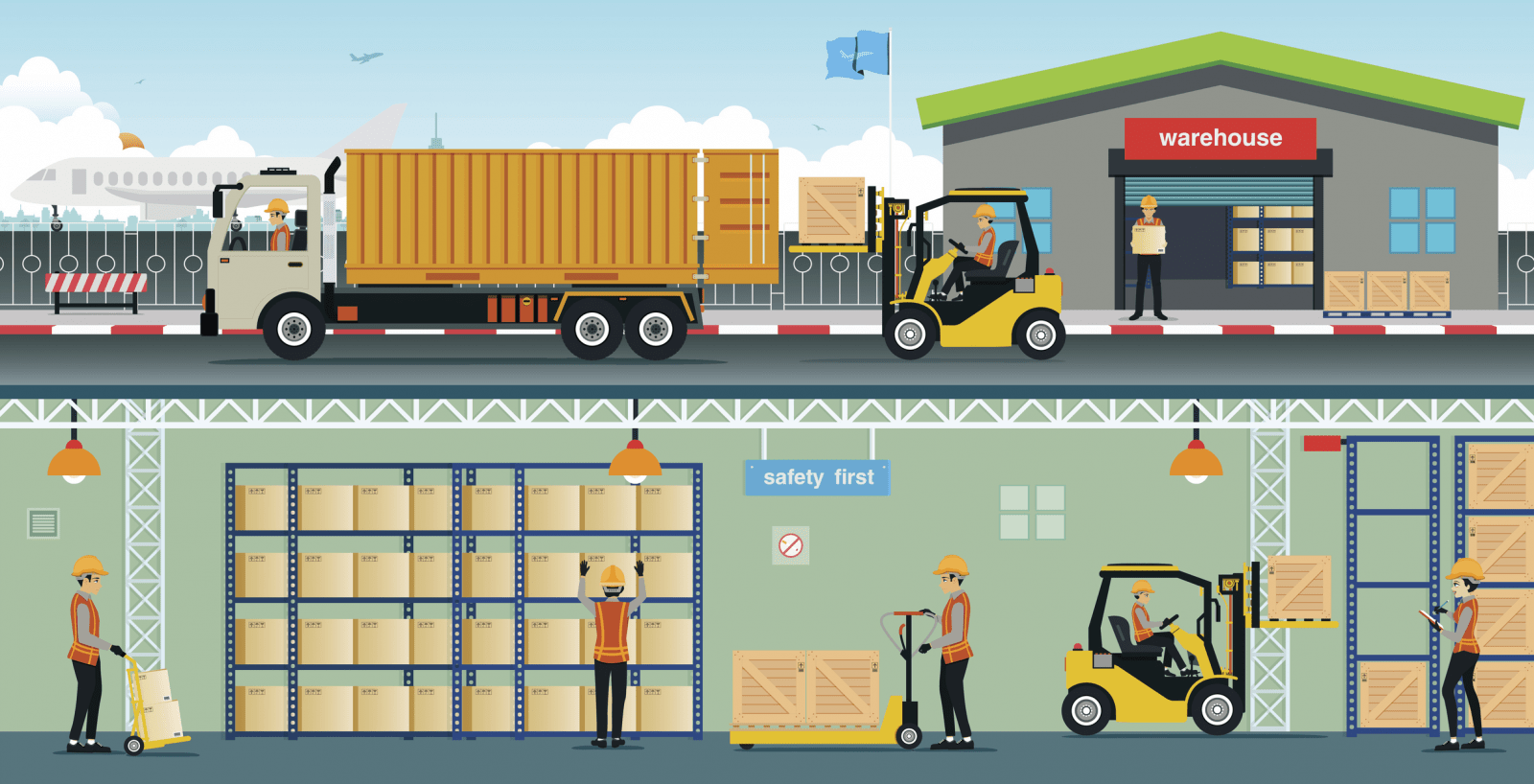
  • Warehousing of goods (can be both in the company’s own warehouse, and in the warehouse of suppliers, or a drop shipper).
  • Receiving and processing orders in the online store, which includes reconciliation with current stocks in the warehouse and confirmation of purchase order.
  • Picking and packing orders.
  • Transfer of the order to transport companies for delivery/ or delivery of orders.
  • Informing the buyer about the current status of the order.
  • Updating inventory stock information.
  • Receiving payment from buyers (B2B or B2C).
  • Work with returns.

The main objective of order management is to provide accurate and fast execution at all stages of the sales cycle, which helps increase customer loyalty, and the profitability of the company, and maintain a positive reputation.

Currently, a large number of online businesses outsource the fulfillment function. However, keep in mind that when order fulfillment is transferred to a 3PL provider as a fulfillment center, the set of specific fulfillment operations may vary. For example, a company can deal with returns on its own.

Fulfillment Meaning in E-Commerce

E-commerce fulfillment is a complex set of business operations that start from the moment the customer places an order in an e-commerce online store until the moment he receives the purchased products or goods.

An e-commerce company can complete the order fulfillment process internally or outsource it to a third-party logistics (3PL) provider.


In e-commerce, the term order fulfillment refers to two main types of order fulfillment:

1. Business-to-business (B2B) where orders are shipped to a company or big retailers (Walmart, Costco, Home Depot, etc.) Normally, B2B orders include large quantities of many items.

2. Business-to-Consumer (B2C) where individual shoppers are provided with products directly at home. In general, these are not large orders consisting of an extremely high count of products, although the frequency of purchase can be greater.

E-commerce Order Management: Order Fulfillment Automation

In e-commerce, order management is one of the most important processes, which directly impacts profit. That’s why automating the order fulfillment process is crucial to creating a successful online business.

Order fulfillment automation can be successfully implemented under any of the following scenarios:

  • Delivery of goods from the company’s own warehouse
  • Delivery of goods from the supplier’s warehouse
  • Dropshipping
  • 3PL warehouse
 

Based on our many years of experience in integration and e-commerce automation, we can guarantee that automation of order fulfillment will allow your online business to run much more efficiently.

Benefits of Order Fulfillment Automation

The best solution for optimizing order fulfillment is to automate this process. It gives the online businesses a lot of opportunities:

  • the speed of receiving and processing the order.
  • Manage orders coming from different sales channels (e.g. Shopify store, Amazon seller, etc.)
  • Ensure high speed, transparency, and continuity of processes.
  • Minimize errors that occur during manual order processing.
  • Improve customer service and increase profits.

Order Fulfillment Automation – Behind the Scene


Let’s take a look behind the scenes when we talk about automating the online order fulfillment process.

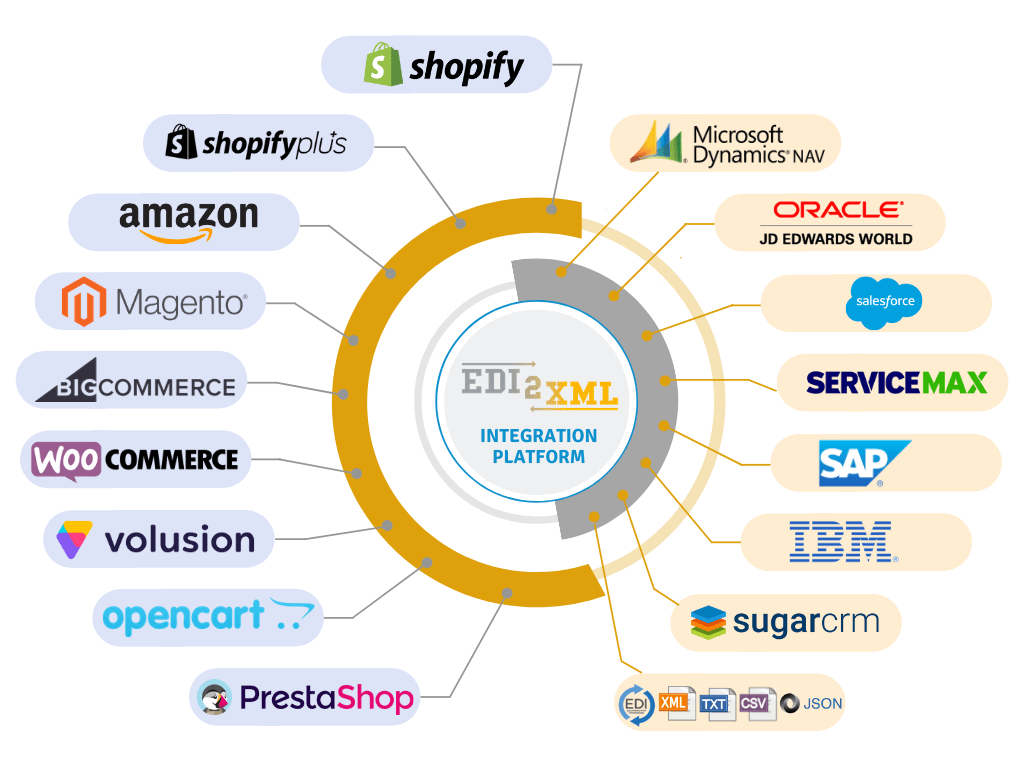
In fact, e-commerce automation is the integration of an enterprise business system such as CRM or ERP and an e-commerce platform to synchronize the exchange of data in both directions incoming and outgoing.

The goal of e-commerce automation is to configure and deploy a cloud-based, integration process (not a widget) that will be running 24/7/365 to synchronize business data between the e-commerce online store and the ERP /CRM system of the company.

Of course, depending on the specifics of the business, there are a variety of e-commerce integration scenarios. Usually, it is the integration of an online store running on Shopify, BigCommerce, Magneto, and WooCommerce with back-end management systems such as SAP, Microsoft Dynamics, Oracle, NetSuite, Salesforce, HubSpot, and EDI (Electronic Data Interchange).

Automation e-commerce
 

Based on our many years of experience in integrating e-commerce, the following is the most common integration scenario:

Shopify Salesforce Integration

Shopify and Salesforce integration is one of the most common integrations for automating an online store.

This type of integration is very common due to the fact that both platforms are very popular and used by hundreds of thousands of users around the world.

Shopify is one of the most popular platforms for creating and running an e-commerce website. It powers over 800,000 businesses.

Salesforce is a leading cloud-based customer relationship management (CRM) platform for businesses of all sizes.

By integrating Shopify with Salesforce, you can sync all your data and streamline processes across the two platforms.

Shopify Salesforce Integration with EDI2XML

Shopify integration

Let’s take a look at how we, in EDI2XML, automate e-commerce using the example of Shopify and Salesforce integration.

EDI2XML typically acts as an intermediary between a customer’s e-commerce instances and their trading partner (shipper, supplier, 3PL) or customer’s internal business systems.


Shopify Sales Orders Synchronization

Here are the steps of one-way synchronization from Shopify to Salesforce:

1. Our EDI2XML integration flow will start every pre-defined period (recommended every 15 minutes).

2. The integration flow will connect to a Shopify instance to read and extract the list of Orders created since the last call, that are not yet transferred to Salesforce.

3. It will bring those orders with their corresponding details

4. Our EDI2XML flow will than transform these orders into a format ready to be pushed to Salesforce

5. The orders will be submitted to Salesforce.

6. An email will be triggered for a mailing list to advise about a new order(s) sent to the Salesforce

Shopify Order Fulfillment Synchronization

Here are the steps of one-way synchronization from Salesforce to Shopify:

1. Upon fulfilling the order and shipping the goods of an order in Salesforce, the status of the order will change.

2. Our EDI2XML integration flow will start every pre-defined period (recommended every 15 minutes).

3. When it wakes up, it will do the following:

a) Extract the list of Orders that are originating from Salesforce that are not yet fulfilled

b) For each not fulfilled Order, it will check its status in Salesforce

c) If the orders status in Salesforce is now fulfilled, it will extract the fulfillment necessary information and it will update the Shopify instance.

d) It will also send an email to a mailing list, to advise about the fulfillment of the order in question.

Conclusion: Why is It Crucial to Automate the E-Commerce Order Fulfillment Process?

Can automation of online business boost your income? Definitely yes! Automation is designed to reduce the routine, and to get the maximum income from customers, as well as attracting a new target audience.

Contact us for your first free consultation with one of our experts and find out how you can automate your online business.

May 10, 2022/6 Comments
https://www.edi2xml.com/wp-content/uploads/2022/05/e-commerce-order-fulfillment-automation.png 675 1200 Tatyana Vandich https://www.edi2xml.com/wp-content/uploads/2024/08/edi2xml.com-EDI2XML-company-logo.png Tatyana Vandich2022-05-10 13:58:272026-02-13 15:32:42Why Is It Crucial to Automate the E-Commerce Order Fulfillment Process?

What is The Key Factor That Influences E-Commerce Website’s Revenue?

Blog

A well-performing e-commerce website can attract more visitors to your business on the Internet, help you acquire more customers, and improve your reputation.

It does not matter on which eCommerce platform your online store is built; Shopify, Magento, BigCommerce, Salesforce Commerce Cloud, or some others, the main goal is to quickly and fully satisfy the needs of your online customers.

E-commerce Business: Launch Your Online Store

As many eCommerce experts advise, an online store should be simple and straightforward, but its functionality should fulfill the modern requirements of users.

The actions of buyers in most online stores are the same:

Step-1. The buyer enters the online store and finds the desired product.

Step-2. The buyer adds the desired product to the “basket” for ordering.

Step-3. The buyer enters personal information to place and pay for the order.

Step-4. The buyer confirms all the information and the order is sent to the representatives of the online store.

Now, what happens next?

Have you ever wondered where the order should “go” after the customer submits and places it?

Actions at this stage are taken by the owners of the online store, and they could be very different. This can ultimately have a big impact on the store’s revenue and reputation.

eCommerce order management is a key revenue driver for online store

The success of any online store largely depends on the accurate and efficient organization of the order process.

Fast and accurate order processing is one of the most important competitive advantages in any e-Commerce business. However, it is impossible to speed up order processing without effective management. Order management implies an organization’s control at every stage of the cycle: from the receipt of the online order to the delivery of goods to the consumer.

One simple online order usually entails the following processes:

  • placing an order in the database;
  • verification of information from the buyer;
  • receiving of payment;
  • reconciliation with current stocks in the warehouse;
  • shipping and packaging;
  • transfer of cargo to the carrier;
  • message to the buyer about the current status of the order;
  • delivery;
  • updating stock status.

Manual eCommerce order fulfillment vs an automated process

Online store orders can be processed manually or automated.

When processing an order manually, the operator needs to do the following:

  • Key-in into the internal ERP / CRM or accounting system, data about a new client or find his data in the database.
  • Enter customer data (name, email address, phone #, delivery address, payment method, etc.)
  • Enter order data (product, quantity, etc.)
  • Submit the order for further processing.

This approach does not rule out errors and associated disruptions and delays.

The most effective option for successfully managing online orders is fully integrating the ecommerce online store with your business management systems such as ERP/CRM. In this case, all orders automatically synchronize with your internal management system and can be quickly processed.

Fully managed e-commerce Integration with ERP/CRM system

We, at EDI2XML, offer a fully managed solution to integrate your e-commerce store with any business system such as Microsoft Dynamics, Oracle JD Edwards, Salesforce, ServiceMax, SAP Business One / SAP ERP, or even any homegrown business solutions.

We are experienced in using a state-of-the-art technology that is capable of discovering/reading/writing into ERP/CRM systems, using certified connectors.

e-commerce integration service

Using our advanced integration technologies, we provide our clients with the most necessary solutions for their online business:

  • Two-way exchange “eCommerce-ERP”, “ERP-ecommerce”.
  • Secure two-way data transfer.
  • Automatic exchange processing.
  • A stable, reliable, and proven solution.
  • Flexibility and scalability. The ability to expand the functionality of your online store at any stage.
  • Work with a large array of data.
  • Numerous connections with different eCommerce, Amazon, EDI, ERP, CRM, and other business and accounting systems.

Automated eCommerce order management process flow

We eliminate the need for manual data entry by automating the most important business processes, ensuring data exchange between eCommerce and almost all ERP, CRM, and accounting systems.

  • The EDI2XML integration platform connects your ERP/business systems with your online store.
  • Orders placed on your online store are sent automatically to your business system.
  • As you fulfill online orders, the integration platform extracts shipment data from your business system and sends it directly to your ecommerce store thus your clients always have the latest order status.
  • Automatically update inventory data in your online store as frequently as you wish.

Benefits of Integrated e-commerce and ERP

Integration is the best solution for optimizing all stages of order processing. It gives companies many opportunities:

  • You will be able to receive and process orders in one interface.
  • Integration allows you to effectively manage orders in a single structured system from various sales channels (such as your own online store, Amazon account, Facebook marketplace).
  • data synchronization ensures high speed of order processing and continuity of processes.
  • avoid human errors associated with manual order processing.
  • improve customer service and increase profits.

Integration and automation of processes are necessary for online stores with large sales volumes. Additionally, it gets much more necessary, when a company is selling via the multi-channel and omnichannel environment, where the same product is sold online through different channels, and in-store.

An excellent end-to-end solution is the Magic xpi integration platform, which will help automate the process and help speed up order processing.

The popularity of online shopping is skyrocketing like never before

As many surveys have shown, more customers are shopping online now than before the pandemic, and this trend continues despite physical stores started re-opening. Thus, this fact is driving the need for digital transformation.


Over the years, we have been helping our clients build successful online businesses. We have extensive and strong experience in data synchronization between eCommerce and ERP/RCM systems as well as automation of processes in the online store built on Shopify, BigCommerce, Magento, and many others.

Contact us for a free consultation and we will help you choose the most suitable integration solution for your e-commerce business.


The following is a list of additional helpful information:

Must-Have Integration between E-Commerce and Business Systems

9 Major E-Commerce Trends That Will Help Grow Your Online Business

The main reasons why you need Microsoft Dynamics Integration with your Business Systems

Shopify and Microsoft Dynamics Nav Integration: Things you should know

Free Shopify Integration Whitepaper

August 30, 2021
https://www.edi2xml.com/wp-content/uploads/2021/08/EDI2XML-ecommerce-revenue.jpg 675 1200 Tatyana Vandich https://www.edi2xml.com/wp-content/uploads/2024/08/edi2xml.com-EDI2XML-company-logo.png Tatyana Vandich2021-08-30 14:03:542026-02-13 17:32:51What is The Key Factor That Influences E-Commerce Website’s Revenue?
Recent
  • The Infrastructure Behind Modern Commerce: Why EDI Still Matters
    EDI in E-Commerce and Retail: Why Modern Commerce Still...May 1, 2026 - 4:54 pm
  • Key Statistics on AI Use in the Workplace
    The Risks of Using Public AI Tools in Business: Data Privacy,...March 11, 2026 - 5:51 pm
  • Enterprise AI
    How to Securely Access Enterprise AI: GPT, DeepSeek &...February 20, 2026 - 3:09 pm
  • EDI 754 Guide
    EDI 754 Routing Instructions: Complete Guide to Purpose,...February 18, 2026 - 4:54 pm
  • All you need to know about EDI 753 Transaction
    What Is EDI 753? Purpose, Structure & Routing Rule...February 12, 2026 - 3:59 pm
Popular
  • How to Quickly Connect to a Large Retailer's EDI Requirements
    How to Get EDI-Compliant Quickly For A Large RetailerNovember 21, 2025 - 4:29 pm
  • EDI-as-a-services
    EDI Translation Software “On-premises” or “As...January 21, 2014 - 1:28 pm
  • order-automation in e-commerce
    Why Is It Crucial to Automate the E-Commerce Order Fulfillment...May 10, 2022 - 1:58 pm
  • EDI for Logistics and transportation
    EDI Integration for Efficient Transportation ManagementOctober 6, 2023 - 1:33 pm
  • information technology definitions
    Business Tech Terms DefinitionsMay 24, 2018 - 1:32 pm

Browse by tag

Amazon Amazon Integration ANSI ASC x12 ASC X12 EDI B2B EDI integration e-commerce e-commerce business e-commerce integration eCommerce eCommerce integration EDI EDI2XML EDI as a Service EDI Communication EDIFACT EDI for supply chain EDI for Third-Party Logistics EDI for transportation EDI implementation EDI Integration EDI Integration Project EDI project EDI to XML converter EDI Translation EDI Web Service EDI x12 ERP Fully managed EDI Integration integration platform integration project JDE Logistics EDI Transactions Magic xpi NetSuite online store Shopify Shopify eCommerce integration Shopify integration soa integration Supply Chain Supply Chain Management Translation Software X12 EDI XML

Subscribe to our Blog

Menu

  • Home
  • About the EDI2XML Company
  • About EDI2XML EDI Converter
  • Blog
  • Book A Free Consultation
  • Privacy Policy EDI2XML Company

Our Services

Fully Managed Integration

E-Commerce Integration

Business Systems Integration

Fully Managed EDI

EDI Web Service 

On Premises EDI 

Managed Cloud Service


Latest Blog Posts

  • The Infrastructure Behind Modern Commerce: Why EDI Still Matters
    EDI in E-Commerce and Retail: Why Modern Commerce Still Depends on EDIMay 1, 2026 - 4:54 pm
  • Key Statistics on AI Use in the Workplace
    The Risks of Using Public AI Tools in Business: Data Privacy, Compliance, and Shadow AIMarch 11, 2026 - 5:51 pm
  • Enterprise AI
    How to Securely Access Enterprise AI: GPT, DeepSeek & LLaMAFebruary 20, 2026 - 3:09 pm

Contact Us

400 Blvd Curé-Labelle, #304 Laval QC H7V 2S7 Canada

Contact EDI2XML Team
Phone: +1 450-681-3009
Website: https://www.edi2xml.com/

© 2000-2026 EDI2XML (by Namtek Consulting Services). All rights reserved.
  • Link to Facebook
  • Link to LinkedIn
  • Link to X
  • Link to Youtube
  • Blog
Scroll to top Scroll to top Scroll to top