EDI2XML
  • About
    • The Company
    • EDI2XML
    • Advantages
    • Partnership with EDI2XML
    • Testimonials
  • Services
    • Enterprise AI
    • Fully Managed Integration
    • Fully Managed EDI Services
    • EDI Web Portal
    • EDI Web Service
    • EDI On Premises
    • Managed Cloud Services
    • Amazon Integration
    • Shopify Integration
    • BigCommerce Integration
    • NetSuite Integration
    • JD Edwards Integration
    • Dynamics 365 Integration
    • SAP B1 Integration
    • Salesforce Integration
    • Industry 4.0 Integration
  • Pricing
    • EDI Managed Services
    • EDI Web Service
    • EDI On-Premises
    • Managed Cloud Services
    • Shopify Integration
    • JD Edwards Integration
    • E-commerce Integration
    • All other Integrations
  • Blog
  • Resources
    • Resource Center
    • List of EDI Codes
    • List of EDIFACT Messages
    • EDI Documents Library
    • Trading Partners
  • Contact us
  • Book a Consultation
  • Click to open the search input field Click to open the search input field Search
  • Menu Menu
  • Link to Facebook
  • Link to LinkedIn
  • Link to X
  • Link to Youtube

Streamline communication with trading partners through EDI Integration—automate data exchange, reduce errors, and strengthen business relationships.

Tag Archive for: EDI Integration

Best Practices for Improving E-Commerce Supply Chain Management

Blog

This post was updated to reflect current trends and information.


Currently, many businesses are operating their own eCommerce stores on Shopify or Amazon to sell their products and services over the Internet to clients and consumers, all over the world. This is a great way to increase sales and brand awareness.

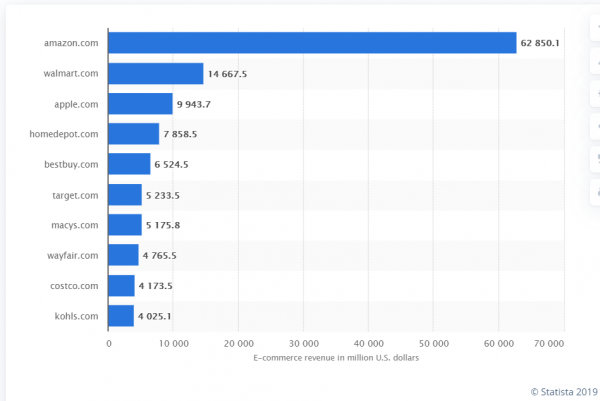
United States: top 10 online stores

The e-commerce market in the United States is constantly evolving. According to Statista’s forecasts, in the coming years, retail sales of B2C e-commerce in the US will grow rapidly: from 315.6 billion US dollars in 2018 to more than 565.7 billion US dollars in 2023. The most popular online store in the United States is, of course, Amazon.com, the second most popular is Walmart.com

United States: top 10 online stores

As you can see in the graph above, at the top of the e-commerce rating are the 2 largest retailers:

Amazon.com, Inc. is a global e-commerce corporation that provides online retail, consumer electronics, digital content and other services such as daily deals and local groceries. The greatest part of the company’s revenue is generated from third-party seller revenues, subscription services, and AWS activities. Due to quality standards and global reach, Amazon is considered one of the most valuable brands in the world.

Walmart, Inc. is one of the biggest retail chains offering low prices and immensely varied products, giving Walmart a competitive edge.

Challenge of efficient e-commerce transaction

Whatever you choose, open your own online store on one of the most popular e-commerce platforms such as Shopify, WooCommerce, BigCommerce, Magento or sell on Amazon, or deal with Walmart, Home Depot, Target, etc. it is very beneficial for companies of all size and various industries to expand their online business.

However, many executives still do not consider a full integration between there online store, and their business management system (ERP, CRM), as a must and important option to adopt.

Efficient supply chain management and prompt exchange of the necessary information between trading partners is the key to the success of your electronic business and the high satisfaction of your customers.


Download our whitepaper for more information about Shopify integration.


The main problems that online store owners may encounter when they omit a full integration between their store and their ERP are as follows:

  • They must hire more staff to manage their supply chain, in order to respond to growing customer demands.
  • It is difficult to balance incoming demand and production (in case the company is a manufacturer)
  • Problematic transfer of inquiries and information between several business partners involved in the supply chain channel.

The challenge with supply chain management is to synchronize the supply chain with consumer demand and measure the productivity and success rate. Therefore, below are 3 useful tips to overcome these challenges:

Integrated ERP Solutions

Having one platform to manage and run a business can make all the difference. A fully integrated software system will be able to efficiently manage an eCommerce and retail business and eliminate the need to key-in information from the online store to the management system manually.


Useful reading: Must-Have Integration between E-Commerce and Business Systems


EDI Integration

As mentioned previously, the ability to balance product demands from an eCommerce store and supply chain demands is very important. Therefore, to do this would be to empower the eCommerce platform with EDI capabilities, to exchange data in real-time with suppliers and partners.


Useful reading: The most used EDI messages in the supply chain management


Modern Business Solutions

A scalable integrated IT solution, such as the one suggested by EDI2XML, is needed to be able to electronically exchange information by parsing data of different formats, like X12/EDIFACT, XML, CSV or Json, and translate EDI from one format to another. On top of that, the solution should be able to easily integrate with different systems and communicate with different partners using modern and secured communication protocols such as AS2, sFTP or API (Web services).

Improve your eCommerce management and supply chain by implementing and integrating with the best tools and solutions.

Free EDI Consultation

RELATED POSTS:

Must-Have Integration between E-Commerce and Business Systems

9 Major E-Commerce Trends That Will Help Grow Your Online Business

The main reasons why you need Microsoft Dynamics Integration with your Business Systems

PRICING PACKAGES: Shopify Integration

Shopify and Microsoft Dynamics Nav Integration: Things you should know

January 13, 2020
https://www.edi2xml.com/wp-content/uploads/2020/01/Best-practice-e-commerce.png 350 1024 Tatyana Vandich https://www.edi2xml.com/wp-content/uploads/2024/08/edi2xml.com-EDI2XML-company-logo.png Tatyana Vandich2020-01-13 10:55:542024-05-24 11:47:24Best Practices for Improving E-Commerce Supply Chain Management

Understanding ANSI ASC X12 EDI 810 Invoice: Definition, Key Data Elements, and Workflow

Blog

This post was updated to reflect current trends and information.


In the world of business-to-business (B2B) transactions, efficiency is paramount. The EDI 810 Invoice stands as a crucial electronic document that streamlines the billing process, ensuring accurate and timely payments. But what exactly is an EDI 810 invoice, and how does it revolutionize the way companies handle financial exchanges? This comprehensive article delves into the intricacies of the EDI 810 standard, exploring its key components, workflow, benefits, and implementation strategies. We’ll answer the common questions businesses have, such as how to interpret an EDI 810 sample, what are the mandatory data elements, and how to integrate EDI 810 into existing systems.

What is EDI 810? 

EDI 810 Invoice – in international business practices, the 810 (Invoice) is an electronic document sent by the seller to the buyer to receive payment for goods or services provided.

The EDI X12 810 Transaction Set contains information about the goods and /or services, their quantity, and the price at which they were delivered to the buyer, the characteristics of the goods (color, weight, etc.), delivery terms and information about the sender and the recipient.

An electronic invoice can be generated in various standards, it all depends on which standard the partners agreed to use in order to exchange EDI. For example, in ANSI ASC X12, which is prevailing in North America, this document is called ANSI X12 Transaction Set 810 Invoice. You can also see various names for this document, for example, X12 810, EDI Invoice, EDI Invoice 810, ANSI X12 810, EDI X12 810, EDI 810, EDI 810 Document, 810 Transaction Set, etc.


“INVOIC” is an analog of the EDI 810 Invoice in the international UN / EDIFACT standard, which ispredominant outside of North America. INVOIC document (derived from the word “Invoice”, but limited to 6 letters, according to the EDIFACT rule).

EDI 810 Invoice Data Elements: What Information is Included?

Understanding the key data elements within an EDI 810 Invoice is essential for accurate processing. What specific information does an EDI 810 contain, and how is it structured? Typically, an EDI 810 document includes:

  • Invoice Number and Date: Unique identifiers for tracking and referencing invoices.
  • Purchase Order Number: Linking the invoice to the original purchase order for reconciliation.
  • Delivery Date: The date goods or services were provided.
  • List of Items or Services: Detailed description of products or services rendered.
  • Item Price and Identifier: Pricing details and unique product/service codes.
  • Payment Terms: Agreed-upon payment conditions, including due dates and discounts.
  • Shipping Information: Addresses, carrier details, and tracking numbers.
  • Tax and Discount Calculations: Detailed breakdown of applicable taxes and discounts.

How do these elements ensure accuracy and efficiency in billing? Each element plays a crucial role in providing a clear and comprehensive record of the transaction, minimizing discrepancies and accelerating payment processing. Depending on the goods or services the company provides, additional information may also be included in the EDI 810 invoice.

EDI 810 Transmission Explained: AS2, FTP/SFTP, and Web Services

Previously, many EDI transactions (including EDI 810), were carried out through a Value Added Network (VAN). But the transmission of EDI 810 invoices has evolved significantly. 

Currently, in order to provide an affordable and cost-efficient EDI exchange, most companies have switched to a point-to-point communication such as:

  •  AS2 (Applicability Statement 2) exchanges documents over the Internet by using digital certificates and encryption of the EDI data.
  • FTP/SFTP (File Transfer Protocol/Secure File Transfer Protocol) –  These file transfer protocols allow businesses to connect with their partners via the Internet in order to exchange EDI documents.
  •  HTTP EDI Web Service (REST API) This EDI Web Service gains more and more popularity because is much more cost-effective and you can be up and running in less than an hour. EDI web Service meant for companies who got their technical resources to work with REST API (call and consume HTTP Rest Web services). The EDI2XML offers a free 15 days trial.

Which transmission method is best for your business, and what factors should you consider when choosing? The choice depends on factors like security requirements, technical capabilities, and cost considerations. For example, REST APIs are often preferred for their speed and ease of integration, while AS2 provides robust security for sensitive data.


Learn more about EDI Web Service

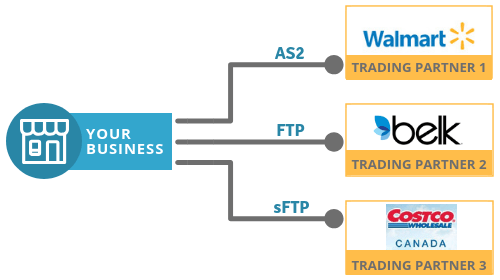
One company can use different means or protocols to exchange EDI documents with its multiple trading Partners. (see picture below) Usually, this happens because each big company has its own requirements to exchange electronic messages or EDI.

EDI communication

A Detailed Look at the EDI 810 Transaction Process

In typical and common business practice, the basic documents exchanged between trading partners are EDI 850 (Purchase Order) and EDI 810 (Invoice); this statement is partially true in the EDI world. Based on our more than 25 years of successful EDI Integration experience, we can tell you for sure that usually, the EDI process is much more complex. Between EDI 850 Purchase Order (or even before it) and Invoice 810, partners exchange a number of different documents. This is especially true for retail companies.

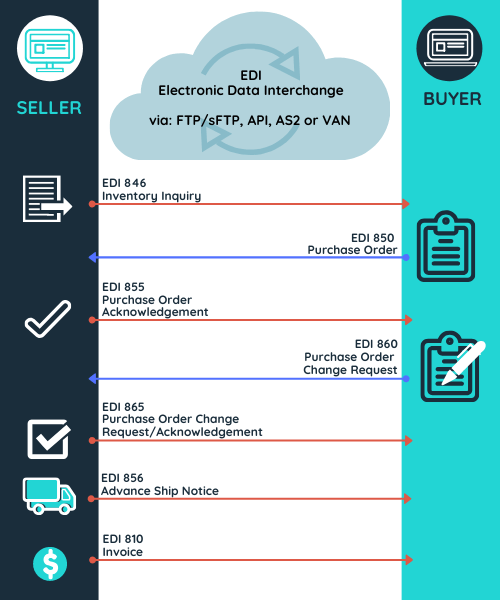
Below you can find a possible EDI scenario in the retail industry.

Seller sends to the buyer an EDI 846 Inventory Inquiry message to advise about stock level status and availability. EDI846 can include also pricing information.


Thus, The EDI 810 invoice is often part of a larger EDI workflow. What is the typical sequence of EDI transactions in a B2B exchange, and how does the EDI 810 fit into this process? A common scenario involves:

  1. EDI 846 (Inventory Inquiry/Advice): Primarily used by suppliers to provide real-time inventory data to their trading partners
  2. EDI 850 (Purchase Order): The buyer initiates the order.
  3. EDI 855 (Purchase Order Acknowledgement): The seller confirms the order.
  4. EDI 860 (Purchase Order Change Request – Buyer Initiated): allows a buyer to request modifications to an existing purchase order they’ve already sent to a supplier
  5. EDI 865 (Purchase Order Change Acknowledgment/Request – Seller Initiated): transaction set used to confirm or request changes to a previously submitted purchase order. 
  6. EDI 856 (Advance Ship Notice): The seller provides shipping details.
  7. EDI 810 (Invoice): The seller requests payment. 

NOTE: EDI 846 is more often used in B2B e-commerce for more information about this transaction set please read the blog: What is EDI 846 document?

  • Based on the information received in EDI 846 the buyer generates a Purchase Order (EDI 850) which contains a list of goods that he wants to purchase from the supplier, including information about the quantities, shipping directives, and other details.
  • Upon receiving the Purchase Order seller send a Purchase Order Acknowledgement (EDI 855) to confirm goods are available to be sold.
  • In the next step, the buyer could send a seller a Purchase Order Change Request (EDI 860) to request a change to a previously submitted purchase order.
  • The seller responds with a Purchase Order Change Request/Acknowledgement (EDI 865) to notify of the acceptance or rejection of the change to the purchase order previously submitted by the buyer.
  • To send the contents of the shipment, the seller sends an EDI 856 Advance Ship Notice or EDI ASN. This EDI document must be transmitted before the arrival of the goods.
  • An invoice (EDI 810) can be transferred to the buyer after filling out and delivering the order or along with.
EDI 810 Invoice
 

Thus, it can be observed that although the EDI X12 810 invoice is the most commonly exchanged electronic document, multiple EDI transaction sets can be used in relation to the EDI 810.


Book a FREE one-on-one EDI consultation session with our in-house experts


EDI X12 810 Invoice Sample

The following example details the format of an EDI 810 invoice.

ISA*00*          *00*          *12*5141231234     *12*5034564567     
*181122*1220*U*00501*000000001*0*T*> GS*IN*5141231234*504564567*20181122*122047*1*X*005010
ST*810*0001
BIG*20181122*I-0042537
N1*RI**92*10055500
N1*ST**92*00262
ITD*05*1*****100
DTM*011*20190120
IT1**2*EA*5.45**UP*888077648572
SDQ*EA*92*00682*1*70674*1
IT1**2*EA*5.45**UP*888077650123
SDQ*EA*92*00111*1*11356*1
IT1**3*EA*4.85**UP*888077648954
SDQ*EA*92*00682*1*11356*1*70674*1
IT1**3*EA*5.15**UP*888077649105
SDQ*EA*92*00011*2*00111*1
IT1**1*EA*5.9**UP*888077648867
SDQ*EA*92*00682*1
TDS*5770
CAD*A***FDEG
CTT*5
SE*20*0001
GE*1*1
IEA*1*000000001

Invoice EDI 810 Invoice Specifications: Decoding the Segment Structure

Here is the specification of the EDI 810 transaction set given as an example above. You should note that like any other EDI document, 810 contains mandatory and optional data. Optional data depends of the business areas and the requirements of the trading partner.

  Segment name Purpose
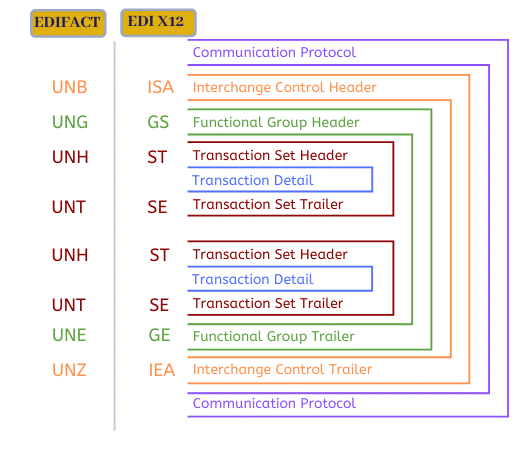
ISA Interchange Control Header Marks the beginning of the transmission and provides the sender/receiver identification.
GS Functional Group Header Marks the beginning of the functional group and provides the sender/receiver identification.
ST Transaction Set Header To indicate the start of a transaction set and to assign a control number. There must be only one instance per transaction.
BIG Beginning Segment for Invoice To indicate the beginning of an invoice transaction set and transmit identifying numbers and dates.
N1 Name To identify a party by type of organization, name, and code ST- Ship To RI – Remit To The N1 is sent in conjunction with the SDQ when the N1 indicates the ship to location and the SDQ indicates the bill to locations.
ITD Terms of Sale/Deferred Terms of Sale To indicate a discount terms. Code 05 – Discount Not Applicable  
DTM Date/Time Reference To specify pertinent dates and times Code 011 Shipped
IT1 Baseline Item Data To specify the basic and most frequently used line item data for the invoice and related transactions
SDQ Destination Quantity To specify multiple locations and quantity detail.
TDS Total Monetary Value Summary To provide the total invoice amount
CAD Carrier Detail To specify transportation details for the transaction Code: FDEG  – FedEx (Ground Only)
CTT Transaction Totals Number of line items To transmit hash totals for a specific element in the transaction set. 5 – Total number of IT1 Items segments.
SE Transaction Set Trailer To indicate the end of the transaction set and provide the count of the transmitted segments (including the beginning (ST) and ending (SE) segment).
GE Functional GroupTrailer Marks the ending of the functional group and provides the sender/ receiver identification
IEA Interchange Control Trailer To define the end of an interchange of zero or more functional groups and interchange-related control segments

To learn more about the structure of ANSI ASC X12 read our Blogs:

  • EDI ANSI ASC X12 Standards – Technical Overview
  • What is EDI ANSI ASC X12 Standards?

What are the Benefits of Using EDI 810 Invoices?

Like any EDI document, the EDI 810 provides faster communication between seller and buyer and reduces the risk of errors. Using EDI is much easier than traditional paper documents.

Thanks to EDI, the exchange of documents between trading partners is error-free.

Major benefits of EDI:

  • Reduce paper flow and increase business efficiency by reducing the time it takes for both parties to complete transactions.
  • Reduce administrative time spent manually submitting invoices and other essential documents.
  • Resolve manual data entry errors
  • Customer satisfaction is growing due to the rapid completion and delivery of your orders.
  • Faster payment from your customers

EDI 810 Integration Options: Managed Services vs. Web Service, Which is right for you?

EDI2XML propose 2 options for EDI 810 transaction exchange with your business partners:

Option 1: Fully Managed EDI Service including translation and communication service offering to businesses of all sizes, from various industries. All processing of EDI files are done at our end, leaving customers with no on-site installation of software or hardware and an EDI project that is on time and within budget.

Option 2: EDI2XML web services is an HTTP service running over the internet, on EDI2XML own platform that is capable of receiving HTTP requests to translate EDI messages to XML, and XML messages (based on EDI2XML’s proprietary format) to EDI.

Contact us today for more information about EDI Integration and we will more than happy to assist you!

November 12, 2019
https://www.edi2xml.com/wp-content/uploads/2019/11/EDI810.png 350 1024 Tatyana Vandich https://www.edi2xml.com/wp-content/uploads/2024/08/edi2xml.com-EDI2XML-company-logo.png Tatyana Vandich2019-11-12 16:00:392026-05-13 16:07:53Understanding ANSI ASC X12 EDI 810 Invoice: Definition, Key Data Elements, and Workflow

Fully managed EDI service VS HTTP Web Service: Which is Better for Your Business ?

Blog

This post was updated to reflect current trends and information.


Electronic Data Interchange (EDI) and all the services around it are becoming more and more popular, regardless of the industry, for one major reason: EDI transactions are replacing paper documents exchanged between trading partners, and helping companies in their digital transformation projects, for a “greener” planet.

Retail was one of the first industries to fully adopt EDI, and it is still the most active vertical in its usage. EDI is a proven and effective alternative to fax, e-mail, and manually entering or re-entering data such as Invoice, Purchase Order, Inventory and many others…

There are various types of EDI and several approaches to integrate Electronic Data Interchange in a business community. Each EDI provider can offer a different EDI integration methodology, in order to become EDI compliant. We at EDI2XML, offer two options for to integrate EDI into your company, and make your business “EDI compliant”, while shortening the integration project:

Fully Managed EDI Service

HTTP EDI Web Service

How to select? What kind of EDI integration solution is a better option for your business?  First, let’s understand both options.

Fully Managed EDI Service

The EDI2XML service offered as “fully managed” includes translation and communication service offering to businesses of all sizes, from different industries.

Our team at EDI2XML, takes care of ALL the aspects of the integration project. With this model, we offer a “Turnkey EDI Solution” where we take on our shoulder all setup, configuration, testing, certification with the EDI partners …

EDI Fully Managed Service
 

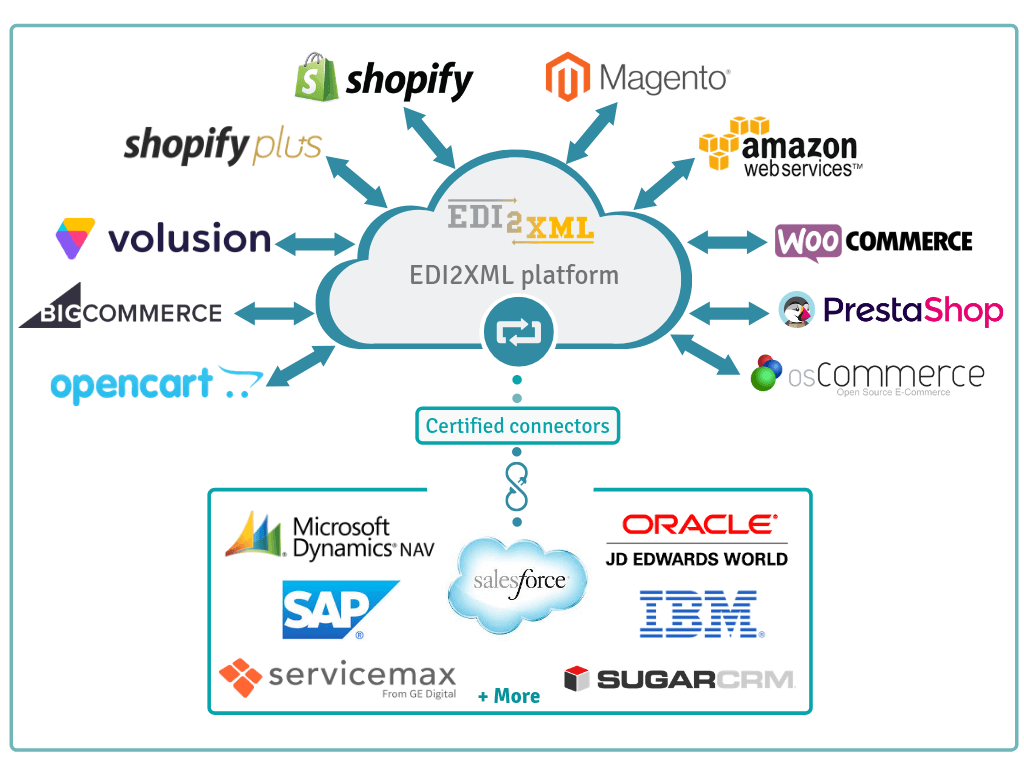
In other words, with this option, we take care of everything: all the steps of the project from A to Z. We can even integrate directly into your ERP or CRM system. We provide certified connectors for leading IT systems such as Salesforce, JD Edwards, SAP, Dynamics CRM, Dynamics AX, and more.

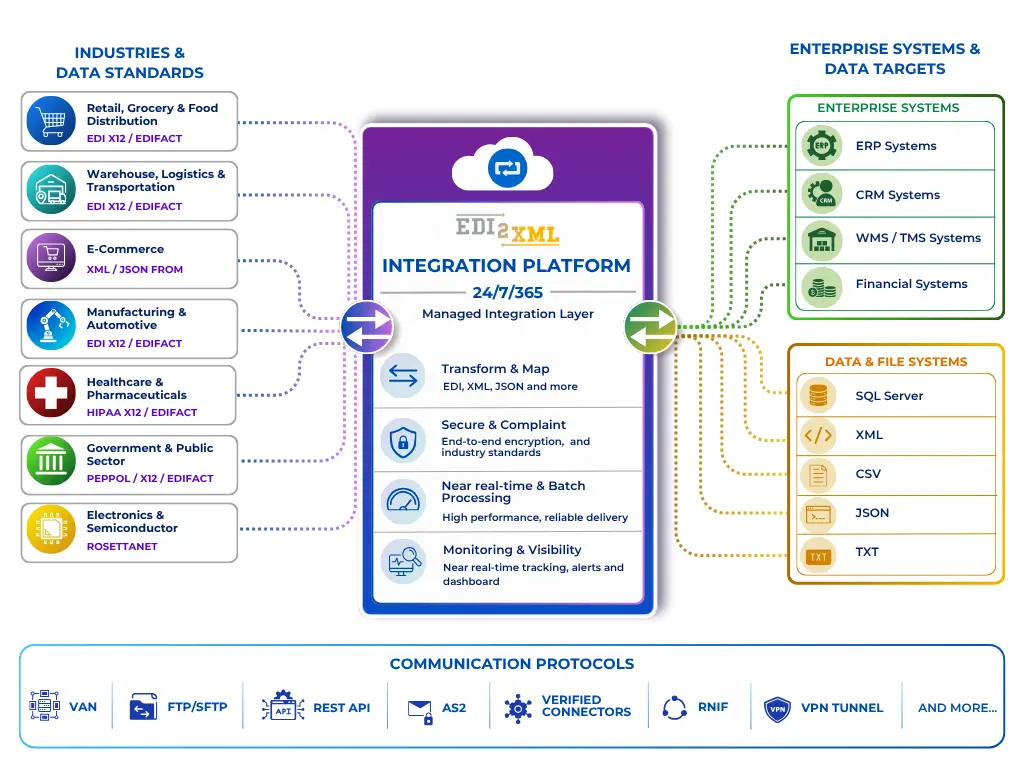
EDI integration platform
 

a) Technical Details

A setup phase is mandatory for all new Trading Partners and/or EDI document implementation. This stage includes the project analysis, setup of Trading Partner accounts, configuring Partner specs and platform, defining the transfer file structure, building and setting up all required connectivities and communication protocols. It also includes an end-to-end full cycle data testing and certification.

To learn more about EDI service, download our free introductory guide here

b) Pricing

As for the pricing, it is based on pre-defined monthly service packages, including a pre-defined volume of data processed. All our packages are billed monthly based on the entry level plan (Business Light) at the beginning of each month. Subsequent month billing will include the basic plan fee PLUS the difference between the plan we billed initially (Business light) for previous month, and the plan that we were supposed bill for the previous month based on real volume of data processed for that month.

All this to say, our monthly pricing packages are dynamic, they go up and down based on the volume of data we process and integrate, and our clients are not locked in in any of the packages.

For more information about pricing, fill out a form: EDI2XML Translation Service Pricing Package

HTTP EDI Web Service (REST API)

EDI2XML Web Service is an HTTP service running over the internet, on EDI2XML’s own platform that is capable of receiving HTTP requests to translate EDI messages to XML, and XML messages to EDI (based on EDI2XML’s proprietary format).

EDI2XML Web Service is much more cost-effective, and meant for companies who got their own technical resources to work with REST API (call and consume HTTP Rest Web services)

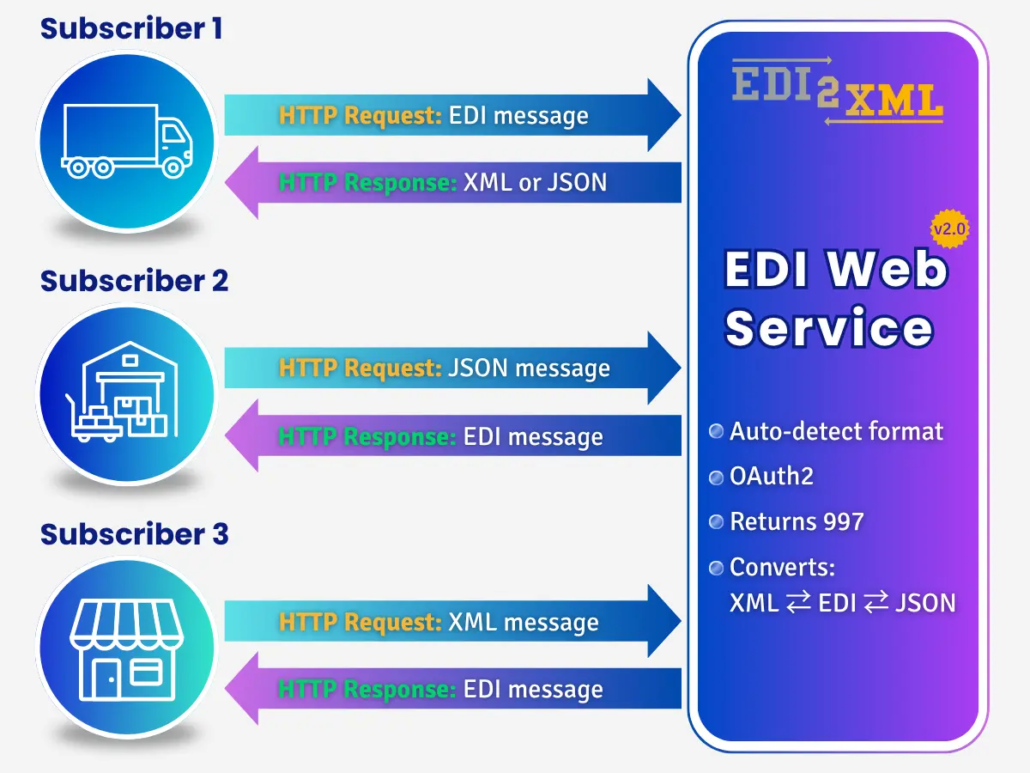
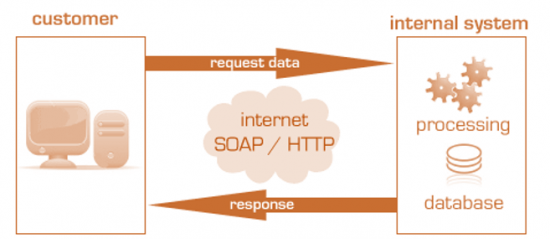
The principles of the mechanism of the EDI2XML Web Service is schematically illustrated in the diagram below.

API-Converter for EDI XML and JSON

a) Advantages

EDI2XML Web Service is the way to go for the following reasons:

  • Self-service solution
  • Low cost
  • We offer a 15 days free trial, without any commitment.
  • Get started with less than an hour
  • There is no contract, no commitment.
  • Payments are month to month; Cancel anytime with a 30 days’ notice.
  • A very simple and dynamic pricing scheme
  • Availability and reliability
  • Based on proven technology in the field for over 18 years now
  • Outstanding technical support

b) Technical Details

Implementation time: Getting started with EDI2XML Web Service, is very simple and quick. Within less than an hour, you can issue the first Call to the Web Service and see the response. Our HTTP EDI Web service is very clearly documented, and we provide instructions with each subscription.

  • Quick entry: you can be up and running in less than an hour, and it is proven; we provide everything to your developers to get started, a java client with its source code and instructions on how to work with it.
  • We offer the schemas(xsd) of the XML format our API expects, and all what you need to do is to format your data according to that format and you will be up and running.

c) Pricing

EDI2XML API service fee to use the HTTP / Web Service calls, has a very simple pricing scheme. The price consists of two elements:

  1. Monthly mailbox fee: a “fixed” monthly fee for the Web Service Mailbox usage on EDI2XML platform. It is a nonrefundable fee.
  2. Data processing fee: a “variable” fee based on the volume of data processed and translated between EDI and XML, during a calendar month. The volume of data processed is computed in both directions:
  • Incoming, and
  • Outgoing

Click here to request EDI2XML Web Service Price List

d) How to get started with EDI2XML API

To get started with our EDI Web Service three steps you need to follow:

1. You need to provide us the list of documents/transactions you want to be activated under your trial account.

2. We will simply set you up with a 15 days trial account, without any commitment from you. Just let us know when do you want to kick off, and we can take care of setting you up on a trial account.

3. We provide a Java client and its source code. You can get started with less than an hour, this will allow you to try and see the results by your own.

We’ve recently launched EDI2XML Web Service v2.0 – a smarter, faster, and more secure version of our REST API. It supports improved token-based authentication and better performance for X12, XML, and JSON document exchange. Learn more: What’s New in Version 2.0?


Watch the Video and discover which solution aligns best with your business needs and goals.


Compare key features of Fully Managed EDI Service and HTTP EDI Web Service

key feature

Fully managed EDI service

HTTP EDI Web Service

 Type of EDI solution Full service Self service
 Contract Yes No
 Commitment 24 months No
 Implementation time   (approximately) 2 weeks 1 hour
 Real-Time Connection Yes Yes
 Free Trial account No 15 days
 Data processing fee Based on the appropriate plan. It works in both directions: when the volume goes up and  when the volume goes down.   “Variable” fee based on the   volume      of data processed     and translated         between   EDI    and XML, during a         calendar    month.
 Need for internal   resources No Yes
 Need for in-house EDI expertise No No
 Technical Support Yes Yes
 Hardware Installation  Required No Yes
 Software Installation Required No No
Communication with the trading partner: setup and testing in both directions Yes

No

Free edi consultation

We, at EDI2XML, provide an EDI integration solution for every type of business. Contact us today for a free consultation and we will help you find the most appropriate option for your business.


April 12, 2019
https://www.edi2xml.com/wp-content/uploads/2019/04/Fully-EDI-vs-API-EDI-.png 350 1024 Tatyana Vandich https://www.edi2xml.com/wp-content/uploads/2024/08/edi2xml.com-EDI2XML-company-logo.png Tatyana Vandich2019-04-12 13:14:502025-07-02 12:40:59Fully managed EDI service VS HTTP Web Service: Which is Better for Your Business ?

API Web Service for EDI X12 exchange – Discover the advantages

Blog

This post was updated to reflect current trends and information.


API Web Service for EDI X12 Exchange – Discover the Advantages

For over 25 years, we have been working with EDI, integrating systems, and helping companies of all sizes in their digital transformation journey. We have been writing extensively and covering hot topics about EDI integration with e-commerce such as Shopify, Amazon, and other e-commerce platforms, or EDI for drop-ship business, or EDI Integration with Salesforce and other different CRM and ERP systems.

We have extensive knowledge in Electronic Data Interchange (EDI), and we share our knowledge by writing a large number of articles in our Blog; we take up questions from our readers and contacts, related to different EDI topics, including types of EDI messages, EDI Standards and we try to respond to those in our blog.

In this article, there is an important topic I want to expand on: it is our EDI2XML API service, to translate EDI to XML (and vice versa) through our Http/https/httpss REST Web Service; This service, now available as Version 2.0, has gained significant traction among CTOs, integrators, and developers. With major improvements to security (OAuth2), performance, and documentation, the upgraded version is ideal for integration projects using SOA (or service-oriented architecture) or ESB (enterprise service bus).

What Is EDI2XML Web Service and How Does It Work?

EDI2XML Web Service is an HTTP/HTTPS/HTTPSS service running over the internet, on EDIXML own platform that is capable of receiving HTTP/HTTPS/HTTPSS requests to translate EDI messages to XML, and XML messages (based on EDI2XML’s proprietary format) to EDI. The principles of the mechanism of EDI2XML Web Service is schematically illustrated in the figure below.

API-Converter for EDI XML and JSON

Is EDI2XML Web Service Right for Your Business or Development Team?

EDI2XML Web Service is for developers and businesses interested in building their own EDI (Electronic Data Interchange) integration flows and programs. Normally, these individuals are capable of interacting with external API and Web Services to translate EDI to XML and XML to EDI, and have the resources and expertise to work with Web Services and HTTP/HTTPS/HTTPSS requests in order to achieve their goals. With Version 2.0, EDI2XML Web Service becomes an even more powerful and reliable option for IT professionals seeking a secure, fast, and flexible solution to handle EDI data exchanges.

Getting Started with EDI2XML API: Setup in Under 60 Minutes

In order to access EDI2XML Web Service and start taking advantage of our HTTP/HTTPS service in your EDI integration projects, we require that you fill the form on our EDI2XML website.

Getting started with EDI2XML Web Service is very simple and quick. Within less than an hour, you can issue the first Call to the Web Service and see the response.

Our Web Service is very well documented, and instructions are provided with each subscription. The instructions on how to get started are very straight forward and simple to follow. We provide detailed instructions and screenshots.

For a junior developer who is able to follow instructions, he can see results within less than an hour, just by following instructions from our quick start guide.

Moreover, we offer a 30-minute courtesy technical call for every new subscriber.

What Are the Limitations of the EDI2XML REST API?

Access to our EDI2XML Web Service is unlimited, and there are no limits for http/https calls. EDI2XML format supports currently the most commonly used EDI formats in North America: X12 and EDIFACT. You can check supported EDI transactions listed on our website. In case a transaction you are looking for is not on the list, we can simply just add it and activate into the service at no additional fee.

Understanding the XML Schema for EDI2XML API Integration

When translating from EDI to XML, our EDI2XML Web service will generate a “proprietary” XML format we call it “EDI2XML format”. This is a very structured format where we also provide the corresponding schemas (.xsd) for each transaction, in order to ease developers’ lives.

When translating from XML to EDI, EDI2XML expects a proprietary XML format, which we do provide the schemas (.xsd).

What’s New in EDI2XML Web Service v2.0?

  • OAuth2 Token-Based Authentication – for improved security over HTTP/HTTPS
  • Improved Performance – faster processing of large EDI documents
  • Updated Developer Documentation – clearer examples and onboarding
  • New Sandbox Mode – for testing and simulation
  • Full Support for JSON – convert EDI ↔ JSON with ease (in addition to XML)

Version 2.0 reflects our commitment to continuous improvement and developer support.

Does EDI2XML Web Service Support HTTPS?

EDI2XML API service supports http and https REST calls. We do realize how important is to transmit EDI information on a public tunnel such as the internet, with full security, when calling our EDI2XML web service.

Why Businesses Choose EDI2XML Web Service for Secure EDI Data Exchange

  • Get started with less than an hour
  • No contract: pay as you go
  • Very simple and dynamic pricing scheme
  • Availability and reliability
  • Based on proven technology in the field for over 20 years now
  • Outstanding technical support
  • Self-service solution
  • Cloud based
  • Low cost
  • Quick entry: you can be up and running in less than an hour, since we provide everything an integrator/developer needs to get started. We provide java client with its source code and instructions on how to try it.
  • Free trial for [15] days, with no commitment.

EDI Consultancy

We do offer EDI projects consultancy. We help companies plan, deploy, test and integrate EDI projects. You can simply call us (450) 68-3009 Ext 223 or write us sales@namtek.ca if you need any EDI consulting work. We have proven 25 years of experience in EDI and integration projects.

EDI Web Service for edi integration

February 15, 2019
https://www.edi2xml.com/wp-content/uploads/2019/02/API-Web-Service-for-EDI-X12-exchange-Discover-the-advantages-e1550256721256.png 311 1024 Tatyana Vandich https://www.edi2xml.com/wp-content/uploads/2024/08/edi2xml.com-EDI2XML-company-logo.png Tatyana Vandich2019-02-15 14:04:242026-06-04 14:52:02API Web Service for EDI X12 exchange – Discover the advantages

EDI Web Service v2.0 – Fast, Secure EDI to XML/JSON API for Developers

Blog

What Is EDI Web Service and How Does It Work?

EDI Web Service v2.0 is a RESTful HTTP/HTTPS API that lets you translate EDI (X12/EDIFACT) to XML or JSON, and vice versa.
It runs on our cloud-based platform and is trusted by developers, integrators, and IT teams building EDI workflows using modern integration stacks or ESB architectures.

Our EDI Web Service gives developers the power they need to do EDI easily. EDI Web Service solution solves developer’s problem because we have an expertise in an EDI technology that is difficult for developers to replicate. This solution enables to increase in efficiency and reduces the cost of EDI implementation.

Read more about EDI Web Service here

Benefits of Using the EDI2XML API for EDI Integration

✅ Get started in less than 60 minutes

🔐 Secure token-based access (OAuth2)

🔄 Bi-directional conversion: EDI ↔ XML / JSON

☁️ Fully cloud-based & scalable

📃 Simple pay-as-you-go pricing — no contracts

💡 Includes Quick Start Guide + sample Java client

🧑‍💻 Free 30-min onboarding call for new users

🧪 15-day free trial — no credit card required

📈 Proven solution, in production for over 20 years

What’s New in EDI Web Service v2.0?

We’ve upgraded our EDI Web Service to version 2.0 – with major improvements based on developer feedback:

  • Faster document processing

  • OAuth2 authentication for secure API access

  • Enhanced support for JSON and XML

  • Streamlined error handling and debugging

  • Updated developer documentation and XSDs

Looking for an easy way to convert EDI to XML or JSON via a secure API?
Get started today with a 15-day free trial of EDI2XML Web Service v2.0 — no credit card or contract required.
👉 Request our pricing and FAQ guide or email us at sales@namtek.ca.

free edi web service trial


EDI Web Service – Related Posts:

API Web Service for EDI X12 exchange – Discover the advantages

SOAP or REST Web Services: what you should use for EDI implementation?

Seamless EDI implementation through Web Services

Download EDI Web Service overview

February 6, 2019
https://www.edi2xml.com/wp-content/uploads/2019/02/EDI-web-Service-free-15-days-e1549468986953.png 341 1024 Tatyana Vandich https://www.edi2xml.com/wp-content/uploads/2024/08/edi2xml.com-EDI2XML-company-logo.png Tatyana Vandich2019-02-06 11:18:282026-06-04 14:53:02EDI Web Service v2.0 – Fast, Secure EDI to XML/JSON API for Developers

Electronic Data Interchange: Key Information You Need to Know

Blog


This post was updated to reflect current trends and information.


EDI
(or Electronic Data Interchange), has been part of business for long time; However, questions about its functioning, pros and cons are still not clear for new EDI users and those who have been using EDI for years in their business.

To help better understand EDI, we created this e-book “Electronic Data Interchange: Key Information You Need to Know”, where you find answers to most of the frequent questions like What is EDI? Benefits of EDI, EDI communication (EDI-VAN) and (EDI -INT) and much more.

It was built for beginners and those who have strong EDI technical knowledge. We are certain you will get important information out of this eBook, that is certainly useful to your EDI projects.

We invite you to download this e-book from EDI2XML Resource Page

Free EDI eBookFree EDI consultation


January 1, 2019
https://www.edi2xml.com/wp-content/uploads/2019/01/Free-edi-gude.png 350 1024 Tatyana Vandich https://www.edi2xml.com/wp-content/uploads/2024/08/edi2xml.com-EDI2XML-company-logo.png Tatyana Vandich2019-01-01 12:09:152020-06-25 14:02:39Electronic Data Interchange: Key Information You Need to Know

Seamless EDI Implementation Through Web Services

Blog

EDI is used almost everywhere regardless of industry or company size. The most extensive use of EDI is in the retail industry. EDI compliance is mandatory in order to trade with big retailers such as Target, Costco, Walmart,… even giants of electronic commerce like Amazon are heavy users of EDI.

There are a lot of different types and approach of implementing EDI in your company. It can fully managed EDI service, or gaining popularity lately EDI Web Service, because, service architects and developers want EDI to be easy to implement, maintainable, extensible, and scalable.

What is Web Service?

Web service is a network technology that provides inter-program interaction based on web standards. More specifically, it’s client and server application that communicate over the World Wide Web’s (WWW).

The W3C consortium defines a web service as: “A Web service is a software system designed to support interoperable machine-to-machine interaction over a network”.

Thus, the web service is identified by a URI string. The Web service has a User Programmatic Interface (UPI) that is represented in WSDL format. Other systems interact with this web service by exchanging SOAP or REST protocol messages. HTTP Hypertext Transfer Protocol is used to transport the messages. The description of Web services and their APIs can be found by UDDI.

♦ WSDL (Web Services Description Language) – is an XML-based interface definition language that is used for describing the functionality offered by a web service.

♦ UDDI (Universal Discovery, Description and Integration) – is an XML-based registry for business internet services

Web services are rich in functionality and extensibility, as well as their machine-readable descriptions through the use of XML. Web services can be combined to achieve complex operations.

web service diagram

The diagram above shows a very simplified view of how a web service works. The client invokes a web service call by sending a request to a server which hosts the actual web service, then get the response from the web service.

What are the Different Types of Web Services?

Web services can be deployed in several ways. The following web-services are the most commonly used http web services:

♦ SOAP (Simple Object Access Protocol) — in fact, it is a triple of standards SOAP/WSDL/UDDI

♦ REST (Representational State Transfer) – quite often called as RESTful API (Application Program Interface that uses HTTP requests to GET, PUT, POST and DELETE data) or RESTful web service – is based on (REST) technology.

Actually, SOAP originated from XML-RPC (XML Remote Procedure Call) and is the next generation of its development and evolution. While REST is a concept, based on an architectural style.

Of course, there are other types of web services, but since they are not widely used, we will focus on these two in this brief review: SOAP and REST.

A Quick Overview of SOAP Web Services

SOAP stands for Simple Object Access Protocol. It is an XML-based protocol for accessing web services.

It is platform and language independent. It means that by using SOAP, you can interact with other programming language applications.

Initially, SOAP was primarily intended to implement a remote procedure call (RPC). Now SOAP is used to exchange arbitrary messages in XML format, not just to call procedures.

Like any text protocol, SOAP can be used with any application layer protocol: SMTP, FTP, HTTPS, etc., but more often SOAP is used over HTTP.

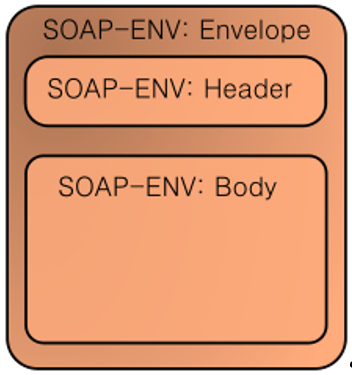
All SOAP messages are structured as an envelope (is the root element in every SOAP message), including the following elements:

  • Message ID (local name)
  • Optional Header element
  • Mandatory Body element (message body)

Structure of SOAP message:

SOAP message structure

The expanded list of SOAP message elements is shown in the data schema (for SOAP version 1.2).

A Quick Overview of REST Web Services

REST stands for Representational State Transfer. As it was mentioned above, REST is not a protocol but an architectural style built on existing standards that are well known and controlled by the W3C consortium, such as HTTP, URI (Uniform Resource Identifier), XML and RDF (Resource Description Format).

In a REST services, the emphasis is placed on access to resources, and not on the execution of remote services; this is the fundamental difference from SOAP-services. However, the remote procedure call is also applicable to REST. It uses the PUT, GET, POST, and DELETE methods of the HTTP protocol to perform tasks. The cardinal difference between REST and SOAP is that REST remains an HTTP request.

According to many developers, SOAP is cumbersome and difficult to use. REST is an easy alternative.

REST is using the URL approach. Often, to make a request, REST relies on a simple URL Instead of using XML.

Advantages of REST Web Services

REST is more flexible and easier to use for the most part. There are following advantages when:

  • Agile: Unlike SOAP, there is no strict specification for REST Web services and it consumes less bandwidth and resources, thus, REST Web services are very fast.
  • Language and Platform independent: REST web services can be written in any programming language and run on any platform.
  • Can be used with different data format: REST web service permits different data format such as Plain Text, XML, HTML, and JSON.

SOAP vs REST: What to Choose?

SOAP is more applicable in complex architectures where interaction with objects is beyond the scope of the CRUD model. In applications having the CRUD model, it can be quite applicable to REST due to its simplicity and transparency.

In fact, if any objects in your service do not need a complex relationship than: “Create”, “Read”, “Update”, “Delete” (usually in 99% of cases is enough), it is possible that REST will be the best choice.

In addition, REST compared to SOAP can be more productive because it does not require parsing complex XML commands on the server (regular HTTP requests are performed — PUT, GET, POST, DELETE).

EDI2XML HTTP Service

EDI2XML Web Service, is an HTTP (based on REST) service running over the internet, on EDI2XML private cloud platform that is capable of receiving HTTP requests to translate EDI messages to XML, and XML messages to EDI (based on EDI2XML’s proprietary XML format). Advantages of using EDI2XML HTTP service:

⇒ You can start with less than an hour

⇒ No contract: pay as you go

⇒ Very simple and dynamic pricing scheme

⇒ Availability and reliability

⇒ Based on proven technology in the field for over 18 years now

⇒ Outstanding technical support

Our EDI Web Service solution solves developer’s problem because we have over 18 years of expertise in EDI, that is difficult for every developer and integrator to acquire quickly.

You can start with the free 15 – days trial of EDI2XML Web Service to see how real-time translation services works.

EDI Web Service for edi integration


Related Posts:

What is EDIFACT? | UN / EDIFACT standard overview

EDI ANSI ASC X12 Standards – Technical Overview – 2020

EDI Integration of B2B e-commerce for small companies

November 20, 2018
https://www.edi2xml.com/wp-content/uploads/2018/11/edi-web-services-.png 350 1024 Tatyana Vandich https://www.edi2xml.com/wp-content/uploads/2024/08/edi2xml.com-EDI2XML-company-logo.png Tatyana Vandich2018-11-20 16:33:062025-07-02 14:32:40Seamless EDI Implementation Through Web Services

How to get more out of Salesforce with EDI Integration

Blog


This post was updated to reflect current trends and information.


At the end of a discussion we had with one of our contacts, who was inquiring about EDI, Salesforce and how to integrate it all together, I decided to write this article, in order to clarify and structure my arguments with the hope it can help other readers who might fall on this article having the same questions and concerns. I will start by defining some technical terms, prior to getting to the points.

What is Salesforce?

Salesforce is one of the most popular cloud-based CRM. The company is based in California (USA), and it has thousands of users worldwide. We’ve already written an article that provides more about the product, which I invite you to read, and learn more about salesforce itself, and how Magic xpi can be the best integration platform with Salesforce.

What is EDI?

Electronic Data Interchange or (EDI) is fundamentally a standard that regulates the electronic exchange of business documents between trading partners. EDI contains a set of message types. There are many different EDI standards i.e. X12, EDIFACT, RosettaNet…used mainly in different industries and different parts of the world. In North America, the US standard ANSI ASC X12 is p predominantly used.

Some example message types are:

  • EDI 810 – Invoice
  • EDI 850 – Purchase Order
  • EDI 846 – Inventory Inquiry/Advice
  • EDI 856 – ASN (Advance Ship Notice)

Help: What is EDI2XML as a Service?

EDI2XML as a Service is our popular translation and communication service offering to businesses of all sizes, from various industries. All conversions of EDI files are done on our end, leaving customers with no on-site installation of software or hardware and an EDI project that is on time and within budget.

Download our EDI2XML Translation Service Pricing Package here for more information

Why EDI Integration with Salesforce is Important

Companies of all sizes have different systems in place: i.e. ERP, CRM, Warehouse management…Some other companies might only operate their business using Salesforce.

It is a common situation that companies will have business partners requesting to exchange EDI (regardless of the standard), with them. The truth is that companies’ can NOT refuse such a request coming from a customer for example. They have to comply with such demand and become “EDI ready” or “EDI compliant”.

In a such scenario, the company running Salesforce will be receiving a Sales order (850 as an example) and sending back and invoice (810) for billing purposes, all in X12 standard (for example). What to do about this requirement? Companies need to take action.

Why You Need to integrate EDI into Salesforce

Given the above facts and considering that Salesforce “out-of-the-box” does NOT support any EDI standard, there is no choice for a company leveraging Salesforce, to escape the integration request.

Ultimately, businesses need to Integrate EDI into their Salesforce instance. By pushing EDI messages into their Salesforce instance in a near real-time basis, companies can achieve even more with the Salesforce system.

“Need Integration” Checklist

Each company is unique, and it can be a lot of reasons why your business needs Integrations. Following are the most common reasons a company might need to consider, in order to jump into integration projects:

– Your trading partner(s) is requesting to exchange data electronically

– Your company gets a lot of orders (200+ orders a month on average), this is being taped manually in different systems, thus taking lots of time of your employees, and creating inefficiencies.

– You are looking for a better experience with your customer. You need to get your inventory out that always exact, tracking numbers are received instantly after the merchandise is sent, etc.

– You do not have enough time to process orders. Your costumers need to wait for order processing.

– As third-party sellers, you are getting penalties from Amazon, eBay, and other marketplaces for the reason that you are not shipping orders fast enough.

– Your company receiving negative reviews from your customers who shop online, because of slow service or erroneous orders processing.

What to do Next to integrate EDI and Salesforce

Integrating EDI with Salesforce, is a bit different from other types of integration projects, a company might go through. Due to the fact that EDI is very specific, it requires very specific expertise. Here are some of the important points to consider before going into EDI integration projects:

  • For EDI integration in general, work with an EDI provider, and NOT with VANS (Value Added Networks). VANs are more expensive and less into integration.
  • Make sure the EDI provider is “integration oriented”; meaning he is not only specialized in EDI, but in integration as a concept
  • Do NOT settle half-way with “file integration”, look for near “real-time” integration, directly into your system.
  • Do NOT settle with point-to-point integration”. Developing and “coding” integration points, is very expensive to maintain at long term.
  • Look for the best integration method: look for certified connectors from the manufacturer (salesforce).

Integrate EDI with Salesforce to drive your business

If you need more information or help in determining your need in EDI to Salesforce Integration, please contact our integration experts, and Feel free to request a free demonstration.

EDI Salesforce Integration

March 20, 2018
https://www.edi2xml.com/wp-content/uploads/2018/03/Featured-Image-edi-Salesforce.png 350 1024 Tatyana Vandich https://www.edi2xml.com/wp-content/uploads/2024/08/edi2xml.com-EDI2XML-company-logo.png Tatyana Vandich2018-03-20 13:46:182024-12-24 15:16:11How to get more out of Salesforce with EDI Integration

A must-have guide for a successful systems integration with EDI

Blog

The concept of Electronic Data Interchange (EDI) is still very abstract for a business owner up until today. More often, as soon as an SME (small to medium-sized enterprise) is requested by an important partner to comply with the electronic data interchange process or do EDI, everyone gets into a big pig panic inside the enterprise, and all reinforcements are being called to help with such a project.

Why EDI Integration Projects Often Turn Into a Headache

Large retail chains are critical customers for many small and medium-sized businesses. Complying with their requirements isn’t optional—it can make or break a partnership. And since these retailers communicate almost exclusively through EDI, integrating it correctly is non-negotiable.

Yet many companies underestimate what it takes. Diving into EDI integration without a clear understanding of your own processes and specific business needs often leads to delays, errors, and frustration. In short: without proper planning, EDI projects can quickly become a nightmare.

Recommendations and Steps for a Successful Integration

EDI technology can have a bigger impact on a company’s business processes than almost any other IT solution. That’s why EDI integration projects need to be carefully planned and executed, following a clear, structured approach.

Here are the key steps to ensure a smooth and successful integration:

Step 1: Preparation of an EDI implementation team

It is essential that senior management be involved in any EDI integration project and implementation, at least at a high level.

Ideally, the EDI implementation team should include representatives from different departments, such as operations management, sales, and information services.

It is important for the team to design together a good flow of information, so everyone understands the issues, the scope, and the benefits of the project. A project manager should be assigned to take charge of such a mandate.

Step 2: Setting a project timeline

The implementation team should set an ETA and develop a plan with a complete list of tasks, resources required, and delivery estimates.

Step 3: Choice of standards

While the choice of standard of EDI format and communication protocols is very limited, this phase consists on just reviewing and making sure all specs and documentations are in place for the kick-off.

Step 4: Choice of documents for EDI transaction

Often, trading partners specify the EDI standard and the type of documents they will send or accept. Sometimes partners use only a few of the possible documents such an Invoice EDI 810 form and purchase orders EDI 850 form.

Step 5: “On premises” or “cloud” based or EDI Web Sevice?

There are many ways to do EDI. It is depending of the anticipated transaction volume, or the size of the business. Going with a software solution deployed “on-premises” or adopting a “cloud based software” or maybe EDI Web Service

♦ The Cloud-based EDI Service is an excellent solution for Small and Medium-sized enterprises that do not have a budget for large EDI projects, and who do not have experienced staff with EDI exchange.

USEFUL: Learn more about EDI Solution as a Service for SMEs 

♦ The other way to get the most out of EDI, is by adopting a full EDI integration with your internal software management system like your ERP, CRM etc.

♦ EDI2XML Web Service, is for developers and businesses, interested in building their own EDI (Electronic Data Interchange) integration flows and programs. Normally, these individuals, are capable of interacting with external API and Web Services to translate EDI to XML and XML to EDI, and have the resources and expertise to work with Web Services and HTTP requests in order to achieve their goals. EDI2XML web service, is the premier choice for IT people as a reliable service to accomplish such integration projects.

Step 6: File Integration or direct system integration

When it comes to integration, the implementation should be decisive on how the integration to their CRM/ERP is going to happen: there are (2) methods to do such an integration; either through file integration, Where the ERP has already some built-in jobs to import data based on specific format, or direct integration. Obviously, this decision is also dependent on whether the software management system is a legacy system or a modern one, fully loaded with all kinds of API and programming interfaces. This part can be the most difficult and lengthy part, unlike what most people think…

Step 7: Integration project testing

Pilot projects are conducted both within the company and with external business partners. EDI test should be of a specified duration. They will help identify possible loopholes and establish a problem-solving plan. Technical employees should be trained in the technical aspects of EDI.

Step 8: Setting up

The implementation of the EDI system must be combined with several factors in order to be successful: adequate users training, proper implementation plan, and establishment of an emergency procedure.

For small to medium-sized enterprises, EDI integration is a good deal. An Electronic Data Interchange (EDI) capable enterprise retains an important customer or supplier and have a lot of opportunities to enter into new contracts with large companies.

For many years, our EDI2XML service has been offering up-to-date integrated solutions at an affordable cost. We have been helping companies of all sizes, to optimize operations and improve their competitiveness.

cta_edi2xml

December 14, 2017
https://www.edi2xml.com/wp-content/uploads/2024/09/edi2xmlcom-EDI-cloud-software.webp 628 1200 Tatyana Vandich https://www.edi2xml.com/wp-content/uploads/2024/08/edi2xml.com-EDI2XML-company-logo.png Tatyana Vandich2017-12-14 16:33:202026-03-13 12:28:55A must-have guide for a successful systems integration with EDI

Becoming EDI Compliant with Amazon for a Seamless Integration

Blog, EDI, EDI2XML

This post was updated to reflect current trends and information.


As the Amazon Marketplace becomes people’s go-to for online shopping, I am asked about this successful eCommerce platform and why should e-retailers embrace EDI when selling on Amazon.com. Other great questions from business people include, “Why is it so important to go that route versus using Amazon Web Forms? What are the benefits to be on EDI? What are the steps that a company needs to follow, in order to become EDI-ready?”

To answer the above questions, I decided to write this article and share my experience. This can be helpful to a lot of business people such as executives and business owners and Amazon Account Managers, who most of the time have limited information about eCommerce integration and the use of EDI to simplify their business flow and processes.

What is Amazon.com?

Amazon.com is the pioneer in online retailing and now third largest retailer, behind Walmart and CVS. Amazon has truly come a long way: starting out as an online bookseller, this online marketplace now sells everything, from “A to Z”. In 2017, Amazon acquired Whole Foods Market for $13.4 billion, which vastly increased Amazon’s presence as a physical retailer. The acquisition was interpreted by some as a direct attempt to challenge Walmart as a physical store (As per Wikipedia https://en.wikipedia.org/wiki/Amazon_(company) ). Amazon, as an eCommerce platform, has a presence everywhere (Amazon.ca, Amazon.uk, etc.) and is capable of delivering in almost every country. For more information, you can visit their site and learn more.

Here’s a bit more background on Amazon.com

  • Amazon is known to be “customer-obsessed”; they focus on selection, price and convenience to “build a place where people can come to find and discover anything they might want to buy online” (Amazon’s Mission Statement)
  • They are solely an online eCommerce store (eStore)
  • On Cyber Monday in 2019, it was reported  Amazon sales of $9.4 billion in wider retail.
  • Amazon has acquired Zappos in 2009 and recently acquired Whole Foods
  • It owns 10% of North American eCommerce – which includes Office Depot, Staples, Apple and Walmart

There are 310 million active Amazon customer accounts worldwide, 90 million of which are Amazon Prime members, many companies are looking to sell their products on Amazon.com. Who wouldn’t want to when Amazon is the KING of eCommerce Stores with roughly 175 million monthly visitors or potential buyers – the largest online marketplace.

Creating an Account & Selling on Amazon.com

Selling on Amazon is quite simple and quick to achieve. It takes few moments to create an account on Amazon.com either personal or business account, setup your items and start selling. Amazon themselves provide a payment gateway solution and all kinds of logistics and assistance to make sure your products are sold and delivered to consumers. One thing for certain, every seller should work and respect Amazons’ own terms and conditions and pay the monthly subscription fee along with the selected program fees.

Managing your Profile on Amazon.com

Part of Amazon’s offering in the eCommerce platform is that they provide an easy “back office” interface, called Vendor Central (for 1P sellers), where brand administrators can add items to the platform, prices, stock availabilities, product descriptions and more. In this same interface, the admin can manage orders received from consumers, updates item statuses and shipment details.

What else is on Amazon Vendor Central?

One of the options provided by Amazon Vendor Central is the ability to set some type of integration between your business software system and your Vendor Central Interface using EDI. This is a very important feature offered at no additional cost to sellers, so that they can integrate their day-to-day orders received from their Amazon store into their Software Management System and vice versa.

Amazon Vendor Central vs EDI Integration

As highlighted in the previous section, the Vendor Central provided by Amazon allows you (as an account and eCommerce store owner) to manage every aspect of your store, manually. This process depends on human interaction and intense manual labour work.

The ability to transport and integrate your data between your software system and your Amazon account in both directions (in and out) is uniquely done through EDI. Meaning when you want to extract an order from Amazon and automatically integrate into your JDE, SAP, Sage or any other system, the only way to do so is using EDI integration. Whenever you need to push new Items, SKUs, pricing ….to your store on Amazon, EDI is the only way to do so without having to manual key in all of this data.

When should you embrace EDI with Amazon?

Selecting the EDI route and becoming compliant with Amazon is truly worth the investment, when the following criteria is met:

  • An overwhelming number of SKUs are being sold on the Amazon Marketplace
  • Your SKUs and items sold on Amazon are dynamically changing periodically which makes it very difficult and time consuming for a human to manage it all manually
  • Your number of orders generated on Amazon are exceeding 15 per day. Why is the magic number 15 orders? This is due to the fact that the window to ship those orders out to your customers is very narrow, about 24 to 48 hours. Therefore, managing this amount of daily orders manually can lead to a ton of human errors and in turn, penalties by Amazon.

What are the top benefits to be on EDI?

There are many benefits to be on EDI when selling on Amazon:

  • Reduced human errors in data entry
  • Increased capacity to deliver quickly and on-time
  • Increased response time when issuing advance ship notices for orders placed on Amazon
  • Increased scores/reviews and happy customers on Amazon
  • Ability to quickly and efficiently update your inventory status from your current software or ERP (i.e. JDE, SAP…) into your Amazon account without the need to even login to Vendor Central

Stay on the lookout for part 2 of this article where I dig deeper into the steps that a company needs to follow in order to be EDI compliant with Amazon. In the meantime, feel free to reach our EDI integration experts today to help you with your Amazon integration needs.

Amazon Integration


For more information on Amazon integration, please read these articles:

  • Integration with Amazon Seller or Vendor account: Things you should know
  • Integration with Amazon Web Services (MWS): Things you should know
  • Amazon Business: How to increase the B2B sales on Amazon?
  • What is Dropshipping on Amazon?

November 20, 2017
https://www.edi2xml.com/wp-content/uploads/2024/08/edi2xml.com-EDI2XML-company-logo.png 0 0 Tatyana Vandich https://www.edi2xml.com/wp-content/uploads/2024/08/edi2xml.com-EDI2XML-company-logo.png Tatyana Vandich2017-11-20 11:55:382023-04-10 15:20:06Becoming EDI Compliant with Amazon for a Seamless Integration
Page 6 of 8«‹45678›»
Recent
  • Is EDI Required for Small Businesses? A Supplier’s Guide...June 17, 2026 - 7:02 pm
  • EDI compliance with Loblaw
    How to Meet Loblaw EDI Requirements as a Small BusinessJune 4, 2026 - 2:05 pm
  • The Infrastructure Behind Modern Commerce: Why EDI Still Matters
    EDI in E-Commerce and Retail: Why Modern Commerce Still...May 1, 2026 - 4:54 pm
  • Key Statistics on AI Use in the Workplace
    The Risks of Using Public AI Tools in Business: Data Privacy,...March 11, 2026 - 5:51 pm
  • Enterprise AI
    How to Securely Access Enterprise AI: GPT, DeepSeek &...February 20, 2026 - 3:09 pm
Popular
  • How to Quickly Connect to a Large Retailer's EDI Requirements
    How to Get EDI-Compliant Quickly For A Large RetailerNovember 21, 2025 - 4:29 pm
  • EDI-as-a-services
    EDI Translation Software “On-premises” or “As...January 21, 2014 - 1:28 pm
  • order-automation in e-commerce
    Why Is It Crucial to Automate the E-Commerce Order Fulfillment...May 10, 2022 - 1:58 pm
  • EDI for Logistics and transportation
    EDI Integration for Efficient Transportation ManagementOctober 6, 2023 - 1:33 pm
  • information technology definitions
    Business Tech Terms DefinitionsMay 24, 2018 - 1:32 pm

Browse by tag

Amazon Amazon Integration ANSI ASC x12 ASC X12 EDI B2B EDI integration e-commerce e-commerce business e-commerce integration eCommerce eCommerce integration EDI EDI2XML EDI 850 EDI as a Service EDI Communication EDI converter EDIFACT EDI for supply chain EDI for Third-Party Logistics EDI for transportation EDI implementation EDI Integration EDI Integration Project EDI project EDI Translation EDI Web Service EDI x12 ERP Integration integration platform integration project JDE Magic xpi Magic xpi Integration platform NetSuite online store Salesforce Shopify Shopify eCommerce integration Shopify integration Supply Chain Supply Chain Management Translation Software X12 EDI XML

Subscribe to our Blog

Menu

  • Home
  • About the EDI2XML Company
  • About EDI2XML EDI Converter
  • Blog
  • Book A Free Consultation
  • Privacy Policy EDI2XML Company

Our Services

Fully Managed Integration

E-Commerce Integration

Business Systems Integration

Fully Managed EDI

EDI Web Service 

On Premises EDI 

Managed Cloud Service


Latest Blog Posts

  • Is EDI Required for Small Businesses? A Supplier’s Guide to Retail OnboardingJune 17, 2026 - 7:02 pm
  • EDI compliance with Loblaw
    How to Meet Loblaw EDI Requirements as a Small BusinessJune 4, 2026 - 2:05 pm
  • The Infrastructure Behind Modern Commerce: Why EDI Still Matters
    EDI in E-Commerce and Retail: Why Modern Commerce Still Depends on EDIMay 1, 2026 - 4:54 pm

Contact Us

400 Blvd Curé-Labelle, #304 Laval QC H7V 2S7 Canada

Contact EDI2XML Team
Phone: +1 450-681-3009
Website: https://www.edi2xml.com/

© 2000-2026 EDI2XML (by Namtek Consulting Services). All rights reserved.
  • Link to Facebook
  • Link to LinkedIn
  • Link to X
  • Link to Youtube
  • Blog
Scroll to top Scroll to top Scroll to top